Wisconsin DOJ Files Three Suits Against Kalshi, Polymarket, Robinhood, Coinbase and Crypto.com Over Sports Event Contracts
Wisconsin's DOJ filed three Dane County complaints on April 24 against Kalshi, Polymarket, Robinhood, Coinbase and Crypto.com, alleging their sports event contracts violate state commercial gambling law — escalating the state-versus-CFTC fight over prediction markets.

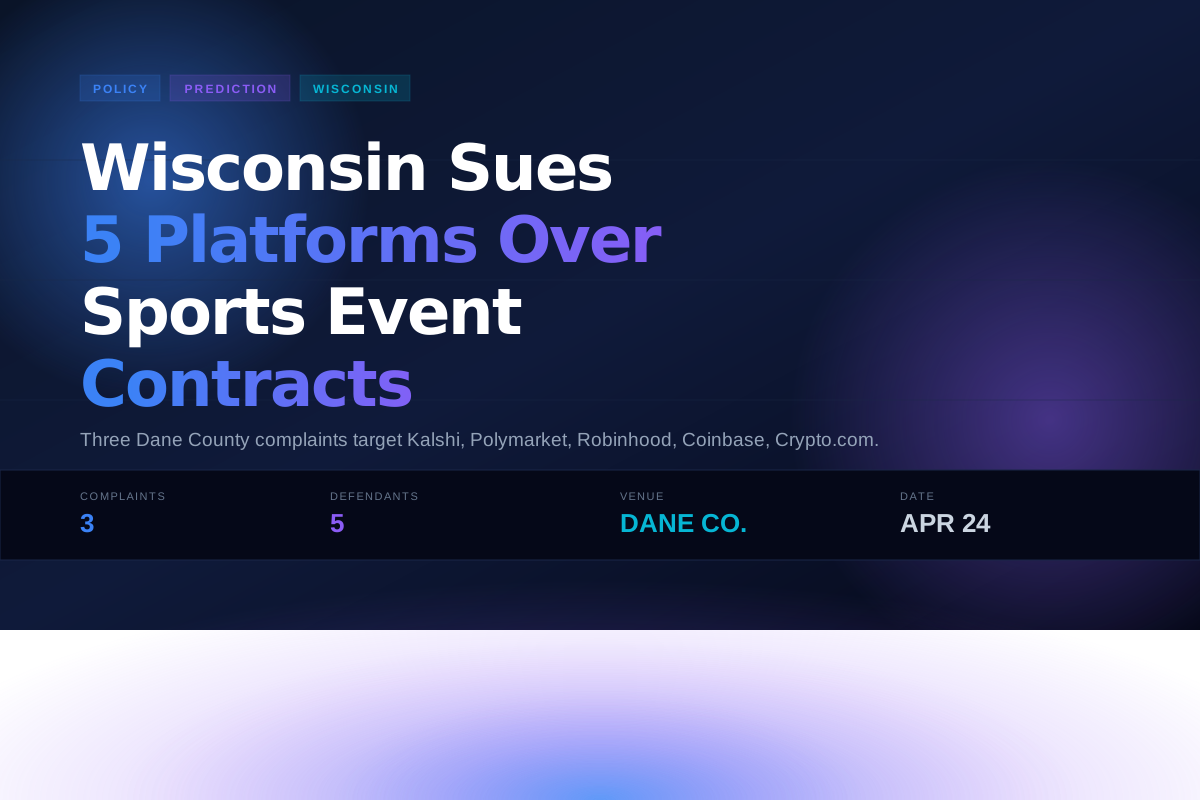
The Wisconsin Department of Justice filed three complaints in Dane County Court on April 24, alleging that the sports event contracts offered by Kalshi, Polymarket, Robinhood, Coinbase, and Crypto.com violate Wisconsin's commercial gambling prohibition.
How the complaints are sliced
Wisconsin split its filings: the first complaint targets Crypto.com and its derivatives arm; the second names Polymarket and affiliated entities; the third names Kalshi alongside Robinhood and Coinbase, both of which route prediction-market orders through Kalshi. The state is seeking preliminary and permanent injunctions against offering sports-related event contracts to Wisconsin customers.
The platforms' own marketing as evidence
The filings cite the platforms' public positioning. Court documents reference a Kalshi Instagram ad calling its service "The First Nationwide Legal Sports Betting Platform" and a Polymarket description of its venue as a place "where people can bet on the outcome of future events." Defendants will lean on CFTC pre-emption — the argument that designated contract markets fall under exclusive federal commodities oversight. The strategy already faces headwinds: on April 3, the CFTC sued Connecticut, Arizona, and Illinois over the same state-versus-federal fault line.
BlockAI Take
The mismatch in the regulatory record is now too big to handwave. CFTC-regulated DCMs sell themselves to the CFTC as commodities exchanges and to consumers as sports betting platforms. Until a federal court explicitly rules on pre-emption — likely via the CFTC's own April 3 suits — every state attorney general has a low-cost, high-publicity opening to file. Expect three or four more state DOJs to follow Wisconsin within 60 days. The platforms most exposed are the ones whose marketing copy reads least like "regulated commodities trading."
Daily Web3 × AI intel, straight to your inbox. Subscribe to BlockAI News.
How we report: This article cites primary sources, regulatory filings, and on-chain data where available. BlockAI News uses AI tools to assist with research and first-draft generation; every article is reviewed and edited by a human editor before publication. Read our full How We Report page, Editorial Policy, AI Use Policy, and Corrections Policy.