SEC's 'Innovation Exemption' Could Let Apple and Tesla Trade Onchain — Without the Companies' Consent
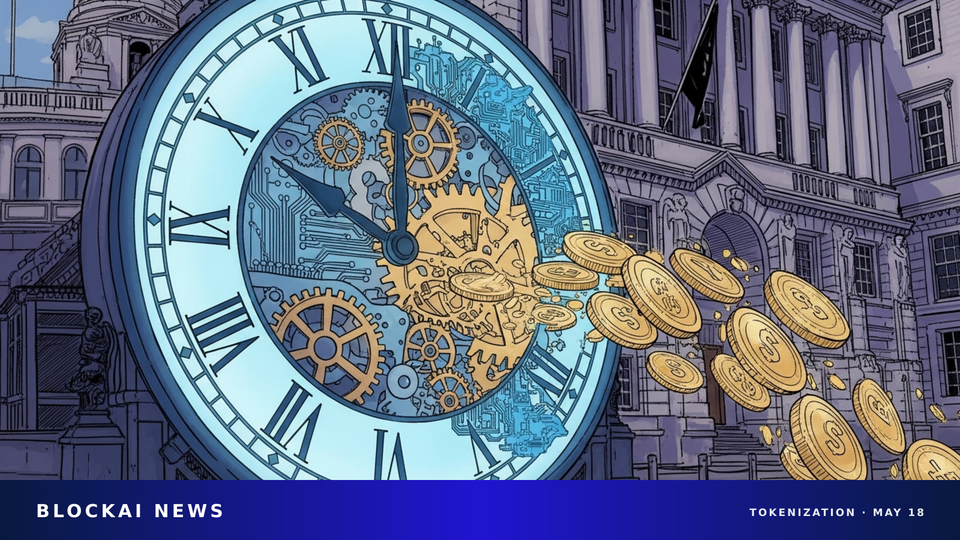
The SEC is finalizing an 'innovation exemption' that would let crypto venues trade onchain versions of US stocks under lighter rules. The detail Wall Street is quietly worried about: third parties can mint the tokens, no Apple or Tesla signature required.

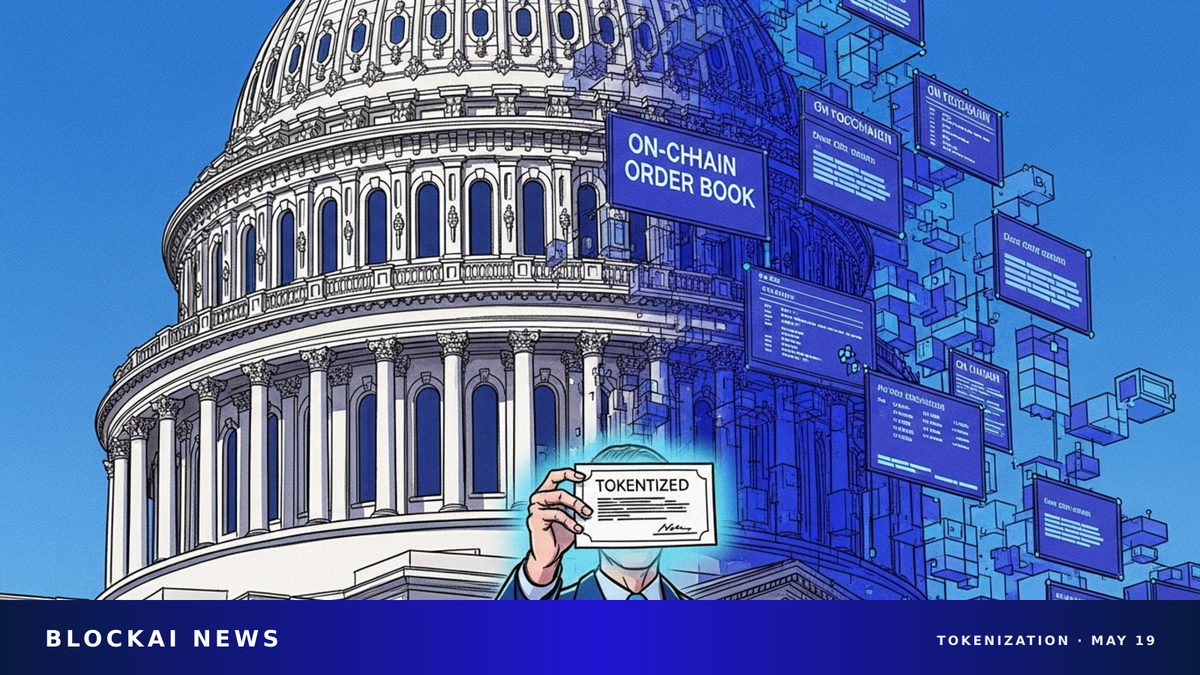
The most consequential US securities-market rule change of 2026 will not arrive as a 700-page rulebook. It is being framed as an exemption, which under SEC Chair Paul Atkins is a polite word for "permission to skip the registration step." The agency is expected to release its long-trailed "innovation exemption" for tokenized stocks within days, and the most quietly explosive piece of the framework is one its supporters keep tucked at the bottom of their FAQs: a third party can mint a token that tracks a US-listed equity onto a public blockchain, and the issuer of the underlying stock does not need to be in the room.
TL;DR
- The SEC, under Chair Paul Atkins' "Project Crypto" agenda, is finalizing an innovation exemption that would let crypto-native venues and DeFi protocols offer onchain trading of tokens linked to US-listed equities — without first registering as broker-dealers or national securities exchanges.
- The most striking design choice: the exemption is expected to cover third-party-issued tokens backed by public shares, with no requirement that the underlying issuer (Apple, Tesla, NVIDIA, et al.) consent to or participate in the tokenization. Holders would get price exposure, not voting rights and often not dividends.
- The framework includes a 12- to 36-month grace window, exposure limits and disclosure requirements. It sits beside — not inside — the March/April Nasdaq and NYSE approvals that used the DTCC tokenization pilot, and it is the more aggressive of the two regulatory paths now open onchain.
What the exemption actually does
Under existing US law, an order book that matches buyers and sellers of a security is either a national securities exchange or an alternative trading system. Both require registration with the SEC, a national bank-grade compliance stack, and gatekeepers who answer the phone when something breaks. The innovation exemption is engineered to remove that requirement for a narrowly defined, time-limited window: an eligible venue can list tokens backed by public-company stock and let users trade them onchain, with the SEC explicitly waiving the broker-dealer or exchange registration that would otherwise apply.
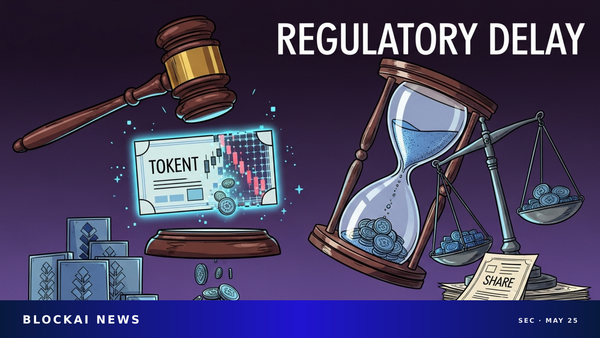
The exemption does not eliminate all rules. Under the framework as previewed at the SEC's Investor Advisory Committee and in the Corporation Finance staff statement, eligible venues are expected to commit to position limits per user, periodic disclosures about the underlying collateral structure, oracle integrity requirements for price feeds, and a hard sunset clause. Most descriptions of the draft put the grace window between 12 and 36 months, after which a venue must either demonstrate "sufficient decentralization" to drop out of the broker-dealer perimeter or finish a full registration. It is, in spirit, the same maneuver the SEC used in the JOBS Act crowdfunding exemption a decade ago: lower the bar for a specific innovation while keeping the right to lift it back up.
What is new — and is causing the loudest reaction inside Wall Street compliance teams — is that the exemption is being drafted to accommodate third-party token issuance. A non-bank, non-issuer entity can wrap an Apple share, an NVIDIA share, an MSTR share, into a token contract on Ethereum or Solana, and list it on a venue inside the exemption. The underlying company is informed but not asked. Coinbase, Robinhood Crypto, decentralized exchanges and, by some readings of the draft, automated market-maker pools, are the obvious commercial winners. The reading is consistent with what Crypto Briefing's sourcing first reported and with the broader contours of the Bloomberg story the rest of the desk has been chasing.
BREAKING: The SEC is set to release its so-called "innovation exemption" for tokenized stocks which will pave the path for trading digital versions of securities, per Bloomberg.
— The Kobeissi Letter (@KobeissiLetter) May 18, 2026
Details include:
1. In a "surprise move," the SEC is leaning toward allowing the trading of…
What an onchain "share" actually is
Treat this as the question the retail bid will get wrong first. A token issued under the exemption is, in most third-party structures, a price-tracking instrument with a backstop of real shares held by a custodian. It is not the share itself in the traditional registered sense. The corporate actions calendar — annual meetings, proxy votes, class-action notices, dividend record dates — runs through the formal shareholder of record at the transfer agent. If a custodian holds 100 Apple shares against 100 wrapped tokens onchain, that custodian is the registered shareholder. Whether the custodian passes through dividends, voting rights, or anything else depends on the token's terms of service, not on US securities law.
That mechanic is why the exemption is structurally different from the path Nasdaq took. Under DTCC's collateral appchain plans and the Nasdaq-NYSE tokenization track approved earlier this year, the token is the share — settlement runs through DTCC's tokenization pilot, and the token's holder is the legal owner of the underlying security. The innovation exemption is more permissive and more abstract: it is a license to trade price exposure on public blockchains, with the legal ownership question left to private contract. Both paths are now open. They will not produce the same investor experience.
That gap is the headline risk for retail. A trader who bought 1 wrapped NVDA on a DEX during the AI-cap-ex rally would have ridden the same chart as a registered shareholder, but would not have been on the cap table, would not have voted on stock splits, and could not have tendered into a hypothetical Broadcom-style acquisition. Under the exemption, none of that needs to be explained in fine print at the same level of detail as a brokerage account, because the venue is not a broker-dealer. The SEC's answer is that disclosure obligations will be tailored to the wrapper type. The market's answer will likely be a year of confused first-time tokenized-stock holders learning what their JSON metadata actually entitles them to.
Why the issuers are unusually quiet
If you have followed the past five years of SEC enforcement, the surprising silence from the Magnificent Seven and their advisors is the second-most-interesting story here. The natural reaction to "anyone can wrap our stock onto a public chain without asking" should be a flurry of letters to the SEC and corporate-secretary memos. Instead, the issuers are mostly waiting. Three reasons.
First, the precedent already exists in less visible form. Synthetic equity exposure has been available offshore for years — from FTX's pre-collapse tokenized stocks to current Bittrex-Global-style structures and onchain perp DEXs offering equity index swaps. The SEC's exemption brings that activity inside a US-supervised wrapper rather than creating new exposure that did not exist before. Second, listed companies have learned from the ETF era: friction against new wrappers tends to compress the discount between the new instrument and the underlying, but it does not change the long-run cost of capital. Tokenized markets, well-policed, increase liquidity around earnings without diluting issuer control. Third, and most importantly, voting and dividend mechanics still run through registered owners. A growing offchain token base does not show up in proxy fights unless the custodian model changes — and the SEC's draft is built to make sure it does not.
The flip side is that the exemption hands a non-trivial business to whichever venue moves first. If Coinbase lists a tokenized SPY tracker before Robinhood, the order flow that builds in the first six months will be sticky. Onchain liquidity tends to concentrate on the first credible venue to clear a regulatory bar — see the dominance pattern of the first set of spot Bitcoin and Ethereum retail rails after the ETF approvals. Expect public-equity tokens to follow the same curve.
How this interacts with the rest of the onchain stack
The exemption does not exist in isolation. It is the third major regulator action this month that pushes the boundary between registered TradFi and permissionless onchain finance. The UK FCA and Bank of England's joint tokenisation vision moved the UK from sandbox pitch to market infrastructure. The Bank of England's RTGS modernization is laying the rails for near-24/7 wholesale settlement. The CLARITY Act in Washington is putting onchain AI agents into a sandbox of their own. Together they sketch a market structure in which the same instrument can settle on three rails — DTCC, a tokenization-pilot exchange, and a permissionless smart contract — and the difference between those rails is mostly about what the holder is legally entitled to, not what the chart looks like.
That fragmentation is real opportunity and real risk. For market-makers, the basis trade between a registered DTCC-tokenized share and a third-party-wrapped exemption token is a new revenue line. For oracles, the exemption's price-feed integrity requirements will be the single biggest enterprise contract in onchain data this year — and the venue that picks the wrong oracle stack on day one will not survive its first late-print Friday. For DEX aggregators, the listing logic gets more complicated overnight: same ticker, different wrapper, different rights, different fee. The teams that build a clean disclosure layer between those wrappers will set the consumer standard.
Beyond the headlines. The Apple-without-Apple's-consent detail is the line that will travel. But the substantive change is quieter: the SEC has decided, on paper, that a registered exchange is no longer the only place an American can trade an American stock. That is the door this exemption opens. Whether the door closes again at the end of the grace window, or simply becomes the default route for everything below the Nasdaq listing tier, will be the most important policy question of the back half of this decade.
Frequently Asked Questions
What is the SEC's 'innovation exemption' for tokenized stocks?
It is a temporary regulatory carve-out being prepared under SEC Chair Paul Atkins' 'Project Crypto' initiative. The exemption would let crypto-native venues and decentralized protocols offer onchain trading of tokens representing US-listed equities without obtaining full broker-dealer, alternative trading system or national securities exchange registrations. Officials expect to attach exposure limits, disclosure rules and a 12- to 36-month grace window before issuers must either show meaningful decentralization or come into full compliance.
Can a third party issue a token of Apple or Tesla stock without the company's permission?
Under the framework as currently reported, yes — that is the most striking design choice. The exemption would cover tokens backed by publicly traded shares even when the underlying company has not consented to the tokenization. Holders of those tokens would generally not receive voting rights or, in many cases, dividends; they would hold price exposure on a blockchain rail, not full shareholder status.
How is this different from Nasdaq and NYSE's tokenized trading approvals earlier in 2026?
Nasdaq's March 2026 approval and NYSE's April 2026 approval kept tokenized trading inside the existing exchange perimeter, using the DTCC tokenization pilot for settlement. The innovation exemption is aimed at venues outside that perimeter — crypto exchanges like Coinbase, decentralized AMMs, and onchain order books — and would let them list tokenized US equities without first becoming registered broker-dealers or exchanges. It is, deliberately, a parallel rail.
Reviewed by Jason Lee, Founder & Editor-in-Chief, BlockAI News.
Sources
Primary sources
- SEC.gov — Chair Paul Atkins, "American Leadership in the Digital Finance Revolution" (July 31, 2025)
- SEC.gov — Division of Corporation Finance, Statement on Tokenized Securities (January 28, 2026)
- Crowdfund Insider — Investor Advisory Committee draft approach (March 2026)
- Crypto Briefing — SEC poised to release exemption for third-party tokenized shares
- Bitcoin.com News — Tokenized US stocks get new regulatory framework
- @KobeissiLetter — BREAKING summary thread on the innovation exemption (X)
How we report: This article cites primary sources, regulatory filings, and on-chain data where available. BlockAI News uses AI tools to assist with research and first-draft generation; every article is reviewed and edited by a human editor before publication. Read our full How We Report page, Editorial Policy, AI Use Policy, and Corrections Policy.