Reuters: Iran's Largest Crypto Exchange Was Founded by the Country's Political Elite — IRGC Used It to Move Millions
Reuters found Nobitex — Iran's largest exchange handling ~70% of national crypto volume — was founded by the politically connected Kharrazi family, with ties to Iran's supreme leaders since 1979. Blockchain forensics linked it to tens of millions tied to the IRGC and sanctioned Bank Markazi.

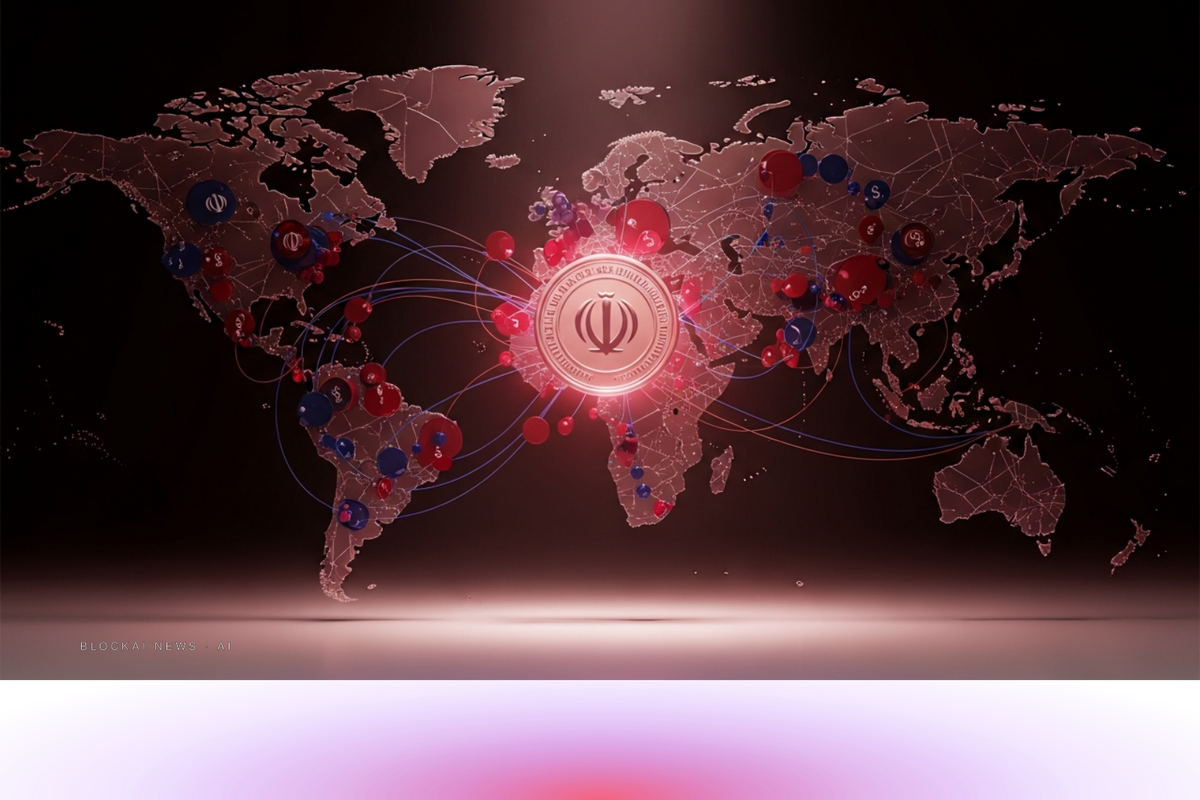
A Reuters special investigation published May 1 found that Nobitex — Iran's largest cryptocurrency exchange, which by industry estimates handles approximately 70% of Iran's domestic crypto volume — was founded by brothers Ali and Mohammad Kharrazi, who operate under an alternative family name. The Kharrazi family represents three generations of close political and religious ties to Iran's supreme leadership since the 1979 Islamic Revolution; family members have held advisory, diplomatic, and clerical roles under both Khamenei and his successor. Reuters built its investigation on blockchain analysis, Iranian corporate registry documents, and interviews with former Nobitex employees and international financial crime investigators. The investigation found that Nobitex processed tens to hundreds of millions of dollars in transactions linked to sanctioned entities including Iran's central bank (Bank Markazi) and the Islamic Revolutionary Guard Corps (IRGC) — both designated by the U.S. Treasury's Office of Foreign Assets Control (OFAC).
The Kharrazi Family's Architecture Inside Nobitex
Nobitex was founded in 2018. Ali and Mohammad Kharrazi registered the company under a modified form of the family name; Reuters obtained corporate registry filings placing them in the ownership chain. The Kharrazi family's political profile is substantial: senior members have served as Iranian foreign minister, as religious advisers to Khamenei, and in diplomatic capacity across the Gulf. The third generation — the Nobitex founders' cohort — came of age inside that network and built a company that grew to become the country's dominant crypto infrastructure without attracting Western media attention until now.
Nobitex responded to Reuters' pre-publication inquiries by stating that it has never had any agreement with any Iranian government agency and has in fact faced repeated operational restrictions from the Iranian government itself: office raids, domain blocking, and banking gateway closures. The exchange said these restrictions are evidence it operates independently of state direction. Critics and investigators note that the restrictions could also reflect internal competition between state factions, not arms-length distance between Nobitex and the broader power structure.
Iran's crypto market is structurally unusual: the country has officially barred its citizens from using foreign crypto exchanges, driving an estimated 12–15 million Iranians to domestic platforms. Nobitex's 70% market share in that constrained environment represents an extraordinary concentration of financial infrastructure in the hands of a single, politically connected entity.
The Blockchain Evidence and Its OFAC Implications
Reuters' financial crime investigators traced wallet clusters associated with sanctioned entities — specifically Bank Markazi and IRGC-linked addresses — through transaction chains that resolved to Nobitex custody addresses. The dollar figures cited in the investigation represent a lower-bound estimate based on publicly traceable on-chain flows; the full volume of indirect or layered transactions is likely higher.
Both Bank Markazi and the IRGC are OFAC-designated entities. Under U.S. law, any U.S. person or institution that knowingly or unknowingly processes transactions involving OFAC-designated parties faces civil and criminal liability. The secondary sanctions exposure extends beyond U.S. actors: any non-Iranian exchange (Binance, OKX, Kraken, Coinbase) that processed funds originating from Nobitex — even indirectly, through layered transfers — may have unwittingly handled OFAC-designated money. That risk triggers mandatory compliance audits and potential voluntary self-disclosure obligations at every major exchange's legal team.
The investigation also raises questions about the due diligence pipelines of fiat on-ramps in jurisdictions where Iranians commonly access global finance — the UAE, Turkey, and Georgia all have active Iranian diaspora communities and crypto-to-fiat service providers that may have accepted Nobitex-sourced funds.
What to Watch
Reuters investigations of this type have historically triggered or accelerated formal OFAC action. In 2022, Reuters' Tornado Cash reporting preceded OFAC's designation by weeks. Watch for three signals in the coming 30–60 days. First, an OFAC designation of Nobitex: if issued, it would be the most consequential crypto-exchange sanctioning since Tornado Cash in 2022 and would force every global exchange to freeze assets connected to Nobitex addresses. Second, compliance responses from major exchanges: Binance, OKX, Kraken, and Coinbase will be reviewing their Iranian transaction data against Nobitex address clusters; watch for any voluntary self-disclosure announcements or informal OFAC consultation filings. Third, Iranian government response: the Iranian state could move to nationalize Nobitex, disavow it, or protect its founders under political cover. Which path the government takes will signal whether Nobitex's political connections are an asset or a liability in the current moment.
Daily Web3 × AI intel, straight to your inbox. Subscribe to BlockAI News.
How we report: This article cites primary sources, regulatory filings, and on-chain data where available. BlockAI News uses AI tools to assist with research and first-draft generation; every article is reviewed and edited by a human editor before publication. Read our full How We Report page, Editorial Policy, AI Use Policy, and Corrections Policy.