Europe's Banks Are Going All-In on Crypto Under MiCA
KBC, BBVA, DZ Bank and Societe Generale are now wiring BTC and ETH directly into existing brokerage and payments rails under MiCA. EU crypto ownership is projected to hit ~25% by 2030, up from 9% in 2024.

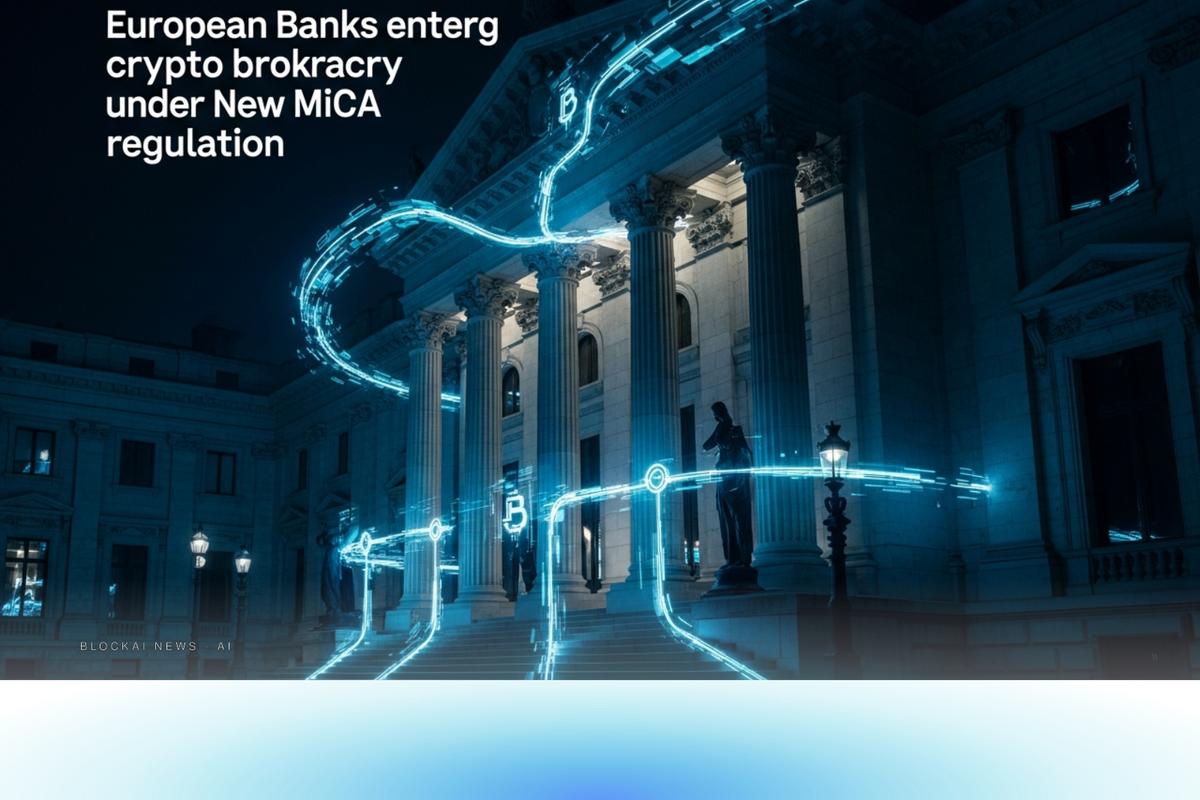
Europe's banking incumbents are quietly turning into crypto distribution channels, with KBC, BBVA, DZ Bank and Societe Generale all bolting Bitcoin and Ether trading onto existing brokerage and payments products under MiCA.
What MiCA changed
The CoinDesk opinion piece argues MiCA's biggest impact is operational: it collapsed the patchwork of EU digital-asset rules into a single, passportable framework. A bank licensed in Belgium, Spain, Germany or France can now offer crypto trading under the same regulatory logic it already applies to securities. The internal question shifted from "should we build a new digital-asset product?" to "should we add digital assets to the product we already have?"
The numbers and the moves
Belgium's KBC, the country's largest bank-insurance group, has switched on regulated BTC and ETH trading for retail investors through its self-directed brokerage Bolero. EU digital-asset ownership is projected to reach roughly 25% by 2030, up from 9% in 2024, with that growth driven largely by MiCA and bank-led rollouts. Crucially, in the bank-distribution model the customer relationship stays with the bank, not the exchange.
Our Take
This is the inverse of the U.S. picture, where exchanges are still the front door. If KBC and BBVA can stitch crypto into the same UI customers use for ETFs and SEPA payments, exchanges in Europe lose their structural advantage in onboarding. Watch which bank ships the first integrated trading-payments-custody product end-to-end — that's the one that resets the competitive map.
Daily Web3 × AI intel, straight to your inbox. Subscribe to BlockAI News.
How we report: This article cites primary sources, regulatory filings, and on-chain data where available. BlockAI News uses AI tools to assist with research and first-draft generation; every article is reviewed and edited by a human editor before publication. Read our full How We Report page, Editorial Policy, AI Use Policy, and Corrections Policy.