NYSE Tokenized Stocks Rule Goes Live: Russell 1000 and Major ETFs Now On-Chain
The SEC's April 17 approval clock just hit zero. NYSE's tokenized securities rule is operative — Russell 1000 stocks, S&P 500 and Nasdaq-100 ETFs, and Treasury products can now trade on-chain on the same order book as their paper twins. First real token-settled fills expected Q3.

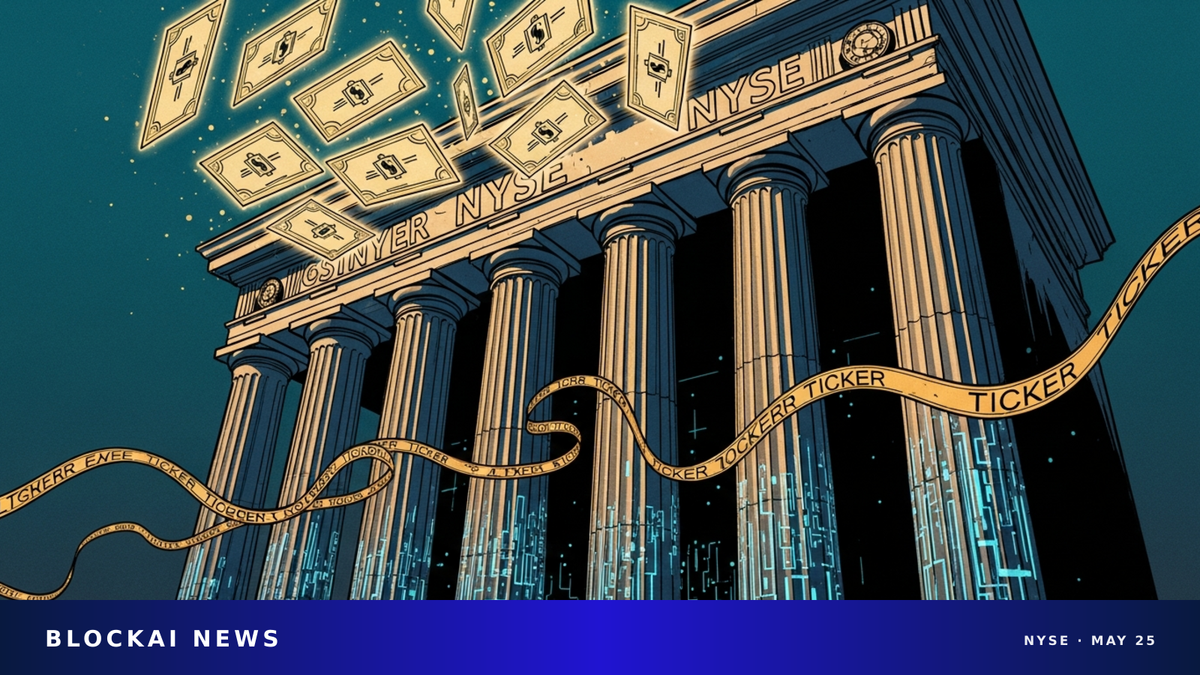
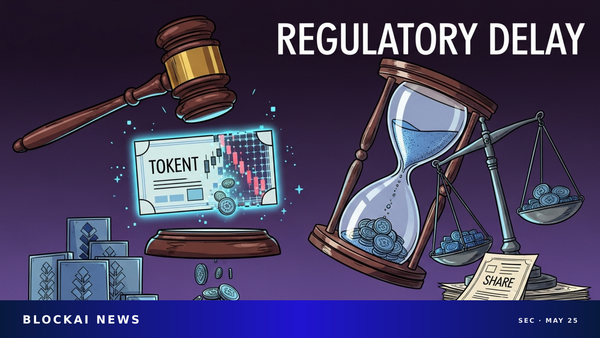
The 30-day clock that started ticking on April 17 has now stopped. The U.S. Securities and Exchange Commission's approval of SR-NYSE-2026-17 — the rule that lets the New York Stock Exchange list and trade tokenized versions of Russell 1000 stocks, major ETFs and Treasury products — moved into operative status across the Big Board and its sister venues this week. There is no celebratory bell, no first token-settled trade yet, but the legal scaffolding for on-chain equities at America's largest exchange is now live, and that is a milestone the RWA market has been pricing in for a year.
TL;DR
- NYSE's tokenized securities rule is operative — Russell 1000 stocks, S&P 500 and Nasdaq-100 ETFs, and U.S. Treasury bills/bonds are eligible.
- Tokenized and conventional shares share the same ticker, the same CUSIP and the same order book; settlement runs in parallel — T+1 via NSCC/DTC today, T+0 on-chain when the platform spins up.
- Securitize is the named first digital transfer agent. First real token-settled trades are expected in Q3 2026, with BlackRock, OKX, BNY and Citi all positioned to participate.
The 30-Day Countdown That Just Hit Zero
The SEC granted SR-NYSE-2026-17 immediate effectiveness on April 17, 2026, publishing the order under Release No. 34-105260. NYSE's rulebook required at least 30 days of member notice before any tokenized trading could go operative — a window engineered to let broker-dealers reconfigure connectivity, custodians update reference data, and DTCC's Tokenization Pilot align. That window closed in the last week of May. NYSE Arca, NYSE American, NYSE National and NYSE Texas filed parallel rule changes through April and May (each becoming immediately effective on filing, per Federal Register entries dated May 5–15), meaning every NYSE-group venue is now formally blockchain-compatible at the rulebook layer.
What's eligible at launch is deliberately conservative. The Russell 1000 covers roughly 93% of investable U.S. equity market capitalization — Apple, Microsoft, Nvidia, the lot — but it excludes microcaps. Index ETFs tracking the S&P 500 and Nasdaq-100 are in. U.S. Treasury bills, notes and bonds are in. Single-stock leveraged products, OTC issues and most ETPs are not. The design echoes the SEC's innovation exemption framework published last week, which gives crypto-native venues a parallel path to on-chain equities — but with a much narrower asset universe and tighter broker-dealer wraparound.
Crucially, NYSE's rule does not invent a new security. A tokenized AAPL share is an AAPL share — same CUSIP, same ticker, same voting and dividend entitlement, same DTC eligibility for the conventional form. The token is a representation, minted by a registered transfer agent against a one-for-one custodied basket. That is the difference between this rule and the offshore "mirror" tokens (Backed's bAAPL, the older FTX-era constructs) that traded as derivative-like exposures with no claim on the underlying.
Today, NYSE is proud to announce the development of a platform for trading and on-chain settlement of tokenized securities.
— NYSE 🏛 (@NYSE) January 19, 2026
NYSE’s new digital platform will enable tokenized trading experiences, including 24/7 operations, instant settlement, orders sized in dollar amounts, and…
Who Lines Up to Issue First
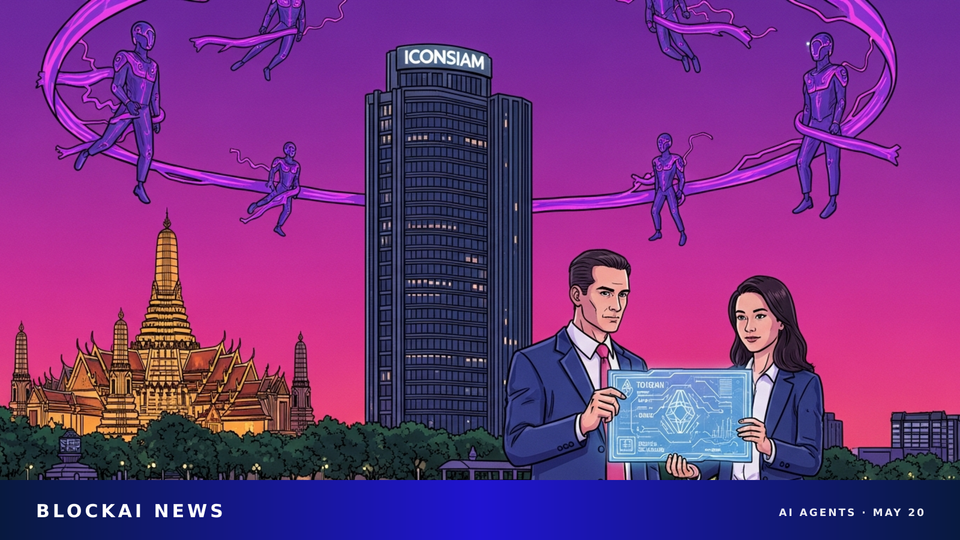
The plumbing was telegraphed months ago. In January, NYSE's parent Intercontinental Exchange announced the Digital Trading Platform — a new venue that bolts the exchange's Pillar matching engine onto a multi-chain post-trade layer, with stablecoin funding rails and dollar-denominated order sizing. In March, ICE signed a memorandum of understanding with Securitize, naming it the first digital transfer agent eligible to mint blockchain-native securities for corporate and ETF issuers on the platform. Two weeks later, ICE took a strategic stake in OKX, giving the exchange's 120 million accounts a path into NYSE tokenized equities — a deliberate move to seed retail demand outside the U.S. before domestic broker pipes are fully reconfigured.
The numbers behind the platform are not hypothetical. The broader tokenized real-world asset market crossed $27.5 billion in May, with tokenized U.S. Treasuries alone above $15 billion and tokenized equities — almost entirely offshore today — at roughly $950 million. Ondo Global Markets currently controls about 70% of that equity slice via non-U.S. retail flow, a position that compresses materially the moment a domestic NYSE listing prints. Securitize's own platform AUM crossed $4 billion in the same window, helped by BlackRock's BUIDL Treasury fund continuing to take share from competing money-market tokens. The whole stack is reorganizing around the assumption that the U.S. market opens to on-chain equity in Q3.
Securitize's role is the linchpin. Under the Securities Exchange Act, every security needs an authoritative transfer agent. For tokenized issues, that agent must reconcile the on-chain ledger with the official shareholder record, process corporate actions (splits, dividends, M&A), and burn/mint tokens to match conventional-form conversions. Securitize cleared a FINRA-supervised regulatory stack expansion in early May that explicitly added these functions, and the firm posted record Q1 revenue of $19.5 million, up 39% year-over-year, driven by BlackRock's BUIDL and the NYSE engagement.
BlackRock sits one layer above. Its tokenization stack already runs at scale via the BUIDL Treasury fund, and the asset manager filed in May to create on-chain shares for a $7 billion money-market fund using Securitize as transfer agent. If BlackRock chooses to tokenize an existing ETF — IVV (S&P 500) or AGG (aggregate bonds) being the obvious candidates — on the NYSE Digital Trading Platform, that would be the headline first issue. Bank of New York Mellon and Citi are named in the platform release as institutional clearinghouse partners.
The competitive geography is now clear. Robinhood is shipping tokenized U.S. equities to European retail on its Arbitrum-based Robinhood Chain. Ondo Global Markets routes non-U.S. flow through its own 200+ token catalog. Backed serves DeFi-native venues. NYSE is the only one of the four pipes that can route directly to a U.S. retail brokerage account with no jurisdictional fork — which is exactly why the rule was written narrowly enough to keep DTC, the SEC and FINRA all comfortable on day one.
Why T+0 Changes Everything Above DeFi
The market structure shift is less about new asset classes and more about settlement physics. Today, an institutional equity trade settles T+1 through the National Securities Clearing Corporation: trade Monday, settle Tuesday, with intra-day margin posted against the open position. A tokenized version on NYSE's Digital Trading Platform settles at the block — call it T+0, more accurately "T+12 seconds." That collapses two pieces of cost simultaneously: the capital tied up as margin in the netting window, and the operational risk of broken settlements (the cost DTCC and Chainlink's collateral appchain are also racing to compress).
For prime brokers running a tokenized equity inventory against a stablecoin liability, that is a balance-sheet event, not a software upgrade. Goldman, Morgan Stanley and JPMorgan have all signaled willingness to onboard tokenized equity flow if (a) the asset is fungible with conventional form, (b) the on-chain leg clears against a regulated stablecoin, and (c) margin treatment is harmonized with conventional positions. The April 17 order does not solve (b) or (c) — that is still policy work in front of the OCC and Fed — but it removes the trading-venue question, which had been the missing piece since the CLARITY Act-era institutional stack started locking in.
Globally, the move tightens a regulatory race. The U.K. is mid-consultation on its wholesale tokenisation framework via the FCA and Bank of England; Singapore's MAS Project Guardian is running atomic FX-DvP pilots; Switzerland's SDX has been running tokenized bonds for two years. None of those venues has anything close to NYSE's listed-equity surface area. The first time a U.S. blue-chip ticker prints on a public chain at NYSE's open, that becomes the global reference price for tokenized equity — and the global benchmark for how 24/7 trading interacts with a closed primary market.
What we are not getting at launch: 24/7 trading of the tokenized form (NYSE has signaled extended hours first, full 24/7 later), permissionless DeFi composability (the tokens will sit in regulated wallets with whitelisted transfer logic), or any path for retail self-custody of NYSE-issued tokens in the U.S. (that question is parked at the SEC's exemption desk). Whoever expected a Compound-style market for tokenized AAPL on day one will be disappointed. Whoever expected the largest exchange in the world to install a blockchain rulebook in 11 months — they got it.
Key Takeaways
- The April 17 SEC order was the symbolic moment; the rule going operative this week is the engineering moment.
- Tokenized and conventional shares share CUSIP, ticker, voting rights and DTC eligibility — no new security, just a new representation.
- From here, the constraint is no longer regulatory but commercial — whether a brand-name issuer (BlackRock IVV most likely) takes the plunge in Q3.
What to Watch. The next 90 days. Three signals matter — which issuer files first for a tokenized form (BlackRock IVV is the consensus guess), whether DTCC's parallel Smart NSCC pilot produces a working dual-ledger reconciliation by July, and whether the SEC's innovation exemption produces the first U.S. crypto-native venue cleared to trade alongside NYSE. The on-chain equity market structure of 2027 is being built in this window.
Frequently Asked Questions
What does the NYSE tokenized securities rule actually allow?
Under SR-NYSE-2026-17, approved by the SEC on April 17, 2026 with immediate effectiveness, the NYSE can list and trade blockchain-issued tokens that represent eligible Russell 1000 stocks, major index ETFs (including S&P 500 and Nasdaq-100 trackers), and U.S. Treasury products. Tokenized and conventional shares trade on the same order book under the same CUSIP, with the same execution priority and shareholder rights. The token is a representation, minted by a registered transfer agent against a one-for-one custodied basket.
When will the first tokenized stock actually trade on NYSE?
The rule went operative in late May 2026, but NYSE has not yet issued the first token. Industry guidance points to Q3 2026 for the first token-settled fills, once Securitize (the named digital transfer agent) and NYSE's Pillar matching engine complete their joint integration and a corporate or ETF issuer opts in to tokenize. BlackRock is the consensus first issuer, with IVV (S&P 500) and AGG (aggregate bonds) the obvious candidate tickers.
Does this replace the existing stock market?
No. The launch is additive, not a replacement. Each eligible security keeps its traditional NSCC/DTC-cleared form and gains an optional on-chain form that is legally fungible with it. The exchange's goal is to compress settlement, enable stablecoin funding and 24/7 dollar-denominated orders — not to deprecate paper rails. Permissionless DeFi composability is not in scope at launch; tokens sit in regulated wallets with whitelisted transfer logic.
Reviewed by Jason Lee, Founder & Editor-in-Chief, BlockAI News.
Sources
Primary sources
- SEC Release No. 34-105260 — SR-NYSE-2026-17 final order
- Federal Register — NYSE tokenized securities rule notice
- Intercontinental Exchange — NYSE Tokenized Securities Platform
- Intercontinental Exchange — NYSE × Securitize MoU
- NYSE on X — Digital Trading Platform announcement
From BlockAI News
- SEC innovation exemption — tokenized stocks third-party issuance
- DTCC × Chainlink collateral appchain
- Digital Asset $300M raise at $2B valuation (Canton)
- UK FCA + BoE tokenisation framework
- Institutional crypto regulatory stack 2026
How we report: This article cites primary sources, regulatory filings, and on-chain data where available. BlockAI News uses AI tools to assist with research and first-draft generation; every article is reviewed and edited by a human editor before publication. Read our full How We Report page, Editorial Policy, AI Use Policy, and Corrections Policy.