Hong Kong's HKDAP Clears Ethereum Mainnet Test Ahead of Q2 Stablecoin Launch
Anchorpoint, OSL and PantherTrade pushed HKDAP through a full mint-transfer-redeem cycle on Ethereum mainnet ahead of a Q2 launch. The choice of L1 over an L2 — and the bank-anchored design — tells you exactly what kind of stablecoin Hong Kong wants.

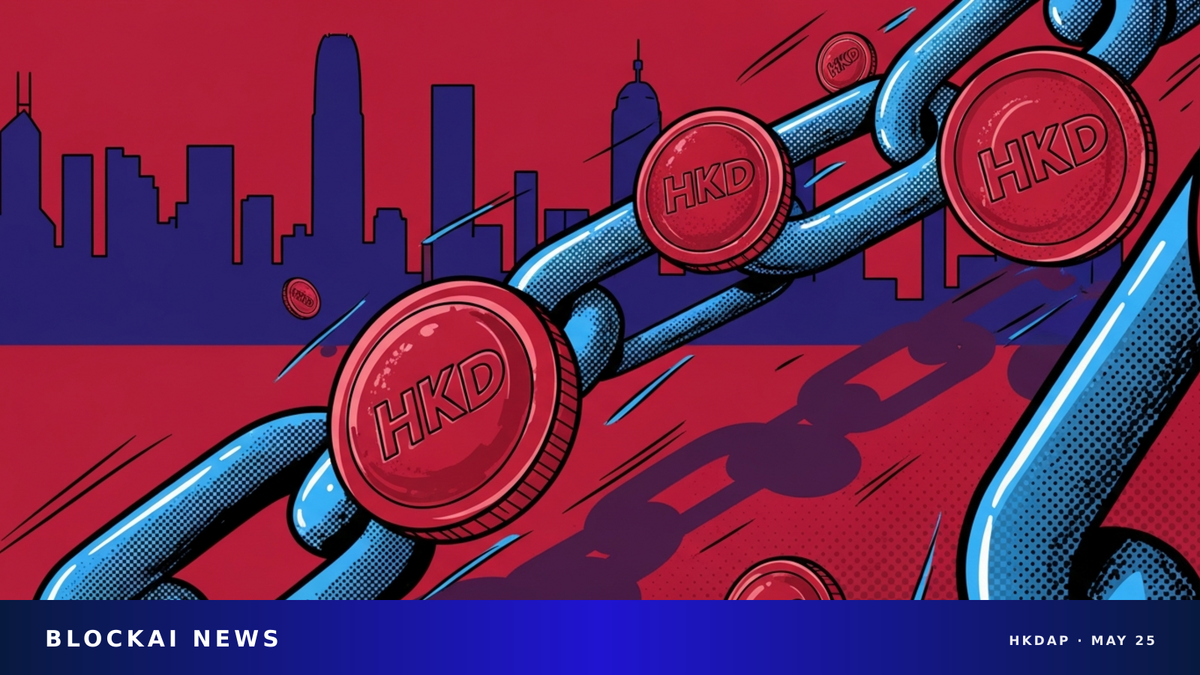
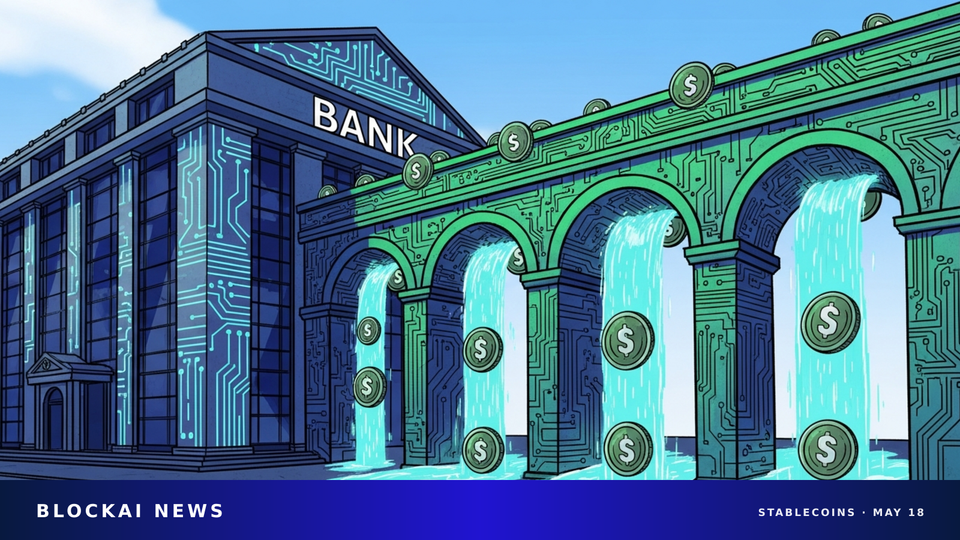
Hong Kong's first regulator-approved stablecoin just rehearsed its full life cycle on Ethereum mainnet — and it did so on layer one, not on a rollup. Anchorpoint Financial, the Standard Chartered-led joint venture that holds Hong Kong's first stablecoin issuer licence, completed test transfers of HKDAP ("HKD At Par") together with OSL Group and Futu's licensed trading arm PantherTrade. The mint, the transfer, and the full redemption all cleared. Phased issuance is now scheduled before the end of Q2 2026.
TL;DR
- Anchorpoint, OSL and PantherTrade ran HKDAP through a full mint-transfer-redeem cycle on Ethereum L1 — no L2, no testnet.
- Anchorpoint holds licence FRS01 from the HKMA; HSBC holds the other inaugural licence and is targeting H2 2026 inside PayMe.
- HKDAP is a bank-anchored HKD rail, not a USDT/USDC competitor — it is built for cross-border B2B, tokenized settlement and supply chain finance.
The Test Ledger That Just Cleared
The detail buried in OSL's press release is what gives the test its weight. According to OSL Group (HKEX:863), the exercise covered "the lifecycle of HKD fiat funding into reserve assets, enabled by Standard Chartered's banking infrastructure and institutional trust services, fully backing the minting and transfer of HKDAP." All HKDAP minted during the test was redeemed back into bank balances after the transfers completed. That is the regulator's preferred dress rehearsal: every token issued can be retired, the reserve never falls below 1:1, and the chain of custody between fiat reserve, mint authority and on-chain holder is auditable end to end.
OSL's chief executive Kevin Cui framed the move in payments terms — "our HKDAP test trades align with OSL's mission to make money move as freely as information" — while Anchorpoint CEO Dominic Maffei called the run "an important first step." That language is deliberately unsexy. Compare it to the marketing of most retail stablecoins and you can see what Hong Kong is trying to build: not a meme-able dollar substitute, but a wholesale settlement asset that happens to live on a public ledger.
PantherTrade's presence is the other tell. Futu's licensed VATP unit sitting in the test alongside OSL means HKDAP will, from day one, be tradable inside two of Hong Kong's regulated exchanges rather than only on offshore venues. That mirrors the path the Bank of England has been laying out for tokenized sterling settlement, which we covered in our analysis of RTGS/CHAPS moving toward 24/7 stablecoin compatibility: a bank-issued token that has to clear through regulated venues, not a wildcat token chasing yield.
We’re excited to share that Anchorpoint, a joint venture established by @StanChart (Hong Kong), HKT, and us at @animocabrands, today was one of two being granted a stablecoin issuer licence by the @hkmagovhk, under the Stablecoins Ordinance that came into effect 1 August 2025.…
— Animoca Brands (@animocabrands) April 10, 2026
The HKMA itself has spent the last month policing the perimeter. On April 28, the authority issued a public warning that tokens trading under the tickers "HKDAP" or "HSBC" were not issued by, or otherwise associated with, any licensed stablecoin issuer. In other words: counterfeit HKDAPs were already in the wild before the real one had transferred a single token on mainnet. That warning is now the cleanest possible proof of why Hong Kong wanted the test on a transparent public chain — verifiable contract addresses are the only way the regulator can credibly tell the public which token is real.
Why Hong Kong Chose Ethereum L1, Not an L2
The most-overlooked decision in this rollout is the chain. Anchorpoint had every reason to pick a cheaper venue. Hong Kong has been actively courting Base, and Animoca — one of the JV partners — has deep Polygon and Ethereum L2 relationships. Hosting HKDAP on a rollup would cut transfer fees by orders of magnitude. They chose L1 anyway. Three reasons, none of which the press release spells out but all of which are visible if you read the Stablecoins Ordinance alongside the HKMA's supervisory expectations.
1. Settlement finality the regulator can underwrite. An L2 introduces a withdrawal delay — seven days on optimistic rollups, faster on ZK rollups but still dependent on a prover. For a stablecoin whose redemption guarantee is supervised by a central bank, that asynchrony is awkward. On L1, finality is the chain's finality. The HKMA does not have to take a position on the security of any specific bridge or sequencer.
2. The buyer base lives on L1. The early HKDAP buyers are not yield farmers. They are corporate treasuries, OTC desks at Standard Chartered, and tokenized asset platforms — many of which already custody assets on Ethereum mainnet. Asking those buyers to set up L2 infrastructure adds friction the JV cannot justify in Q2.
3. Bridging risk is reputation risk. Asia's last 24 months of regulated digital-asset launches have been haunted by bridge exploits in adjacent ecosystems. Putting the licensed HKD token natively on L1 means there is no bridge attack surface to defend in front of the HKMA.
That logic is consistent with what the UK is signalling for its own tokenization stack. The Bank of England and FCA's joint call for input, which we unpacked in our FCA/BoE tokenization deep dive, explicitly prioritized "settlement finality on a regulated venue or public chain with established finality properties" — language that maps almost word-for-word onto the HKDAP architecture.
What HKDAP Means for Asia's Stablecoin Wars
Strip away the marketing and the Asia stablecoin map in 2026 has a very specific shape. Singapore got there first with the MAS framework in 2023, but it has been slow to license bank issuers and faster to license fintech-style payment-instrument issuers. Hong Kong has gone the other way: of the 36 formal applications received by the HKMA before the September 30, 2025 deadline, only two cleared the first round — HSBC and Anchorpoint. That is a 5.6% approval rate, far stricter than the market expected when the Stablecoins Ordinance passed in May 2025.
Hong Kong's bet, in other words, is that fewer, larger, bank-anchored issuers are the right structure for a wholesale-payments stablecoin economy. The framework is closer in spirit to a wholesale-CBDC than to a retail dollar token. Animoca's own announcement of the Anchorpoint licence emphasised the JV's bank backing rather than any Web3-native pitch — a notable shift in posture for a firm that built its brand on consumer Web3.
The competitive consequence is that HKDAP does not need to displace USDT or USDC. Hong Kong's stablecoin trade — exporters paying offshore suppliers, family offices settling tokenized RWA exposure, fintechs moving HKD into and out of Greater Bay Area corridors — is dominated by the local currency leg. USDT and USDC handle the dollar leg of those trades very well. HKDAP plugs the HKD leg, and OSL's own infrastructure is engineered to make that pairing instantaneous. The strategic analogue is what KDDI and Coincheck are quietly assembling for yen-denominated rails in Japan, which we covered in KDDI's $65M Coincheck stake: a local-currency stablecoin embedded inside a domestic distribution stack.
The regional contest is now visible in three layers. Singapore has the deepest legal foundation but fewer flagship bank issuers. Hong Kong has lit two licensed bank issuers — HSBC and Anchorpoint — and is pushing them onto public chains with a fast timeline. Bangkok, as we wrote in our SEABW 2026 coverage, is positioning Thai SEC alongside Circle for an "agentic economy" thesis that depends on USD-denominated rails. Each capital is staking a different lane.
Key Takeaways
- Asset: HKDAP, 1:1 HKD-pegged stablecoin, issued by Anchorpoint Financial under HKMA licence FRS01.
- Chain: Ethereum L1 — not an L2 — for finality, custody compatibility and clean supervisory optics.
- Partners: Standard Chartered, Animoca Brands, HKT, with OSL Group and PantherTrade as launch venues.
- Positioning: Wholesale and cross-border payments rail for the HKD leg of trades — complement, not competitor, to USDT/USDC.
Beyond the Headlines. The real signal from Hong Kong is not that a stablecoin moved on Ethereum. It is that a G2 financial centre, supervising one of the world's largest banks, chose public-chain L1 as the canonical venue for a regulated currency-pegged token — and built the entire compliance perimeter to make that choice defensible. Combined with the broader institutional regulatory stack converging in 2026, that is the template the next ten Asian stablecoins are going to copy.
Frequently Asked Questions
What exactly is HKDAP and who issues it?
HKDAP — short for 'HKD At Par' — is a Hong Kong dollar stablecoin pegged 1:1 to HKD and issued by Anchorpoint Financial Limited, a joint venture led by Standard Chartered Bank (Hong Kong) with Animoca Brands and HKT. Anchorpoint received stablecoin issuer licence FRS01 from the Hong Kong Monetary Authority on April 10, 2026, under the Stablecoins Ordinance that took effect on August 1, 2025.
Why did Anchorpoint test on Ethereum mainnet instead of an L2?
The test transfers settled on Ethereum L1, not on an L2 like Base or Arbitrum. For a bank-anchored stablecoin pitched to institutions, settling on the most battle-tested L1 reduces bridging risk, simplifies redemption proofs for the HKMA, and signals to corporate treasuries that the asset lives where their custodians already operate. The token can later be bridged or natively deployed on L2s — but the canonical issuance lives on Ethereum.
How does HKDAP compete with USDT and USDC?
HKDAP does not try to displace dollar stablecoins. It is a HKD-denominated payment rail for Hong Kong-anchored use cases — cross-border B2B settlement, tokenized asset clearing and supply chain finance — backed by Standard Chartered's banking infrastructure rather than offshore reserves. Where USDT and USDC compete for the global dollar leg, HKDAP competes for the local-currency leg of the same trades.
Reviewed by Jason Lee, Founder & Editor-in-Chief, BlockAI News.
Sources
Primary sources
- OSL Group — HKDAP stablecoin test transfers on Ethereum
- HKMA — Public warning on impersonating stablecoin tokens (April 28, 2026)
- HSBC HK — Welcoming HKMA stablecoin issuer licence
- Animoca Brands on X — Anchorpoint JV licence announcement
From BlockAI News
- Bank of England RTGS/CHAPS 24/7 stablecoin compatibility
- UK FCA + BoE tokenisation framework
- KDDI's $65M stake in Coincheck
- SEABW 2026 — Thai SEC, Circle, agentic economy
- Institutional crypto regulatory stack 2026
How we report: This article cites primary sources, regulatory filings, and on-chain data where available. BlockAI News uses AI tools to assist with research and first-draft generation; every article is reviewed and edited by a human editor before publication. Read our full How We Report page, Editorial Policy, AI Use Policy, and Corrections Policy.