DTCC Picks Chainlink's CRE for 24/7 Collateral AppChain
DTCC will integrate Chainlink's Runtime Environment and data standard into its Collateral AppChain, with production targeted for Q4 2026 — a structural step toward 24/7 collateral management across institutions and blockchain environments.


TL;DR
- DTCC — whose subsidiaries processed $4.7 quadrillion in securities transactions in 2025 — will integrate Chainlink's Runtime Environment (CRE) and data standard into its Collateral AppChain, with production expected in Q4 2026.
- CRE will provide orchestration, data, and automation for eligibility, valuation, margining, collateral optimization, and settlement workflows across the AppChain's participants — custodians, triparty agents, collateral managers, and providers.
- The open question: whether DTCC will also use Chainlink's CCIP for cross-chain asset mobility. If confirmed, Chainlink's role expands from data and orchestration into the collateral movement stack itself.
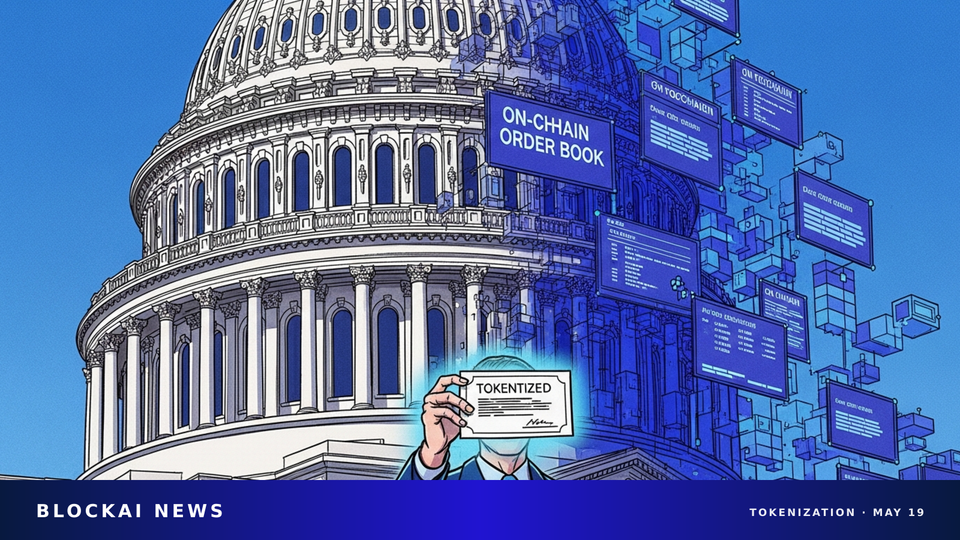
On May 12, 2026, DTCC — the clearinghouse that processed $4.7 quadrillion in U.S. securities transactions last year and provides custody and asset servicing for securities valued at roughly $114 trillion — announced it would embed Chainlink's Runtime Environment (CRE) and data standard into its Collateral AppChain. The target: 24/7, near-real-time collateral management across global markets and blockchains, with a production go-live slated for Q4 2026. For anyone still wondering whether institutional-grade blockchain infrastructure can move beyond pilots, DTCC just provided one of the clearest production roadmaps yet.
Why Collateral Is TradFi's Hardest Plumbing Problem
Collateral is one of the least glamorous but most systemically important layers of global finance. It determines whether leveraged trades can stay open, whether counterparties can meet margin calls, and whether high-quality assets can be mobilized fast enough during market stress. The problem is that collateral today is fragmented — split across custodians, triparty agents, clearing systems, jurisdictions, and trading time zones. Institutions spend enormous operational energy reconciling what assets are available, whether they qualify under collateral agreements, whether they can be transferred in time, and whether they meet margining requirements. Every delay translates into trapped capital, liquidity pressure, and counterparty risk.
DTCC's Collateral AppChain is not trying to make collateral "more crypto-native" for its own sake. It is trying to turn collateral from a trapped, batch-processed asset into programmable liquidity — assets whose eligibility, valuation, margining, and movement can be coordinated in near-real time across institutions and chains. That reframing matters: this is financial market infrastructure reform with blockchain as the substrate, not a blockchain experiment that happens to involve collateral.
How the Collateral AppChain Actually Works — and What Chainlink Brings to It
The DTCC Collateral AppChain is a digitally native platform built on a Besu-based blockchain infrastructure, designed to serve as shared infrastructure for the full cast of collateral participants: providers, receivers, managers, triparty agents, and custodians. As DTCC's official announcement makes clear, the goal is to replace the fragmented, timezone-bound, manually reconciled collateral systems of today with automated, always-on workflows that move tokenized assets in near-real time.
The problem those systems are solving is structural, not cosmetic. Today, collateral is frequently trapped across institutions and time zones — a hedge fund posting U.S. Treasury collateral in New York may not have that position released in London until hours later, burning capital and amplifying counterparty risk. By tokenizing collateral and running it through smart contract logic, the AppChain aims to compress that friction to near-zero latency.
Chainlink's role is the data and orchestration layer that makes the smart contracts actually useful. Chainlink's Runtime Environment is purpose-built to operate at institutional scale: it provides a resilient orchestration framework that automates workflows covering eligibility checks, asset valuation, margining, collateral optimization, and settlement instructions — essentially the entire post-trade lifecycle. Critically, rather than requiring DTCC to build bespoke integrations for every new data source or asset class, CRE acts as a reusable framework that lets the platform scale horizontally across new collateral types and blockchain environments over time.
Today we announced progress toward our goal of advancing 24/7 collateral mobility. DTCC’s Collateral AppChain, a shared infrastructure platform for collateral, will leverage the Chainlink Runtime Environment (CRE) and @chainlink data standard to enable near real-time collateral… pic.twitter.com/pJxBBmVWAr
— DTCC (@The_DTCC) May 12, 2026
Nadine Chakar, DTCC's Managing Director and Global Head of Digital Assets, framed the ambition directly: "The integration of Chainlink's CRE and data standard will allow us to deliver a unified on-chain environment, bringing on-chain asset prices, valuations and other collateral agreement data to support this transformative industry initiative." Sergey Nazarov, Co-Founder of Chainlink, was equally pointed, describing collateral management as "the killer app that traditional finance has been waiting for from our industry" — calling CRE capable of pulling together and orchestrating critical outputs "in a secure, private and compliant manner."
One significant technical question remains open. When asked whether the AppChain would use Chainlink's CCIP cross-chain bridge for actual asset mobility across chains, DTCC confirmed it is "solving for interoperability and cross-chain mobility" but declined to specify the mechanism, noting more information would follow. The answer matters enormously: if CCIP is tapped as the bridge layer, Chainlink's vertical integration across the collateral stack — from price data to cross-chain settlement — becomes essentially complete. This mirrors the earlier work Chainlink and DTCC undertook with Swift, Euroclear, UBS, and DBS on putting corporate actions on-chain using CRE and CCIP together, a project that achieved near-100% AI model consensus on validated corporate actions data during testing.
It is also worth noting the Collateral AppChain's ambitions extend beyond U.S. borders. DTCC, which operates from 20 locations worldwide and processes more than 25 billion trade messages annually through its Global Trade Repository, is explicitly positioning the AppChain as a global solution for collateral mobility — not just a domestic plumbing upgrade. That international scope places it in direct conversation with European and Asian post-trade reform agendas simultaneously.
From Smart NAV to Collateral AppChain: Why the Timing Matters
The DTCC–Chainlink relationship did not begin this week. The Collateral AppChain announcement is the most consequential chapter in a partnership that has been quietly deepening since at least 2023, when the two first signaled their collaboration on bringing capital markets on-chain. The more concrete precursor was the Smart NAV pilot of 2024, in which DTCC and Chainlink worked with 10 market participants — including JPMorgan, Franklin Templeton, BNY Mellon, State Street, Invesco, MFS, American Century Investments, Edward Jones, and U.S. Bank — to demonstrate how trusted mutual fund net asset value data could be delivered onto blockchains via Chainlink's Cross-Chain Interoperability Protocol (CCIP), unlocking use cases from tokenized funds to brokerage portfolio applications. That pilot showed both parties the operational mechanics of delivering authoritative financial data on-chain at institutional quality. The Collateral AppChain is the production-scale evolution of that proof of concept.
The broader context for why this is happening now is revealing. DTCC's earlier corporate actions tokenization push earlier this month signaled that the organization's blockchain ambitions span multiple product lines simultaneously — not just collateral. DTCC has separately confirmed that more than 50 firms have joined a working group for the DTC tokenization service, with a limited live-transaction test planned for July and a full platform launch scheduled for October 2026. It is important not to conflate DTCC's Collateral AppChain with DTC's separate tokenization service. The tokenization service focuses on issuing and processing tokenized securities within DTCC's market infrastructure. The Collateral AppChain, by contrast, is built around collateral mobility — eligibility, valuation, margining, optimization, and post-trade settlement workflows. Together, the two initiatives suggest DTCC is not testing one isolated blockchain use case, but redesigning multiple layers of post-trade infrastructure in parallel, with Chainlink anchoring the data and orchestration tier.
NEW: @The_DTCC is integrating Chainlink data and orchestration standards into the DTCC’s Collateral AppChain.
— Chainlink (@chainlink) May 12, 2026
DTCC and Chainlink are advancing 24/7, near-real-time collateral workflows across global markets and blockchains. pic.twitter.com/2Kr7LGpTb3
That acceleration tracks with an industry-wide shift that is now becoming hard to ignore. A Nasdaq research finding cited in market analysis found that 52% of global financial institutions expect to actively manage live tokenized collateral by end-2026 — the same window DTCC is targeting. Meanwhile, the broader tokenized RWA landscape is converging rapidly. Tokenized Treasury products, blockchain-based settlement experiments, stablecoin payment rails, and acquisitions of traditional transfer-agent infrastructure all point to the same structural conclusion: the rails for on-chain institutional finance are being laid in parallel by multiple players, with 2026 emerging as an inflection point for real transaction volume. Digital Asset's $300M Canton Network raise at a $2B valuation — backed by a16z — is another data point in the same arc. Chainlink is positioning its data and orchestration layer as a common standard for institutional blockchain workflows — but whether it becomes a SWIFT-equivalent for tokenized markets remains unproven.
For Chainlink specifically, the competitive landscape context matters. Crypto media reports have also noted DeFi protocols representing over $3 billion in TVL migrating to CCIP following a rival bridge exploit — adding a flight-to-quality narrative alongside the institutional validation story. That flight-to-quality dynamic in DeFi — combined with the DTCC institutional validation — positions Chainlink as a leading infrastructure candidate for a post-trade world being reconstructed on-chain. The LINK token's 17% appreciation over the prior month, despite a minor pullback on announcement day, reflects that market read.
The Regulatory and Competitive Fault Lines This Deal Exposes
The DTCC–Chainlink announcement lands in a regulatory environment that is simultaneously more permissive and more attentive than at any prior point in the tokenization cycle. U.S. regulators have signaled increased openness to blockchain-based market infrastructure — but a DTCC-scale deployment of tokenized collateral on public blockchains will inevitably draw scrutiny around several dimensions: custody standards, data privacy on public ledgers, systemic risk from smart contract failure, and whether automated margining engines introduce new pro-cyclical dynamics during market stress.
The Chainlink CRE's design specifically addresses the privacy objection: its architecture is built to operate in a "secure, private and compliant" manner, enabling institutions to run regulated workflows on blockchain rails without exposing proprietary data publicly. But as with any novel infrastructure at systemically important institutions, the gap between architectural intent and regulatory acceptance can take years to close. Observers should watch whether DTCC files for any formal regulatory guidance or no-action relief as the Q4 launch approaches, and whether the SEC or CFTC engage with the AppChain framework as a template for tokenized collateral rules more broadly.
The competitive dimension is equally sharp. Platforms like Fnality, HQLAx, and others have spent years building bilateral collateral mobility solutions for institutional participants. DTCC's AppChain, backed by its unmatched connectivity across U.S. market participants and now powered by Chainlink's orchestration layer, could effectively set a market standard that forces those alternatives to either integrate with the AppChain or compete as niche solutions. The 50-firm working group already enrolled in DTCC's tokenization service suggests the network effect is already materializing — a dynamic that mirrors how DTCC itself became the singular clearinghouse for U.S. equities over decades.
It is also worth reading the AppChain announcement alongside the broader Chainlink institutional stack. Chainlink now lists Swift, Euroclear, Mastercard, Fidelity International, UBS, ANZ, and many others as adopters of its standards — a roster that, combined with DTCC, constitutes much of the global financial market's core plumbing. If adopted broadly, the Chainlink data standard could become a common language for how collateral-related data flows between blockchains and legacy systems — reducing reconciliation errors and compressing the settlement cycle in ways that have real capital efficiency implications for every firm in the market.
If the AppChain succeeds at scale, the structural winners and losers become legible. Custodians shift from passive asset-holders into real-time collateral mobility nodes — their economics increasingly tied to throughput and connectivity, not just safekeeping. Triparty agents face a choice: integrate with the AppChain or risk being squeezed by a DTCC-set standard. Asset managers and hedge funds stand to gain the most directly through capital efficiency, as collateral release and reuse compress from days to minutes. The harder question lands on competing infrastructure providers — Fnality, HQLAx, Canton-based collateral platforms, and bilateral solutions — whose value proposition narrows the moment a network-effect standard emerges from the institution that already sits at the center of U.S. post-trade flow.
What Could Still Slow This Down
The Q4 2026 timeline is ambitious because collateral management is not just a data problem. It is a legal, regulatory, operational, and liquidity problem at the same time. Moving tokenized collateral faster is only useful if counterparties, custodians, regulators, and courts recognize that movement as final and enforceable.
The first challenge is legal finality. A tokenized asset transfer may settle instantly on-chain, but the legal rights attached to that asset still depend on custody agreements, collateral schedules, bankruptcy treatment, and jurisdiction-specific rules. For institutional users the question is not simply whether the token moved, but whether the collateral right moved with it — and whether that movement is enforceable when a counterparty defaults.
The second challenge is privacy. A collateral system touches uniquely sensitive information: positions, margin requirements, counterparty exposure, collateral agreements, and liquidity needs. Chainlink's CRE is designed to operate in a secure, private, and compliant manner, but the market will still need explicit clarity on what data sits on-chain, what remains off-chain, and how permissioning works across participants. The privacy architecture, not the throughput claim, will determine institutional adoption.
The third challenge is asset standardization. Tokenized Treasuries, money market funds, stablecoins, tokenized deposits, and conventional securities do not behave the same way as collateral. Each has different liquidity, haircut, custody, settlement, and regulatory treatment. A unified collateral layer has to absorb these differences without either flattening them into unsafe approximations or fragmenting into asset-class-specific silos that recreate the very problem the AppChain is trying to solve.
The fourth challenge is regulatory clarity. U.S. regulators have become more open to blockchain market infrastructure, but a DTCC-scale deployment of tokenized collateral will draw direct scrutiny on custody standards, systemic risk from smart-contract failure, and pro-cyclical dynamics in automated margining engines. The real test is not whether the architecture works — it is whether the SEC, CFTC, Fed, and Treasury will accept the AppChain as a template for regulated tokenized collateral, or treat it as a one-off requiring bespoke supervision.
Chainlink's Real Bet: Be the Middleware, Not the Chain
To be clear, DTCC is not putting collateral "on Chainlink." Chainlink is not the settlement venue. Its role is to provide the data, orchestration, and potentially interoperability layer that allows regulated collateral workflows to operate across blockchain and legacy environments.
One way to misread this announcement is to slot Chainlink into the "Layer 1" frame — as if its position depended on whether assets ultimately live on its chain. They do not. Chainlink is not competing with Ethereum, Solana, Besu, Canton, or any underlying ledger for asset settlement. It is competing for a different position entirely: the connective layer that coordinates data, identity, compliance, workflow logic, and cross-chain messaging across many venues at once.
For DTCC, the question was never "which chain wins" — DTCC's own AppChain runs on Besu, with cross-chain mobility deliberately left open. The question was: how do you let multiple systems, asset classes, data sources, and participants safely interoperate within regulated post-trade workflows? That is a middleware problem, not a base-layer problem. Chainlink's bet — visible across its work with DTCC, Swift, Euroclear, UBS, and others — is that this middleware tier may become more durable, and more economically valuable, than any single chain it touches. If the bet pays off, the most strategic position in institutional blockchain finance ends up being the one that nobody confuses for "the blockchain."
Key Takeaways
- DTCC's selection of Chainlink's Runtime Environment as the data and orchestration standard for the Collateral AppChain is one of the clearest institutional validations yet for blockchain-based data and orchestration infrastructure in post-trade finance — a precedent other market infrastructure organizations will reference.
- The cross-chain bridge question is the deal's open variable: if CCIP is confirmed as the mobility layer, Chainlink holds the full stack from price oracle to cross-chain settlement — but rivals have a narrow window while that mechanism is unspecified.
- Watch three signals in the next 90 days: DTCC's July live-transaction tokenization test, the October platform launch, and any formal regulatory engagement by SEC or CFTC with the AppChain's architecture as a template for tokenized collateral policy.
The Q4 2026 production window is tight. The operational complexity of onboarding tokenized money market funds, stablecoins, tokenized deposits, and conventional securities onto a shared collateral layer — while meeting the privacy, compliance, and legal-finality standards of systemically important market infrastructure — is genuinely non-trivial. Slippage into H1 2027 remains possible if asset-class integrations, regulatory review, or participant onboarding hit friction.
But the direction of travel is now difficult to ignore.
The real story is not simply that DTCC picked Chainlink. The story is that collateral — one of the most conservative and systemically important layers of financial markets — is becoming programmable. If this works, the next phase of tokenization will not be defined by which assets can be put on-chain, but by which market functions can be rebuilt around always-on, interoperable, legally enforceable settlement infrastructure.
Sources
Primary sources and prior BlockAI News coverage referenced in this article.
Primary sources
- DTCC official press release — 'DTCC Collaborates with Chainlink to Advance 24/7 Collateral Management' (May 12, 2026)
- @The_DTCC on X — Collateral AppChain × Chainlink announcement (May 12, 2026)
- @chainlink on X — DTCC integration announcement (May 12, 2026)
- Chainlink official website — Chainlink Runtime Environment and institutional product overview
From BlockAI News
- DTCC Taps High-Performance L1s to Put Corporate Actions On-Chain
- Ondo, JPMorgan, Mastercard & Ripple Settle Tokenized Treasuries on XRPL
- Crypto Exchange Bullish Acquires Transfer Agent Equiniti for $4.2B
- Digital Asset Targets $300M at $2B Valuation as a16z Bets on Canton
- State Street and Galaxy Launch SWEEP Fund on Solana
How we report: This article cites primary sources, regulatory filings, and on-chain data where available. BlockAI News uses AI tools to assist with research and first-draft generation; every article is reviewed and edited by a human editor before publication. Read our full How We Report page, Editorial Policy, AI Use Policy, and Corrections Policy.