Crypto Exchange Bullish Acquires Transfer Agent Equiniti for $4.2B to Build Tokenized Securities Infrastructure
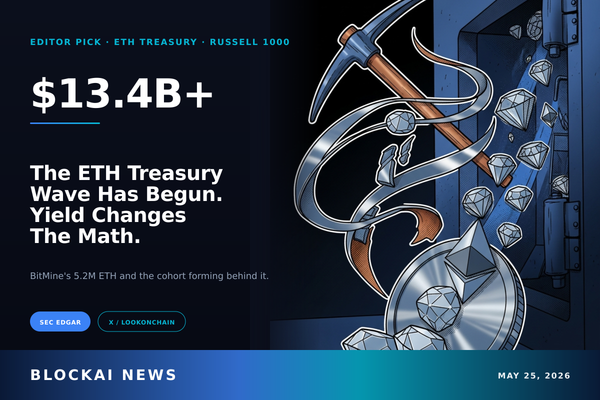
Bullish, the NYSE-listed institutional crypto exchange led by former NYSE President Thomas Farley, will acquire transfer agent Equiniti from Siris Capital in a $4.2 billion deal ($1.85B assumed debt + $2.35B Bullish stock). Equiniti processes $500 billion annually and manages 20M+ verified shareh...


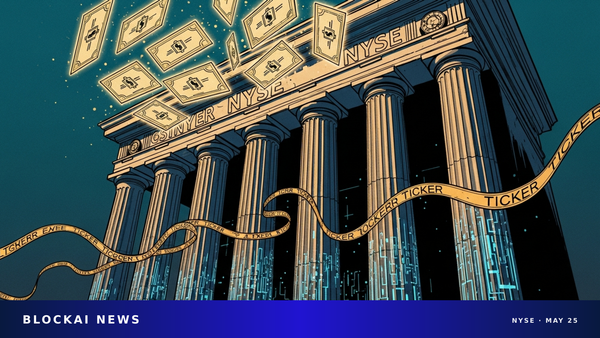
Bullish, the NYSE-listed institutional cryptocurrency exchange led by former NYSE President Thomas Farley, announced on May 5 that it will acquire Equiniti — one of the world's largest transfer agents — from private equity firm Siris Capital in a deal valued at $4.2 billion. The transaction comprises approximately $1.85 billion of assumed debt and $2.35 billion in Bullish stock. The deal positions Bullish as, in its own words, "the global transfer agent for tokenized securities" — combining a regulated blockchain exchange with the traditional equity settlement infrastructure that institutional capital markets have relied on for decades. The acquisition is expected to close in January 2027, subject to regulatory approvals.
What a Transfer Agent Does — and Why It Matters for Tokenization
A transfer agent is the institutional backbone of equity markets, maintaining the official record of who owns each share of a publicly listed company. Every share purchase, transfer, dividend payment, and corporate action flows through the transfer agent's registry. Equiniti manages this function for hundreds of publicly listed companies globally, processing approximately $500 billion in annual payments and maintaining records for more than 20 million verified shareholders.
For the traditional capital markets infrastructure, Equiniti is invisible to retail investors but load-bearing for every equity transaction. For the emerging tokenized securities market, it is the missing piece. Tokenized equities — shares issued as blockchain tokens rather than DTCC-tracked certificates — face a fundamental credibility problem: who maintains the authoritative ownership record? A blockchain ledger records on-chain transfers, but it does not integrate with corporate governance, tax reporting, CREST (the UK settlement system Equiniti connects to), or the regulatory frameworks that govern shareholder rights. A transfer agent with blockchain capability can bridge both worlds: it maintains the off-chain regulatory record while also tracking on-chain ownership, enabling tokenized shares to participate in dividend payments, shareholder votes, and rights offerings without leaving the traditional legal framework.
This is precisely the gap Bullish is positioning itself to fill. Farley described the acquisition as building "the global transfer agent for tokenized securities" — a regulated, institutional-grade custodian of ownership records that operates natively on blockchain rails. For issuers considering tokenized equity offerings, having Equiniti (via Bullish) as the transfer agent means their tokenized shares come with the same institutional credibility as any traditionally settled equity.
Strategic Positioning Against Coinbase, BlackRock, and Traditional Custodians
The Equiniti acquisition places Bullish in direct competition with several established players who are also building blockchain-native capital markets infrastructure. Coinbase operates Coinbase Prime and has been aggressively courting institutional issuers for tokenized asset offerings; it lacks a regulated transfer agent capability. BlackRock, through its BUIDL fund and tokenization work with Securitize, has built asset management relationships but not transfer agency infrastructure. Traditional custodians — State Street, BNY Mellon, and Northern Trust — have announced blockchain initiatives but have moved cautiously in execution.
Bullish's move is the first to combine a regulated crypto exchange (providing liquidity and secondary market infrastructure), a transfer agent (providing ownership records and corporate action processing), and blockchain settlement rails (providing settlement finality) under a single entity. If the combination executes cleanly, it becomes the lowest-friction path for a company that wants to issue tokenized equity: a single relationship covers issuance, settlement, secondary trading, and ownership recordkeeping.
The deal also has IPO optionality implications. Bullish itself went public via SPAC in 2023; the Equiniti acquisition significantly increases its revenue base and regulatory footprint, potentially making a re-listing or up-listing to a major index more achievable. Farley's NYSE background suggests he is acutely aware of the institutional credibility signaling that comes from operating regulated capital markets infrastructure.
What to Watch
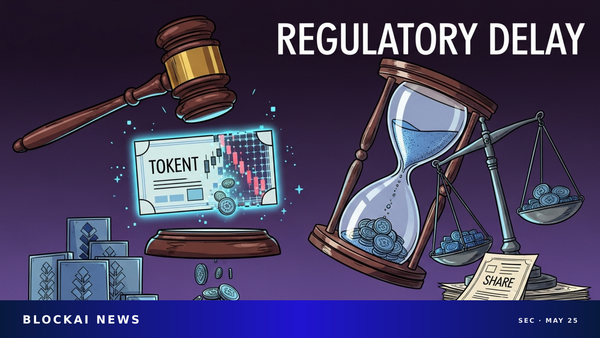
The January 2027 close date means 8 months of regulatory review, primarily from the SEC and UK's FCA, both of which oversee transfer agent activities in their jurisdictions. Watch for whether the SEC's approval includes conditions around the crypto exchange component — a registered transfer agent that is also a spot crypto exchange has no direct regulatory precedent, and the Commission may impose firewall requirements between the two business units. Watch also for competing bids for similar assets: Computershare and Continental Stock Transfer are the other major transfer agent operations, and Bullish's move may trigger interest from Coinbase, JPMorgan, or other institutions looking for equivalent positioning. Finally, watch Equiniti's existing issuer roster — if major issuers begin leaving Equiniti for traditional agents because they are uncomfortable with crypto exchange ownership, the strategic rationale starts to weaken before the deal even closes.
Want every major AI and Web3 funding round the moment it closes? Subscribe to the BlockAI News daily brief.
How we report: This article cites primary sources, regulatory filings, and on-chain data where available. BlockAI News uses AI tools to assist with research and first-draft generation; every article is reviewed and edited by a human editor before publication. Read our full How We Report page, Editorial Policy, AI Use Policy, and Corrections Policy.