Securitize Wins First-Ever FINRA Approval for Tokenized IPO Underwriting and On-Chain Custody
Securitize Markets received expanded FINRA permissions enabling it to custody tokenized securities inside a regulated broker-dealer, underwrite on-chain IPOs, and facilitate atomic settlement between tokenized stocks and stablecoins — the first approval of its kind.


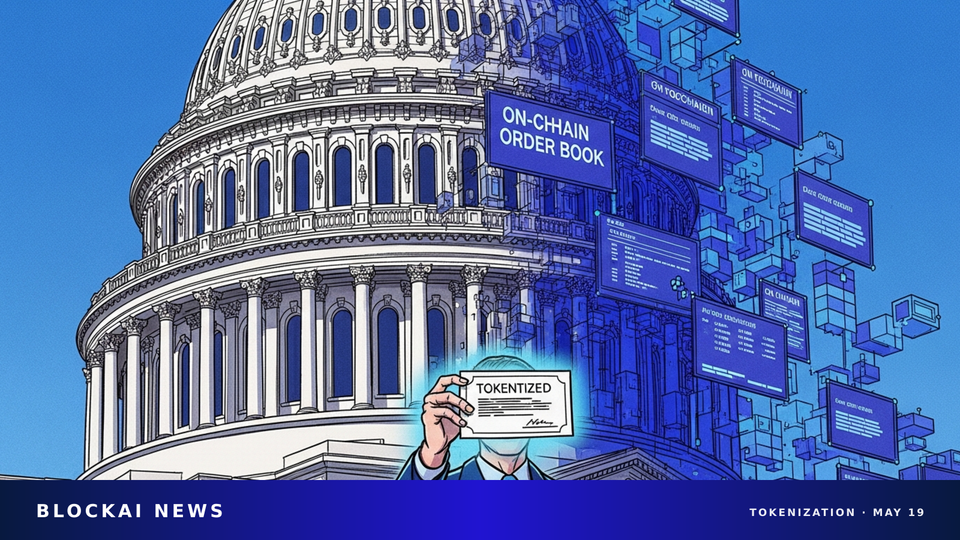
Securitize Markets, the broker-dealer subsidiary of the tokenized asset platform Securitize, has received expanded permissions from FINRA — the Financial Industry Regulatory Authority — making it the first broker-dealer in the United States approved to custody tokenized securities, underwrite on-chain IPOs, and facilitate atomic settlement between tokenized stocks and stablecoins. The approval was obtained through FINRA's Continuing Membership Application process, which broker-dealers must complete before introducing new business lines.
The Approval
The FINRA permissions expand Securitize Markets' capabilities across three distinct axes. First, custody: Securitize can now hold tokenized securities inside its broker-dealer structure — a requirement for institutional clients that cannot custody digital assets through crypto-native custodians. Second, underwriting: Securitize can now act as an underwriter and selling group participant for both initial and secondary tokenized securities offerings, enabling companies to raise capital on-chain using Securitize's infrastructure during the IPO process. Third, atomic settlement: the approval enables delivery-versus-payment finality using stablecoins — tokenized shares and stable dollar assets settle simultaneously in a single transaction, eliminating counterparty risk and the T+1 delay in traditional settlement.
The approval builds on a series of recent Securitize milestones. Last week, the company partnered with Computershare to help public companies issue tokenized share versions alongside traditional shares. Securitize is also helping develop NYSE's 24/7 tokenized securities platform, positioning it as the infrastructure provider connecting traditional exchanges to on-chain equity markets.
What Changes
The underwriting and selling group approvals are the most significant new capabilities. Until now, tokenized securities issuances have operated in a regulatory grey area — companies could issue tokens representing equity or debt, but the underwriting and distribution infrastructure was either informal or relied on securities exemptions. With FINRA approval, Securitize can now run an on-chain IPO as a fully regulated underwriter, handling book-building, allocation, and distribution through its platform in the same way a traditional investment bank handles a conventional offering.
Securitize is also planning its own public listing: the company has announced a definitive business combination agreement with Cantor Equity Partners II (Nasdaq: CEPT), with the combined company expected to list on NYSE or Nasdaq under the ticker "SECZ". The FINRA expansion thus serves both as a business development milestone and as a demonstration of regulatory depth ahead of its own public offering.
 PR Newswire
Our Take
The Securitize approval is the on-chain IPO market's missing piece of plumbing. The DTCC's July tokenization pilot creates the settlement infrastructure; Securitize's FINRA underwriting approval creates the origination infrastructure. Together, they describe a world where a company can raise capital through an on-chain IPO, have its shares settle atomically against USDC in T+0, and trade on a 24/7 tokenized market — all within a regulated framework. The first on-chain IPO to use this complete stack will be a watershed moment. Watch for Securitize's own SECZ listing as a likely candidate.
Crypto + AI policy moves, the day they land — subscribe →
How we report: This article cites primary sources, regulatory filings, and on-chain data where available. BlockAI News uses AI tools to assist with research and first-draft generation; every article is reviewed and edited by a human editor before publication. Read our full How We Report page, Editorial Policy, AI Use Policy, and Corrections Policy.