Coachella Built Three Internal AI Tools With Google DeepMind on Project Genie
Coachella worked with Google DeepMind on three internal AI prototypes — a 3D show experience, a stage-design tool, and a mobile game — all built on the Project Genie world-model platform. Aimed at lowering the production-budget floor for smaller artists.

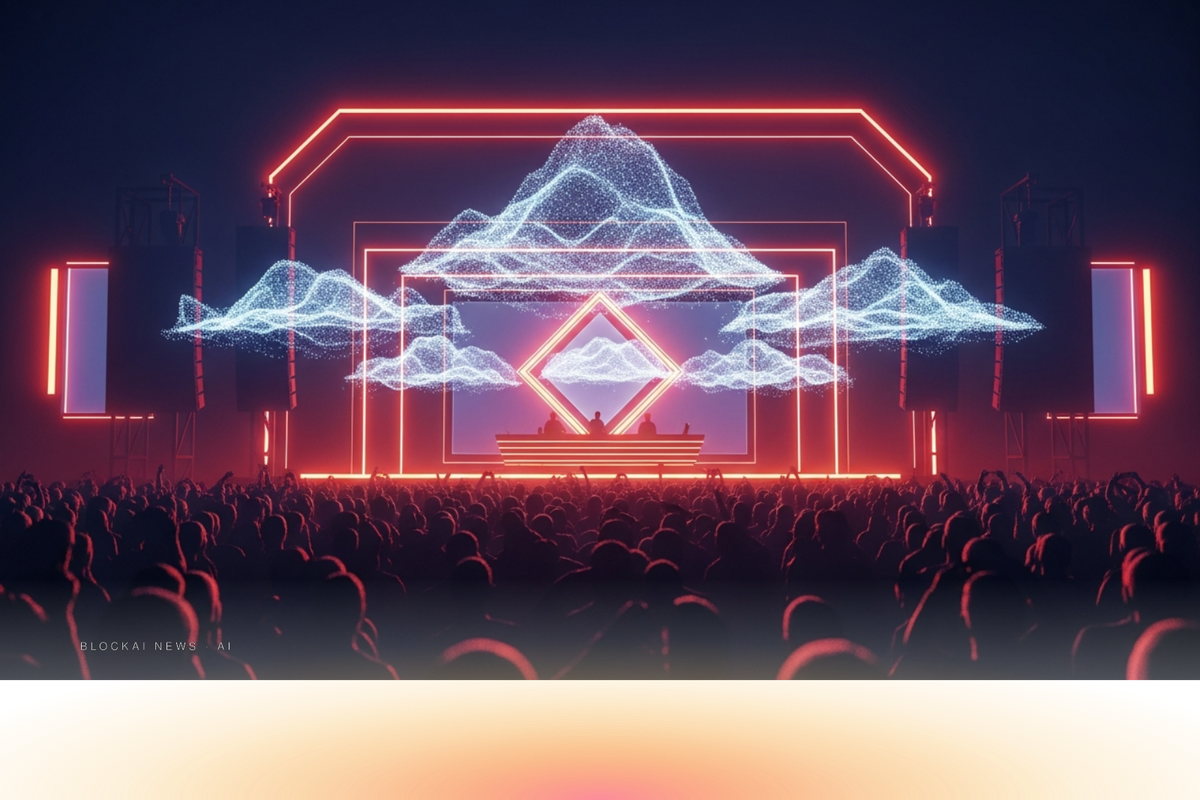
Coachella spent its 2026 festival quietly piloting three AI experiments built with Google DeepMind, all running on DeepMind's Project Genie world-model platform. The festival is treating them as proofs of concept; nothing is shipping publicly yet.
The three prototypes
First: a 3D live-show capture, designed to make festival sets re-livable through future spatial-display hardware (read: glasses). Second: a stage-design tool that lets performers upload visuals or natural-language prompts and instantly preview how a show would look on a 3D model of a Coachella stage at different times of day and crowd densities. Third: a mobile game called "Coachella vs. The Game," in which players control an astronaut exploring digital worlds generated from real festival artists' aesthetics.
Why world models matter for live entertainment
The unifying thread is Genie's ability to generate interactive 3D environments from short prompts, which collapses the cost of pre-visualizing a stage show. Today that work runs six-figure-plus production budgets for headliner acts. If the tool ships, it lets smaller artists prototype complex shows without hiring full creative teams — exactly the kind of "lower the floor, raise the median" application that has the biggest near-term commercial pull for world models.
What to Watch
Two threads worth tracking. First, whether Coachella decides to roll any of these tools out for the 2027 festival or release them to artists outside its own bookings. Second, whether other major festival operators (Live Nation, AEG, Tomorrowland) adopt similar Genie-based pipelines. If they do, expect a parallel Web3 push: tokenized stage-design templates, on-chain rights for AI-generated visuals, and NFT-gated access to the 3D show captures Coachella is now quietly building.
Want every AI × Web3 signal the moment it breaks? Subscribe to the BlockAI News daily brief.
How we report: This article cites primary sources, regulatory filings, and on-chain data where available. BlockAI News uses AI tools to assist with research and first-draft generation; every article is reviewed and edited by a human editor before publication. Read our full How We Report page, Editorial Policy, AI Use Policy, and Corrections Policy.