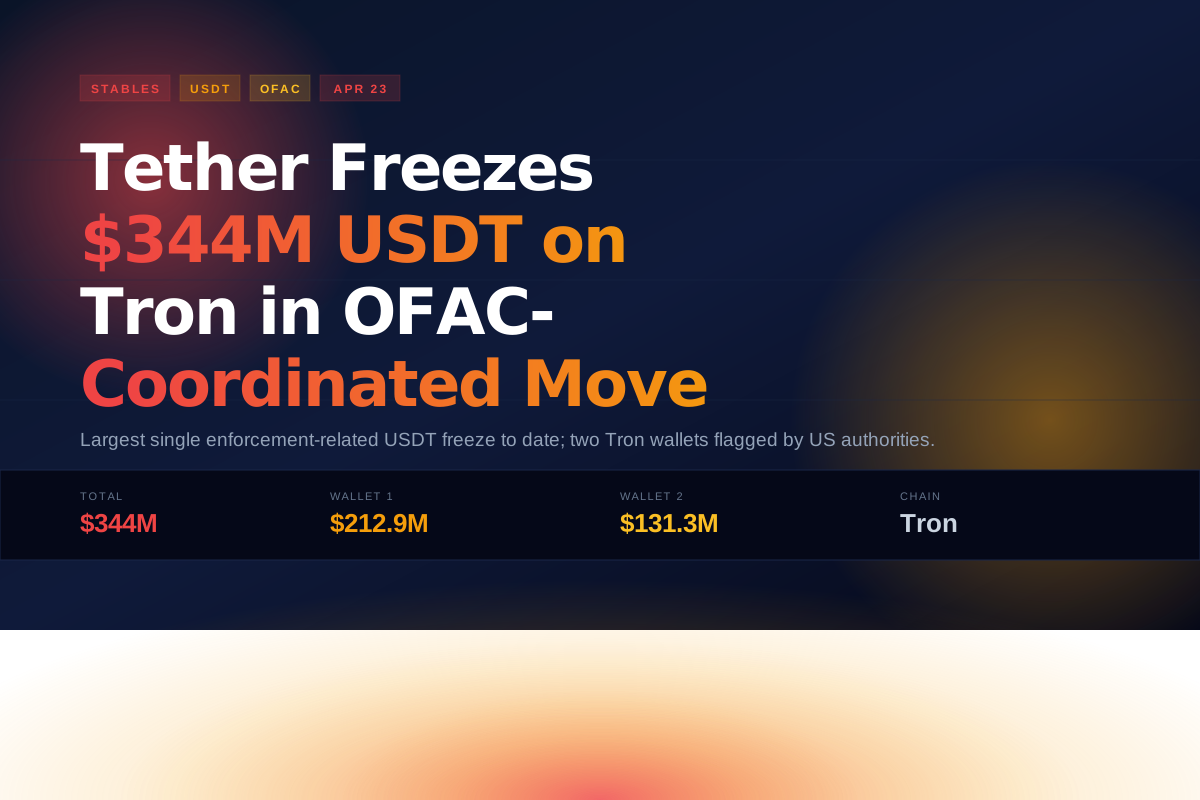
Tether Freezes $344M USDT on Tron in OFAC-Coordinated Move
Tether froze $344M across two Tron addresses flagged by OFAC and US law enforcement for sanctions evasion and criminal-network links. The largest single enforcement-related USDT freeze to date.

Tether froze approximately $344 million in USDT on Tron on April 23, acting on information from the US Office of Foreign Assets Control (OFAC) and multiple US law enforcement agencies tied to suspected sanctions evasion and criminal-network activity.
The Freeze Details
The freeze hit two Tron addresses: one holding roughly $212.9 million and the other $131.3 million. Tether's statement describes it as a coordinated enforcement action — not a unilateral call — and confirms both wallets were allegedly linked to sanctions evasion and criminal networks.
The Compliance Angle
This is one of the largest single enforcement-related stablecoin freezes ever executed. In context: Tether says it now works with 340+ law enforcement agencies across 65 countries, has supported over 2,300 cases globally, and has frozen more than $4.4 billion in USDT lifetime. The $344M freeze lands as US stablecoin legislation moves through Congress and as Tether positions itself as a compliance-forward issuer — a deliberate counter-narrative to the "stablecoins enable illicit finance" critique.
The $344M action brings Tether's 2026 year-to-date frozen USDT past $1.1 billion, per a mid-April update from its compliance team — already a full-year record with eight months still to go. For context: Circle (USDC) has not published comparable 2026 freeze numbers, but its most recent transparency report showed roughly $180M in blacklisted addresses at end-2025 versus Tether's then-$3.8B lifetime total. The 2026 cadence is strategic: the US stablecoin bill in conference committee explicitly requires OFAC-coordination capability as a condition for domestic payment-stablecoin status, and Tether's messaging on this freeze — "in coordination with OFAC and U.S. law enforcement" — is the exact phrasing Congress proposed.
 Tether
Bottom Line
Stablecoin programmable-freeze is the compliance feature, not a bug, and Tether is leaning into that framing ahead of US regulation. Watch for the inevitable next question: is Circle (USDC) under pressure to match the cadence and transparency of these freezes, or does it quietly already?
Daily Web3 + AI signal, straight to your inbox — subscribe →
How we report: This article cites primary sources, regulatory filings, and on-chain data where available. BlockAI News uses AI tools to assist with research and first-draft generation; every article is reviewed and edited by a human editor before publication. Read our full How We Report page, Editorial Policy, AI Use Policy, and Corrections Policy.