Arbitrum Freezes $71M Tied to Kelp — And Reopens the Decentralization Debate
Arbitrum's Security Council used privileged powers to transfer 30,766 ETH out of the Kelp DAO exploiter's wallet. The move recovered funds — and revived an old question: how decentralized is Layer 2 really?

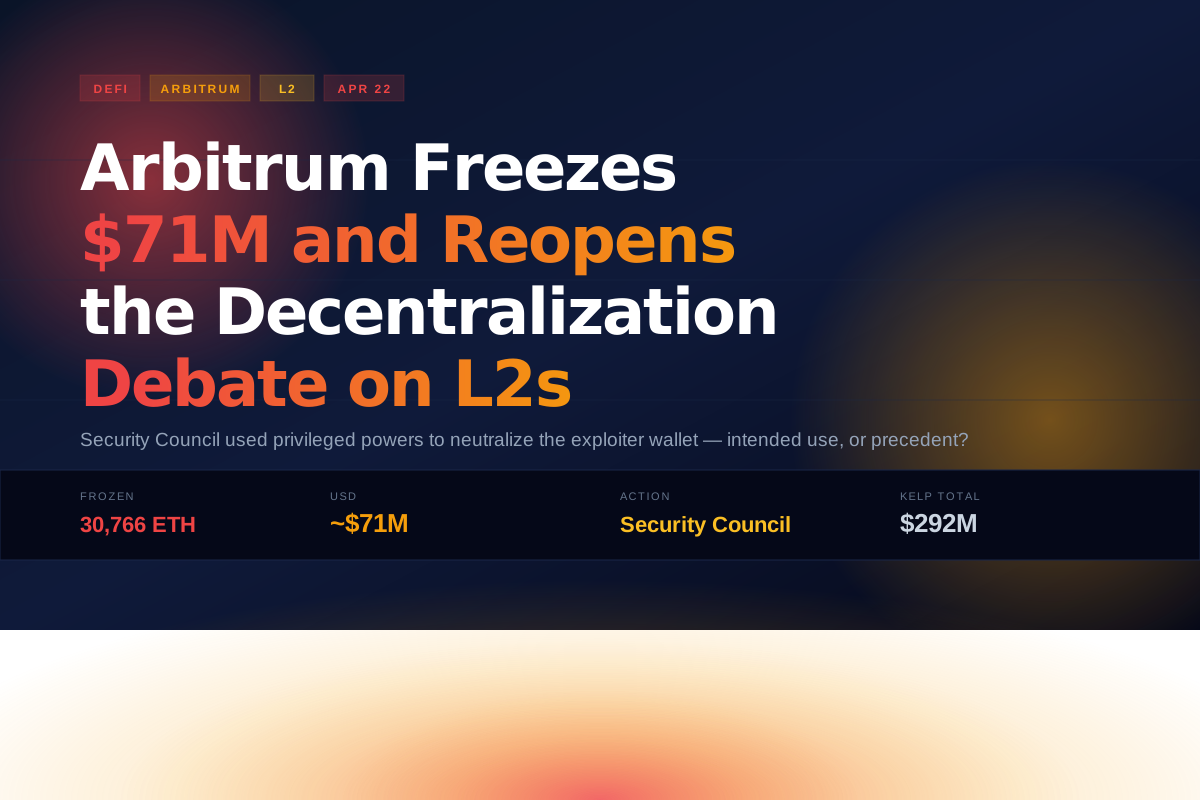
Arbitrum's Security Council executed an emergency privileged transfer on April 20, moving 30,766 ETH (~$71 million) out of an address tied to the Kelp DAO exploiter and into a wallet with no owner — effectively freezing the funds. Any future movement requires a formal Arbitrum governance decision.
The Action
The frozen $71M is roughly a quarter of the $292M drained from Kelp DAO's LayerZero-powered cross-chain bridge on April 18. The Security Council is elected by token holders every six months; its privileged powers include upgrading contracts and, as now demonstrated, rewriting balances on stuck or stolen funds. The transfer completed at 11:26 p.m. ET on April 20.
The Debate
This is the first high-profile use of Arbitrum's Security Council to transfer user-level funds, not protocol parameters. Supporters call it the system working as designed — stolen funds recovered, attackers stalled. Critics argue the same mechanism could, in theory, be pressured into action by regulators or political actors. The Security Council is transparent and elected, but it is still a small group able to move quickly, and this action sets a precedent.
Arbitrum's Security Council has 12 elected members, terms rotating every 6 months; a freeze action of this size requires at least 9 of 12 to sign. That threshold was cleared overnight on April 20 after Kelp DAO publicly requested assistance. Critics point out: Optimism's Security Council has similar powers and has used them twice before, both for bridge upgrades, never for user funds. Base's sequencer is controlled by Coinbase and can also freeze — arguably with less oversight than Arbitrum's elected council. The larger debate: what does "decentralized" mean on a Layer 2 whose sequencer, upgrade key, and escape hatch are still centralized by design? Vitalik Buterin weighed in publicly on April 22, arguing freezes tied to confirmed exploits sit inside the legitimate scope of "Stage 1" L2 governance.
 CoinDesk
Looking Ahead
Every major L2 has a version of this emergency power. Arbitrum just made it visible. Expect Optimism, Base, and zkSync teams to get the same question this week — and expect DeFi teams building on L2s to rethink which "decentralization" label actually applies to their stack.
Track DeFi protocol moves and on-chain data daily — subscribe →
How we report: This article cites primary sources, regulatory filings, and on-chain data where available. BlockAI News uses AI tools to assist with research and first-draft generation; every article is reviewed and edited by a human editor before publication. Read our full How We Report page, Editorial Policy, AI Use Policy, and Corrections Policy.