Stargate Crosses 9 GW: OpenAI's Compute Build-Out Now the Largest Industrial Project in Modern Tech
OpenAI's Stargate Project — a $500B compute build-out with SoftBank, Oracle and MGX — now has visible construction at all seven US sites and a pathway to over 9 GW of capacity by 2029. The same week, OpenAI released an Intelligence Age policy paper introducing the "Right to AI".

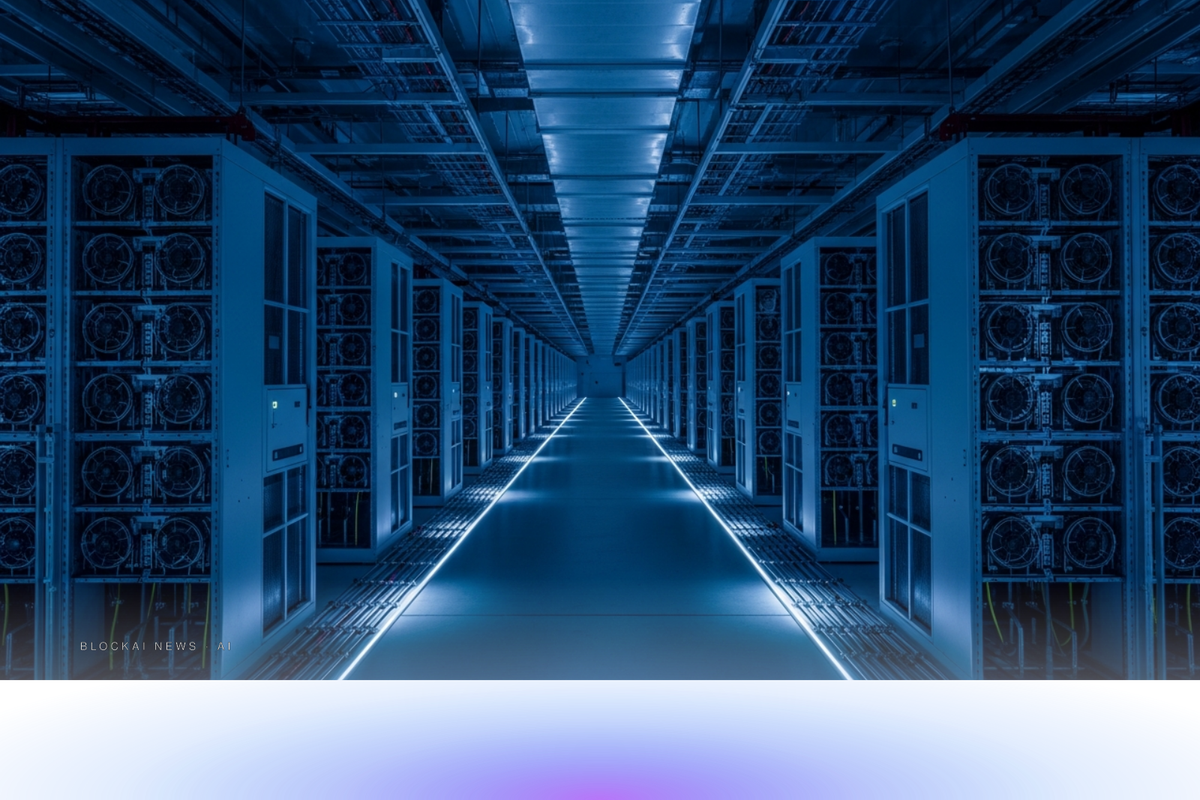
OpenAI's Stargate Project — the $500 billion AI compute build-out announced jointly with SoftBank, Oracle and MGX — has entered its most concrete phase yet. According to a April 17, 2026 survey by Epoch AI Research, all seven surveyed US Stargate sites show visible physical development progress, with a credible pathway to exceed 9 GW of total compute capacity by 2029. That's an order-of-magnitude jump beyond the largest existing hyperscaler campuses today.
The numbers behind "$500B"
The headline commitment is $500B over four years, with $100B being deployed immediately in the first wave. SoftBank carries financial responsibility; OpenAI handles operations; Arm, Microsoft, NVIDIA and Oracle sit on the technology partner roster — meaning Stargate effectively pre-locks NVIDIA GPU allocation, Oracle Cloud capacity, and Microsoft's Azure backstop. Each individual Stargate campus targets 1.2 to 1.5 GW of IT power load, putting them in the upper bound of any hyperscaler facility ever built. For comparison, the average hyperscale data center today runs 30–80 MW; a single Stargate site is roughly 15× that.
The policy companion piece
OpenAI released an Intelligence Age policy white paper the same week — "Industrial Policy for the Intelligence Age: Ideas to Keep People First" — that bolts a political narrative onto the physical build-out. The most-discussed concept: a proposed "Right to AI", framing access to frontier AI models as a public utility comparable to electricity or internet access. The paper argues that compute supply is the binding constraint on whether that right is real — explicitly tying Stargate's GW count to a civic argument for accelerating power-grid permitting, federal land-use approvals, and water rights for cooling.
What this does to the rest of the market
Three downstream effects worth flagging. First, the cloud trio loses negotiating leverage: with $500B of dedicated capacity coming online, OpenAI's Microsoft / AWS / Google Cloud pricing power flips. Combined with the April 27 partnership restructure (Microsoft no longer pays revenue share, OpenAI free to multi-cloud), the era of OpenAI as a captive Azure customer is decisively over. Second, the power story is the bottleneck: 9 GW dedicated to a single AI buyer is a non-trivial fraction of incremental US grid capacity through 2029, and pre-empts capacity that would otherwise flow to competing AI labs, reshoring industry, or EV charging. Third, capex burns through equity: even with SoftBank shouldering the financial obligation, the ROI math requires OpenAI's revenue to scale past $100B annually well before 2029 — anything short and Stargate becomes a balance-sheet event.
What to Watch
Three signals over the next 90 days. Site-level commissioning timelines: when the first Stargate site reports a live, customer-serving GPU cluster will tell us whether the build is on schedule or slipping. Power purchase agreement disclosures: utilities serving Stargate counties (mostly Texas, Wisconsin, Ohio per public siting) will file PPAs that reveal both the pricing and the carbon mix. The "Right to AI" framing in DC: whether the white paper is treated as serious policy by FTC, FCC, or DOE staff — or as marketing — will shape whether Stargate gets the regulatory tailwinds OpenAI needs to hit 9 GW.
Want every AI × Web3 signal the moment it breaks? Subscribe to the BlockAI News daily brief.
How we report: This article cites primary sources, regulatory filings, and on-chain data where available. BlockAI News uses AI tools to assist with research and first-draft generation; every article is reviewed and edited by a human editor before publication. Read our full How We Report page, Editorial Policy, AI Use Policy, and Corrections Policy.