SpaceX Eyes $119B 'Terafab' Chip Mega-Factory in Texas
SpaceX is reportedly weighing an investment of up to $119B in a vertically integrated semiconductor facility dubbed 'Terafab' in Texas — a move that would rank among the largest single chip-manufacturing bets in US history and signal Elon Musk's push toward full-stack AI hardware independence.

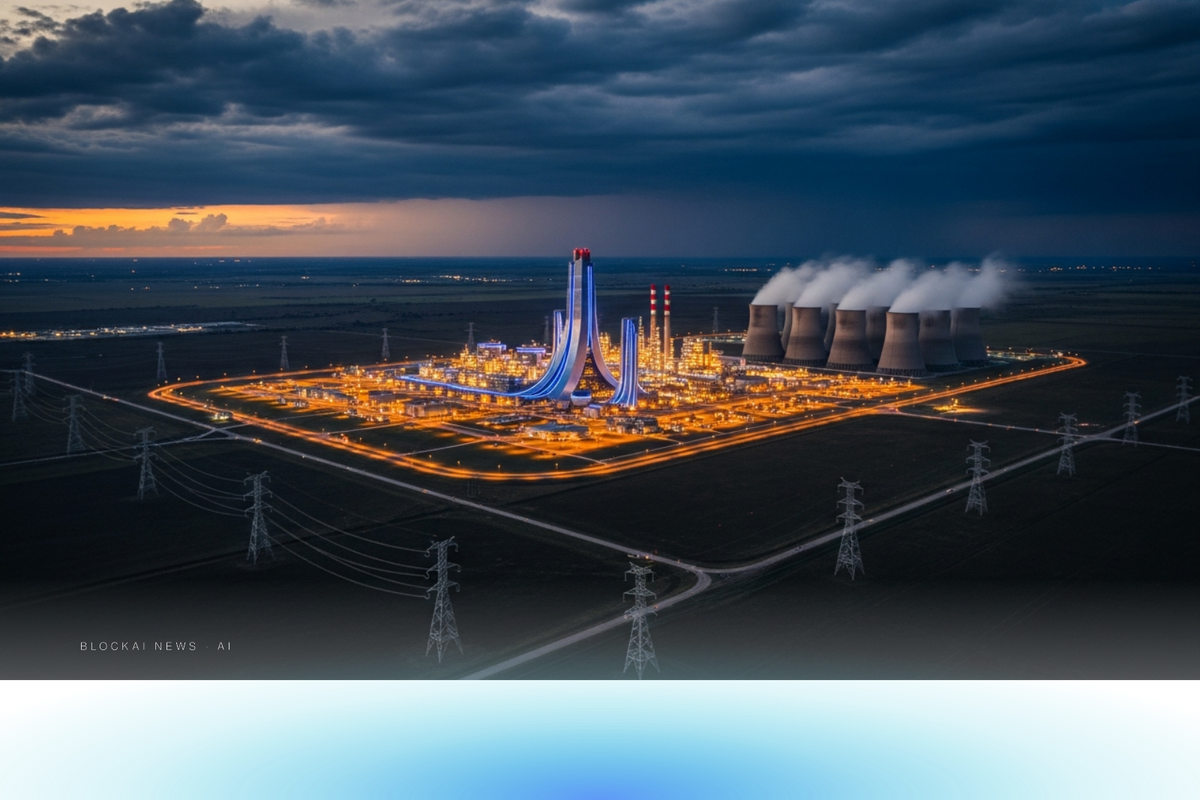
SpaceX is evaluating an investment of up to $119 billion in a vertically integrated semiconductor manufacturing facility in Texas, according to reporting based on materials reviewed by Bloomberg. The proposed plant, internally referred to as "Terafab," would not merely assemble chips but would pursue end-to-end fabrication — spanning wafer production through advanced packaging — placing SpaceX in direct competition with established foundry giants at a scale that would rival TSMC's entire US expansion program.
What's New on the Table
The Terafab concept represents a significant strategic escalation from SpaceX's existing compute investments. The company already operates a growing internal silicon design team — the same organization responsible for custom chips that power Starlink terminals and onboard avionics — but fabrication has historically been outsourced to third-party foundries. A vertically integrated facility would collapse that dependency entirely.
The $119 billion figure cited in the materials represents the upper bound of a projected investment range, not a committed capital figure. Sources familiar with the discussions caution that the number reflects a multi-decade buildout scenario, potentially spanning 10 to 15 years, across multiple fabrication lines and technology nodes. For context, Intel's revived US foundry program — among the most ambitious domestic semiconductor efforts in recent memory — has projected capital expenditures in the $100 billion range across its Ohio and Arizona sites combined, spread across a similar timeline.
Critically, the Texas site selection aligns with SpaceX's existing infrastructure. The company's Starbase launch facility is located near Boca Chica, and its headquarters relocated to Bastrop, Texas in 2024. A semiconductor campus in the same state would create logistical coherence for what Elon Musk has described as his broader ambition to own every layer of the technology stack — from raw silicon to deployed intelligence.
The Capital Picture
Financing a facility at this scale is, on its own, a structural challenge. SpaceX's most recent valuation stood at approximately $350 billion following a tender offer completed in early 2025, making it one of the most valuable private companies globally. However, even at that valuation, committing $119 billion — more than a third of enterprise value — to a single capital project would require either a dramatic restructuring of the company's balance sheet, significant external financing, or the creation of a dedicated subsidiary capable of raising project-level debt.
The semiconductor industry's capital intensity is well-documented. A single leading-edge fab — operating at 3nm or below — now costs between $20 billion and $30 billion to construct and equip, per estimates from industry analysts and ASML's own customer guidance. The Terafab figure implies a multi-fab campus with redundant lines, potentially incorporating both logic and memory production, along with the advanced packaging infrastructure — CoWoS, HBM integration, chiplet interconnects — that has become the decisive bottleneck in AI accelerator supply chains.
Federal incentive structures remain a meaningful variable. The CHIPS and Science Act has already directed more than $30 billion in direct grants and subsidies toward US-based semiconductor manufacturing. Whether SpaceX — as a private, defense-adjacent but not traditionally defense-contracted entity — would qualify for, or pursue, CHIPS funding at scale is an open question. The company has historically been selective about federal subsidy relationships, preferring contract revenue over grant dependency.
There is also the question of xAI, Musk's artificial intelligence company, which operates the Colossus supercluster in Memphis, Tennessee — reportedly one of the largest GPU clusters in existence at over 200,000 Nvidia H100-class accelerators. If Terafab's silicon output were oriented toward xAI's inference and training workloads, the vertical integration story becomes considerably more coherent: SpaceX-built chips, trained in xAI clusters, deployed via Starlink edge nodes.
BlockAI News' Take
The Terafab announcement — even framed as exploratory — is a signal worth reading carefully. The global semiconductor industry is entering what analysts at McKinsey have called a "capacity arms race," driven not by consumer electronics demand but by sovereign AI infrastructure goals. The United States, the European Union, Japan, and India have each launched multi-billion-dollar domestic chip programs since 2022. A SpaceX entry into fab ownership would add a privately controlled, vertically integrated node to that map — one answerable to a single founder rather than a board, a government, or a consortium.
That autonomy is both the asset and the risk. TSMC took decades to accumulate the process knowledge that makes its fabs indispensable. Intel's attempt to re-enter cutting-edge foundry manufacturing has cost tens of billions and multiple CEO transitions without yet achieving commercial parity. SpaceX has demonstrated an ability to compress aerospace development timelines through vertical integration — but silicon fabrication has physics constraints and yield-learning curves that do not compress on the same schedule as rocket iteration cycles.
What makes this moment distinct is the convergence: AI compute demand is structurally insatiable, US policy is actively incentivizing domestic fab capacity, and the company most associated with disrupting legacy industries is now pointing its capital toward the one input that every AI system — from frontier models to edge inference — depends on absolutely.
Watch for whether SpaceX files any environmental impact or land-use permits in Texas in the next 60 to 90 days — that paperwork, more than any press release, would confirm Terafab has moved from scenario planning to active site development; a filing would also reveal the precise county and acreage, offering the first hard data point on the project's initial phase scope.
How we report: This article cites primary sources, regulatory filings, and on-chain data where available. BlockAI News uses AI tools to assist with research and first-draft generation; every article is reviewed and edited by a human editor before publication. Read our full How We Report page, Editorial Policy, AI Use Policy, and Corrections Policy.