
Google Pushes Gemini to 4 Million Cars — GM and Polestar Lead the Largest Auto-AI Rollout to Date
Google began Gemini rollout in cars on April 28–30. GM is upgrading roughly 4 million MY2022+ Cadillac, Chevrolet, Buick and GMC vehicles via OTA, and Polestar swapped Google Assistant for Gemini Live in U.S. cabins — the largest in-car AI deployment to date.

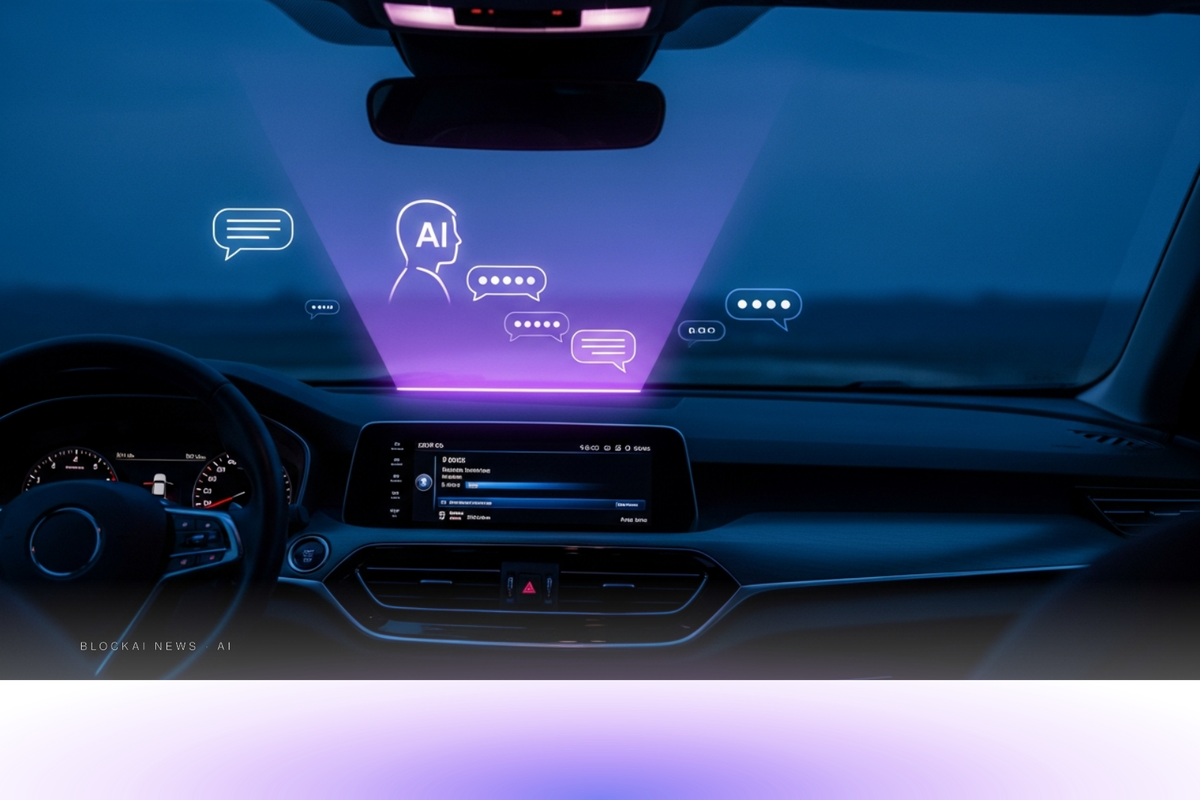
Google announced on April 28–30 that Gemini will replace Google Assistant in vehicles with Google built-in, with General Motors upgrading approximately 4 million model-year-2022-and-newer Cadillac, Chevrolet, Buick and GMC vehicles via over-the-air update. Polestar began its own rollout to U.S. drivers on April 30. The combined deployment is one of the largest single deployments of any frontier AI assistant on physical hardware — and arrives at a moment when conversational, context-aware assistants are reshaping how consumers expect to interact with software in non-screen environments.
What changes inside the cabin
The functional difference between Google Assistant and Gemini is not subtle. Google Assistant is a command-driven system: drivers speak short, structured intents ("Hey Google, navigate home"; "Play classical music"), and the system parses keywords. Gemini Live — the conversational, real-time interface launching in beta — handles natural back-and-forth dialogue, follows context across multiple turns, asks clarifying questions, and supports follow-up queries that depend on the previous exchange. Inside the car this looks like: "I'm hungry, what's nearby that's vegetarian and open past 9?" followed by "Just kidding, make that the second one but with a reservation for four at 7:30." The system understands the modification, rebooks, and updates navigation. The rollout starts English-language users in the United States, with additional regions planned through 2026.
Why the deployment scale matters
Three layers of significance. First, install base: 4 million GM vehicles plus Polestar puts Gemini ahead of every other in-car AI assistant by a meaningful margin; BMW, Mercedes-Benz and Volvo each have smaller deployments, and Apple's in-car AI strategy remains unannounced. Second, data flywheel: a cabin AI deployed at this scale generates hundreds of millions of unique multimodal interactions monthly — real driving conditions, real user follow-ups, real failure modes — and Google's ability to fold those signals back into Gemini training is structurally hard for any non-OEM-allied lab to match. Third, monetization surface: in-car commerce, parking payments, fueling, EV charging discovery, and reservation booking are all natural Gemini-mediated transactions, and they connect directly to Google's existing payments and merchant relationships. The Stripe Link launch the same week, and OKX's APP, point to the agent-payments rails Gemini will eventually plug into.
The skeptics' read
Three concerns. First, safety regression risk: a more conversational, more capable assistant introduces new attention-distraction modes that are hard to test exhaustively before mass deployment; NHTSA and the EU's GSR-2 vehicle safety regulations may both demand interim disclosures. Second, OEM lock-in dynamics: GM has effectively outsourced its cabin software stack to Google, repeating a decision that Volvo, Polestar and Renault made years ago; some industry observers see this as the OEMs ceding their last differentiation surface to a platform vendor. Third, user expectation mismatch: drivers comparing Gemini Live in their car to Gemini on their phone may be disappointed by capability gaps caused by safety-driven feature trimming inside the cabin, and that disappointment will cluster in early reviews.
The cabin-AI war is now between three platform vendors, not the OEMs
The Gemini rollout reframes a question OEMs have been quietly answering for the past five years: who owns the in-cabin software stack? GM's decision to ship Gemini across its Cadillac, Chevrolet, Buick and GMC fleets is the largest single endorsement of Google Built-In — the embedded Android Automotive operating system — by any U.S. automaker, and follows the same path Volvo, Polestar, Renault and Honda have already taken. Stellantis and Hyundai-Kia are the largest non-Google holdouts, both running their own SDV stacks; Ford uses a hybrid of Google Built-In and proprietary services; Toyota remains the most independent, leveraging its own Arene OS.
The bigger competitive picture is that three cabin-AI platforms will define the next decade. Google Gemini-in-the-cabin on Android Automotive, dominant in the GM-Volvo-Polestar-Renault cohort. Apple's CarPlay Ultra, expected to ship a more integrated AI assistant by H2 2026, dominant in iPhone-loyal markets and the Aston Martin / Porsche luxury segment. OpenAI / Microsoft Auto, which has been signed by Mercedes-Benz and Volkswagen Group for limited deployments. The OEMs are increasingly competing on physical hardware, brand, range and price, while the cabin software experience converges around three external AI platforms — a transition that will reshape both auto industry margins and AI-platform reach.
What to Watch
Three signals over the next 90 days. Customer satisfaction data: the next J.D. Power or Strategy Analytics in-car infotainment survey will be the cleanest measure of whether Gemini Live is actually better than Google Assistant in driver perception. Stellantis, Ford, Hyundai-Kia response: which OEM signs the next major Gemini Live deal — or instead announces an in-house alternative — will signal the competitive dynamic. Cabin-payments integration: a Stripe-backed or Visa-backed Gemini-mediated transaction primitive (parking, fueling, charging, drive-through) is the commercial-monetization signal. Watch blog.google/products/android and OEM newsrooms for the next set of partner announcements.
Want every AI × Web3 signal the moment it breaks? Subscribe to the BlockAI News daily brief.
How we report: This article cites primary sources, regulatory filings, and on-chain data where available. BlockAI News uses AI tools to assist with research and first-draft generation; every article is reviewed and edited by a human editor before publication. Read our full How We Report page, Editorial Policy, AI Use Policy, and Corrections Policy.