Altara Raises $7M Seed to Bring AI Agents to Physical Sciences R&D — Semiconductors, Batteries, Materials
Altara raised $7 million in a seed round led by Greylock to build AI agents for physical sciences R&D — semiconductors, batteries, and advanced materials. The company's agents condense weeks of manual data triaging into minutes, targeting failure analysis and experimental design at facilities whe...

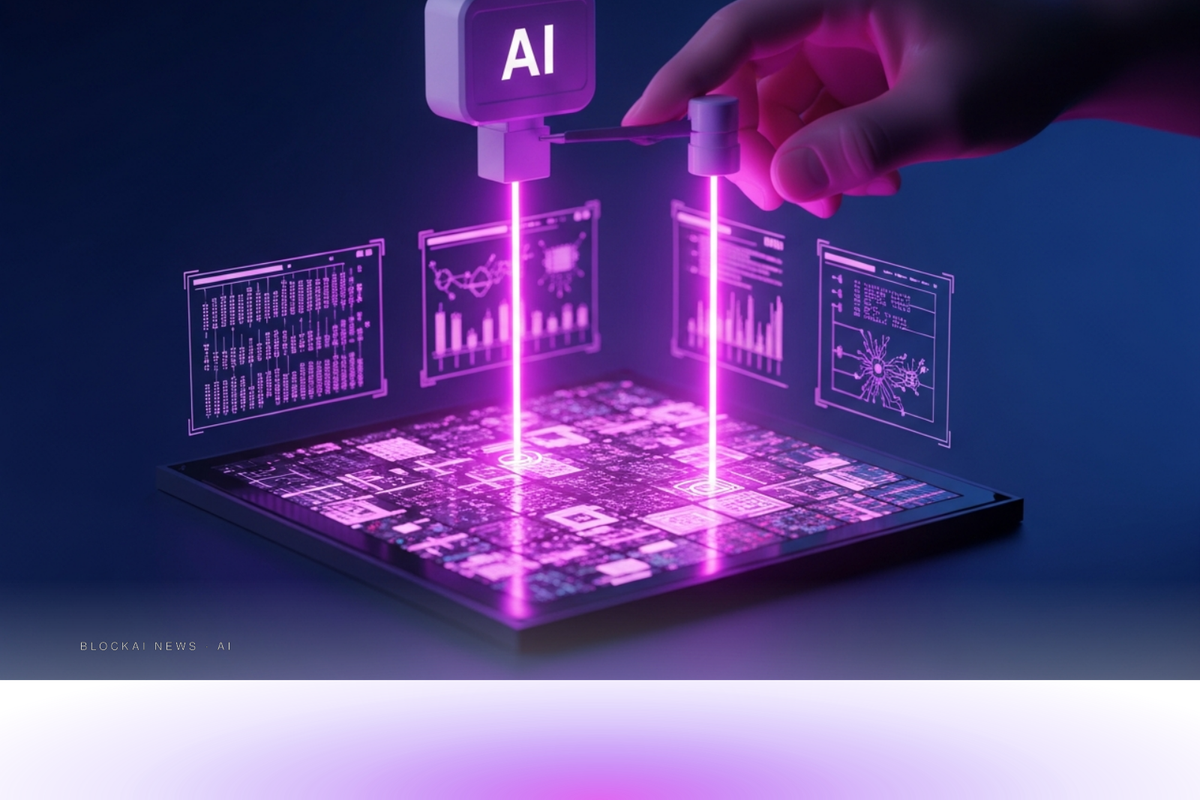
Altara, an AI company building what it calls "scientific intelligence" for physical sciences industries, has raised $7 million in seed funding in a round led by Greylock. Additional investors include Neo, BoxGroup, and Liquid 2 Ventures, alongside angel investors including Jeff Dean (formerly Google DeepMind's Chief Scientist) and leadership from OpenAI and AMD. The company was co-founded by Eva Tuecke — who conducted high-energy particle physics research at Fermilab and worked on Starlink at SpaceX — and Catherine Yeo, who built coding agents at Warp AI and conducted AI research at IBM Research, Harvard, and MIT. Altara targets industries where experimental data lives in disconnected spreadsheets, proprietary instruments, and legacy lab information management systems rather than in structured databases — specifically semiconductors, battery technology, and advanced materials manufacturing.
The Physical Sciences Data Problem
AI has penetrated software development (coding agents), language tasks (LLMs), and increasingly biotech (protein structure prediction, drug discovery pipelines). Physical sciences — the disciplines that produce semiconductor chips, battery cells, and advanced materials — have largely been left behind. The gap is not a modeling problem; it is a data infrastructure problem.
A semiconductor fabrication facility generates enormous volumes of data from every wafer processing step: deposition thickness measurements, etch uniformity maps, electrical test vectors, defect inspection images, and environmental sensor readings from hundreds of process tools. This data is rarely integrated. Deposition data might live in one vendor's proprietary software, etch data in another's, and electrical test results in a spreadsheet that an engineer assembled manually. When a wafer fails final testing, diagnosing which processing step introduced the defect requires a materials scientist or process engineer to manually correlate data across multiple systems — a workflow that can take days to weeks per failure analysis.
Altara's AI agents are designed to reason across these fragmented, heterogeneous data sources — ingesting data from spreadsheets, instrument APIs, and legacy systems, mapping it to a unified ontology, and running diagnostic analyses that identify correlations across process steps. The company claims its agents can compress weeks of manual failure analysis into minutes. In industries where a single production line may be generating millions of units per day, reducing the time from failure detection to root cause identification by an order of magnitude has direct yield-improvement economics.
Founders' Unusual Pedigree — Physics and Space Meet AI
Altara's founding team is notably different from the typical deep-tech AI startup. Eva Tuecke brings domain credibility from two data-intensive scientific environments: particle physics at Fermilab, where petabytes of experimental data from accelerator runs must be analyzed for rare physics events, and satellite communications engineering at SpaceX Starlink, where software-hardware integration at manufacturing scale is routine. Both experiences provided direct exposure to the problem of reasoning across high-volume, heterogeneous physical system data.
Catherine Yeo's background in coding agents at Warp AI is particularly relevant to Altara's technical approach. Coding agents that reason across complex software codebases face structurally similar challenges to scientific agents that reason across complex experimental datasets: both require understanding the relationships between many heterogeneous artifacts (source files vs. experimental measurements), identifying anomalies and patterns, and generating actionable recommendations (code changes vs. process modifications). Yeo's experience building agents that work reliably in messy, real-world code environments translates to building agents that work in messy, real-world lab environments.
Jeff Dean's participation as an angel investor is a meaningful technical endorsement. Dean co-created TensorFlow and led Google Brain; his angel activity in AI companies is selective and tends to signal genuine technical conviction about the underlying research direction. His investment in Altara suggests he views the physical sciences data problem as tractable with current AI capabilities and worth building infrastructure around.
What to Watch
Altara is at seed stage — the primary watch signals are about validation rather than growth metrics. Look for pilot customer announcements from semiconductor fabs or battery manufacturers in the next 6 months: design wins in this segment are slow to close but highly repeatable, and a public reference customer would significantly de-risk the commercial thesis. Watch also for regulatory and IP dynamics: semiconductor process data is among the most tightly controlled proprietary information in existence, and how Altara handles data security, sovereignty, and competitive sensitivity will determine whether major fabs can engage with a startup in their process intelligence layer. Finally, track the competing AI-for-science companies — Radical Ventures portfolio companies and AI-for-materials startups like Citrine Informatics and Uncountable are working adjacent problems — to understand how differentiated Altara's approach is in practice.
Want every major AI and Web3 funding round the moment it closes? Subscribe to the BlockAI News daily brief.
How we report: This article cites primary sources, regulatory filings, and on-chain data where available. BlockAI News uses AI tools to assist with research and first-draft generation; every article is reviewed and edited by a human editor before publication. Read our full How We Report page, Editorial Policy, AI Use Policy, and Corrections Policy.