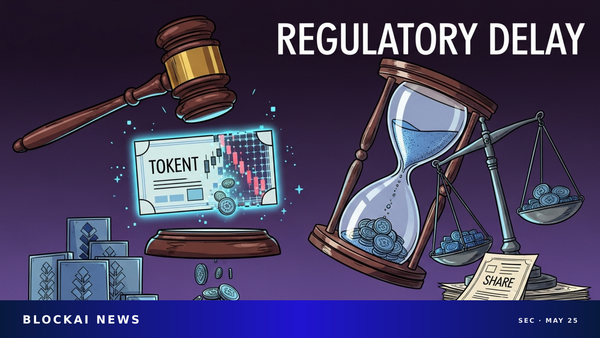
CFTC Quietly Hands Crypto Registration Reviews to AI as Headcount Falls
The CFTC chair told CoinDesk that the agency is now using AI to review crypto registration filings and monitor trading data — a workforce-multiplier deployment driven by federal hiring cuts, not strategic choice.


The Commodity Futures Trading Commission has begun using AI to review crypto firm registration applications and monitor real-time trading data, the agency's chair told CoinDesk on Tuesday. The deployment is described as productivity-augmenting; the subtext is that the CFTC is doing more crypto oversight than ever with a workforce that's smaller than at any point in the past decade.
What the AI Is Actually Doing
Two workflows. First, registration filings — the dense legal-and-compliance documents that crypto exchanges, derivatives platforms, and DCMs file when seeking approval — are now triaged by an internal model that flags inconsistencies, missing disclosures, and language patterns associated with prior enforcement actions. Second, market surveillance: real-time order-book and trade data is fed through anomaly-detection models that surface potential wash trading, spoofing, and cross-venue manipulation faster than the human surveillance team can manually scan.
The Hiring Freeze Is Doing the Strategy
CFTC headcount has fallen meaningfully since 2024 federal workforce reductions, even as crypto registrations and enforcement matters have surged. The chair framed AI as augmentation, not replacement — but the math is straightforward: without the model, applications would queue, surveillance would lag, and the agency's already-strained reputation for slow rule-making would worsen. The AI deployment is a forced response, not an experiment.
What to Watch
Two questions matter going forward. First, due process: a registration denied because an AI flagged a filing has different legal standing than one denied after human review, and litigants will test that boundary. Second, model audit: what data the CFTC's models were trained on, who maintains them, and whether enforcement decisions can be challenged based on model bias. The agency hasn't published technical documentation, and that opacity is itself a regulatory issue.
How we report: This article cites primary sources, regulatory filings, and on-chain data where available. BlockAI News uses AI tools to assist with research and first-draft generation; every article is reviewed and edited by a human editor before publication. Read our full How We Report page, Editorial Policy, AI Use Policy, and Corrections Policy.