SoFi Bank Expands SoFiUSD Stablecoin to Solana, Targets Banks and Fintechs as Infrastructure Provider
SoFi Bank is expanding its SoFiUSD fully reserved stablecoin from Ethereum to Solana, citing speed, cost, and transaction capacity advantages. The move is part of SoFi's Big Business Banking platform, which integrates fiat accounts, SoFiUSD, and crypto payments for banks, fintechs, and enterprise...

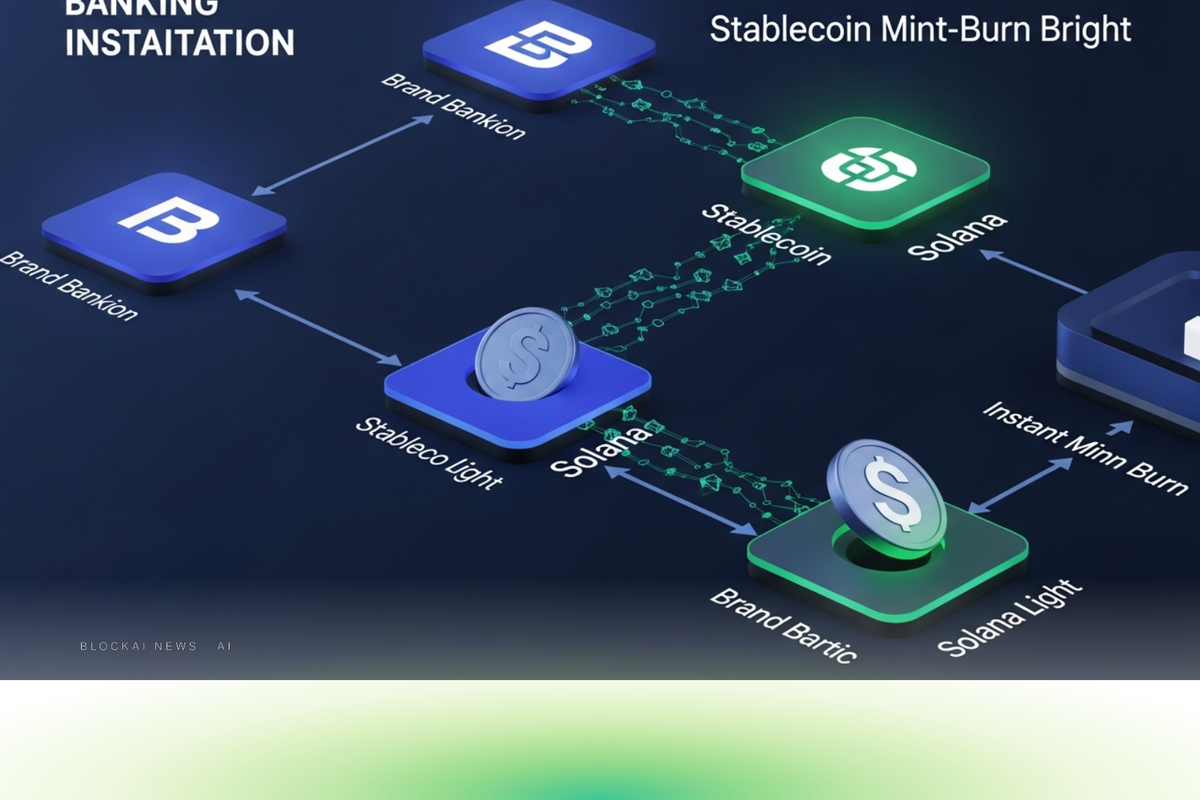
SoFi Bank, N.A. is expanding its SoFiUSD stablecoin to the Solana blockchain, adding a second network to the Ethereum deployment it launched in December 2025. SoFi's head of corporate finance cited speed, transaction costs, and processing capacity as the primary reasons for selecting Solana as the expansion target. The Solana expansion is part of Big Business Banking, SoFi's enterprise financial services platform launched in April 2026 that combines traditional fiat business accounts, SoFiUSD stablecoin infrastructure, and select cryptocurrency payments in a single managed platform. Early enterprise clients using the platform include Cumberland, Bullish, BitGo, B2C2, Fireblocks, Wintermute, Galaxy, Jupiter, Mesh Payments, and Mastercard.
SoFiUSD: From Consumer Fintech to B2B Stablecoin Infrastructure
SoFi's original SoFiUSD launch in December 2025 positioned the company as the first nationally chartered U.S. bank to issue a stablecoin on a public permissionless blockchain. The Ethereum launch was designed to establish regulatory precedent and proof of concept; the Solana expansion is the commercial scaling step. SoFiUSD is issued by SoFi Bank, N.A., which holds a national bank charter regulated by the OCC — the same regulatory framework that governs JPMorgan, Citibank, and Bank of America. This makes SoFiUSD one of the most regulated stablecoin products available: it is not issued by a standalone crypto company relying on state money transmitter licenses, but by a federally chartered bank with capital requirements, examination schedules, and consumer protection obligations that exceed those of virtually any crypto-native issuer.
The B2B infrastructure positioning is the strategic departure from SoFi's consumer roots. Rather than competing for retail stablecoin holders against USDC or PYUSD, SoFiUSD is targeting other financial institutions as customers. A bank or fintech that wants to offer its own customers stablecoin-denominated accounts or payments can integrate SoFiUSD's mint-and-burn infrastructure via SoFi's banking-as-a-service API, without building a separate OCC compliance program. This is a high-margin, low-acquisition-cost business model: SoFi's regulatory infrastructure becomes the shared cost base for multiple clients.
The instant mint-and-burn mechanics on Solana are the operational differentiator. When an enterprise client (say, a crypto market maker like Cumberland) wants to move $50 million from its fiat bank account into stablecoins for trading settlement, the traditional process involves a wire to Circle or Tether, a verification step, and a wait period. With SoFiUSD on Solana, Cumberland can request a mint from SoFi Bank directly — the bank confirms the corresponding fiat deposit and mints SoFiUSD tokens atomically, with no intermediate custodian. The reverse (burning SoFiUSD back to fiat) is equally instant. This is particularly valuable for trading firms whose core business depends on rapid capital allocation between venues.
The Solana Ecosystem Network Effect
The Solana expansion means SoFiUSD joins a growing institutional stablecoin cluster on the same network as USDC (Circle), PYUSD (PayPal), USDPT (Western Union), and the SWEEP fund (State Street + Galaxy). For enterprise users, having multiple institutional-grade stablecoins on the same settlement network creates composability: a trade that starts with USDC on Solana and needs to settle in SoFiUSD can execute the conversion in a single on-chain transaction, without bridging to another network.
Mastercard's inclusion in SoFi's Big Business Banking early-access roster is notable. Mastercard has been building its own stablecoin payment infrastructure — including a partnership with Circle to enable USDC payments on its network — and its engagement with SoFiUSD suggests interest in a bank-issued stablecoin option for regulated card network settlement. If Mastercard begins routing some settlement flows through SoFiUSD, the volume implications would be transformative for SoFi's infrastructure economics.
SoFi itself is not a crypto exchange or blockchain company in the traditional sense — it is a national bank that has made a strategic bet that stablecoin issuance is the next major line of banking fee revenue. The fee model for stablecoin issuers is straightforward: hold US Treasuries against stablecoin reserves, earn the risk-free rate, pay no interest to token holders, and pocket the spread. At scale, this is one of the highest-margin businesses in financial services. SoFi's calculation is that being early and federally chartered in this market creates a durable competitive advantage over crypto-native issuers that will face heavier regulation as the GENIUS Act framework takes effect.
What to Watch
Watch SoFiUSD's circulating supply on Solana in the first 30 days after launch: fast growth in circulating supply would indicate that enterprise clients are actively minting and using SoFiUSD for operational purposes rather than just holding it as a pilot. Watch also for OCC guidance on bank-issued stablecoin reserve requirements under the pending GENIUS Act rulemaking — SoFi's competitive positioning is highly sensitive to whether the final rules impose capital requirements that disadvantage bank-issued stablecoins relative to non-bank issuers, or vice versa. Finally, watch for Visa's response: Visa has a comparable infrastructure capability through its Visa B2B Connect platform, and SoFi's enterprise banking play competes directly for the same institutional settlement volume.
Track every DeFi move and on-chain shift, first. Subscribe to the BlockAI News daily brief.
How we report: This article cites primary sources, regulatory filings, and on-chain data where available. BlockAI News uses AI tools to assist with research and first-draft generation; every article is reviewed and edited by a human editor before publication. Read our full How We Report page, Editorial Policy, AI Use Policy, and Corrections Policy.