MoonPay Acquires DFlow for $100M — Coinbase and Phantom's Solana Execution Layer Goes Full Stack
MoonPay acquired DFlow in a $100 million all-stock deal, adding Solana's fastest-growing DEX aggregator — which powers Coinbase, Phantom, Solflare, and Kamino with just-in-time routing — to its fiat-on-ramp infrastructure. DFlow has processed $50B+ in cumulative volume and now integrates with Cla...

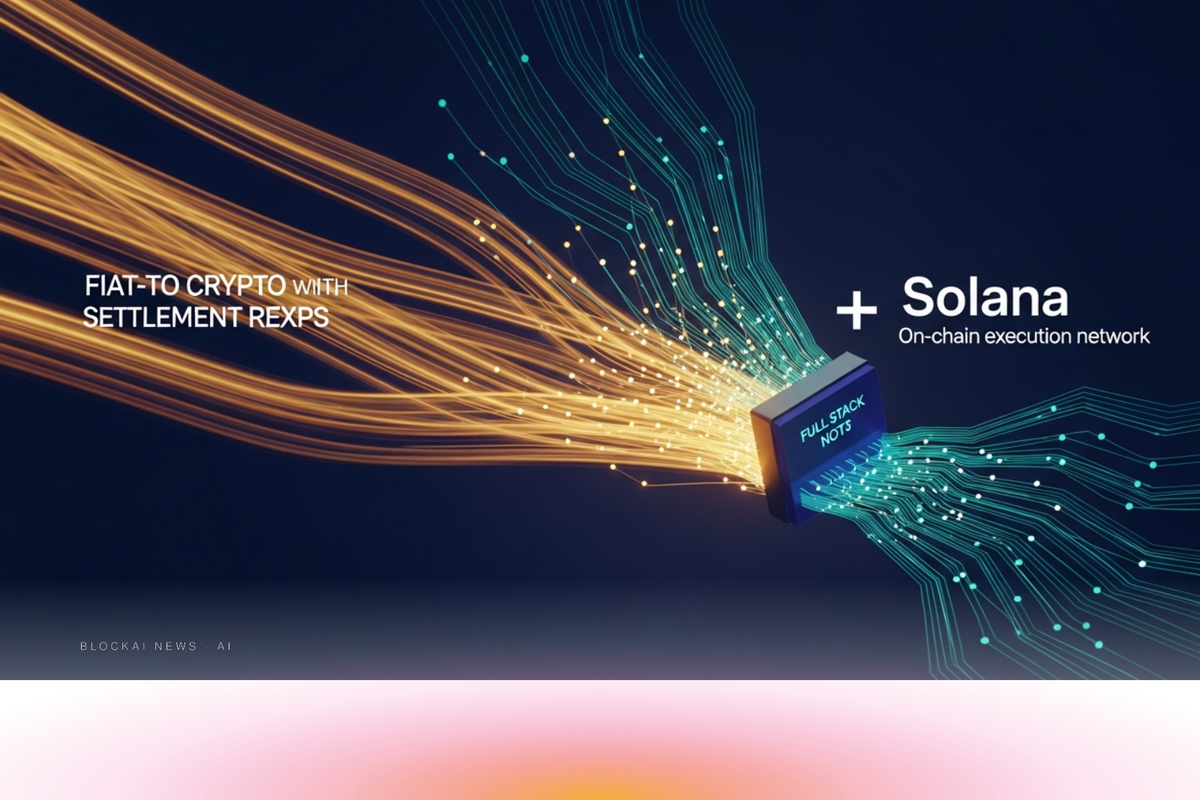
MoonPay, the crypto payments and on-ramp platform, announced on May 5 that it will acquire DFlow in a $100 million all-stock deal. DFlow is Solana's fastest-growing DEX aggregator, powering trading infrastructure for Coinbase, Phantom, Solflare, and Kamino — collectively some of the highest-volume Solana interfaces — and has processed more than $50 billion in cumulative trading volume since April 2025. The acquisition combines MoonPay's fiat-to-crypto on-ramp infrastructure with DFlow's on-chain execution layer, creating a vertically integrated product that can take a user from entering a credit card number to executing a Solana DeFi trade without leaving MoonPay's API surface. DFlow's Agent CLI and native MCP server integration extend the capability to AI agents, allowing autonomous trading programs to provision a Solana wallet, fund it from fiat, and execute trades in a single developer workflow.
What DFlow Built — Just-in-Time Routing on Solana
DFlow's technical differentiation is a system it calls just-in-time (JIT) routing. Conventional DEX aggregators optimize a trade route before the transaction is submitted to the blockchain — they calculate the best path across available liquidity pools at the moment of query, then submit. The problem: blockchain execution is not instant, and the market can move between query and settlement. A route that was optimal at query time may execute at a worse price if conditions change in the seconds between query and on-chain confirmation.
DFlow's JIT routing solves this by re-optimizing the trade route dynamically during on-chain execution itself — checking venue prices at the point of settlement within the same transaction and rerouting to a better venue if conditions have shifted. This re-optimization happens within a single atomic transaction, so the user either gets the improved execution or the transaction reverts without fees. The result is measurably better execution quality compared to static routing, which explains DFlow's rapid adoption among high-volume platforms: Coinbase and Phantom both care deeply about execution quality because their users compare prices and attribute execution performance to the platform they're using.
DFlow covers 99.9% of tokens on Solana — a breadth that is technically challenging given Solana's long tail of tokens — and processes approximately 10 million transactions per month. The $50 billion in cumulative volume since April 2025 represents about 13 months of operation, implying an annualized run rate approaching $50 billion, which is substantial for a protocol that was not yet two years old at acquisition.
AI Agent Integration: The MCP Server Dimension
DFlow's Agent CLI and MCP (Model Context Protocol) server integration add a dimension that distinguishes this acquisition from a conventional fintech M&A. The MCP server allows AI coding agents — specifically Claude Code through Anthropic's MCP ecosystem — to access DFlow's trading functionality directly within agent workflows. A developer building an autonomous trading strategy or a research agent that needs to execute Solana trades can provision wallet and execution capabilities through the same development environment they use for writing and testing code, without building separate API integrations.
When combined with MoonPay's fiat-on-ramp infrastructure, the full workflow becomes: an AI agent identifies a trading opportunity, calls MoonPay's API to fund a Solana wallet from a fiat source, then calls DFlow's execution layer to trade — all within a single agent context, with no human operator required for any step. This is the same thesis as Solana × Google Cloud's Pay.sh launch (AI agents paying for API access) applied to trading execution: making autonomous financial operations as programmable as code execution.
MoonPay CEO Ivan Soto-Wright has described the acquisition as a step toward "full-stack crypto" — a platform that handles every layer from user onboarding to DeFi execution. For MoonPay's B2B clients (the wallets and apps that use MoonPay's on-ramp infrastructure), DFlow adds on-chain execution as an additional API capability alongside fiat conversion, reducing the integration surface that product teams need to manage.
What to Watch
Watch for DFlow integration announcements from new Solana wallet and app partners in the months after close. If MoonPay's distribution relationships accelerate DFlow's platform integrations beyond the current Coinbase/Phantom/Solflare/Kamino roster, volume growth will be the visible signal. Watch also for competitive responses from Jupiter — currently Solana's largest DEX aggregator by volume — which may see DFlow's acquisition as an escalation requiring its own corporate development response. Finally, the AI agent trading volume on DFlow post-MCP integration will be interesting to track: as agent-driven trading becomes a larger share of DeFi volume, a platform built for agent clients has structural advantages over platforms designed for human UX.
Track every DeFi move and on-chain shift, first. Subscribe to the BlockAI News daily brief.
How we report: This article cites primary sources, regulatory filings, and on-chain data where available. BlockAI News uses AI tools to assist with research and first-draft generation; every article is reviewed and edited by a human editor before publication. Read our full How We Report page, Editorial Policy, AI Use Policy, and Corrections Policy.