What Is Real-World Asset (RWA) Tokenization? A Beginner's Guide
Real-world asset tokenization is the process of representing ownership of physical or traditional financial assets — stocks, bonds, real estate, commodities — as digital tokens on a blockchain. Here is everything you need to know.

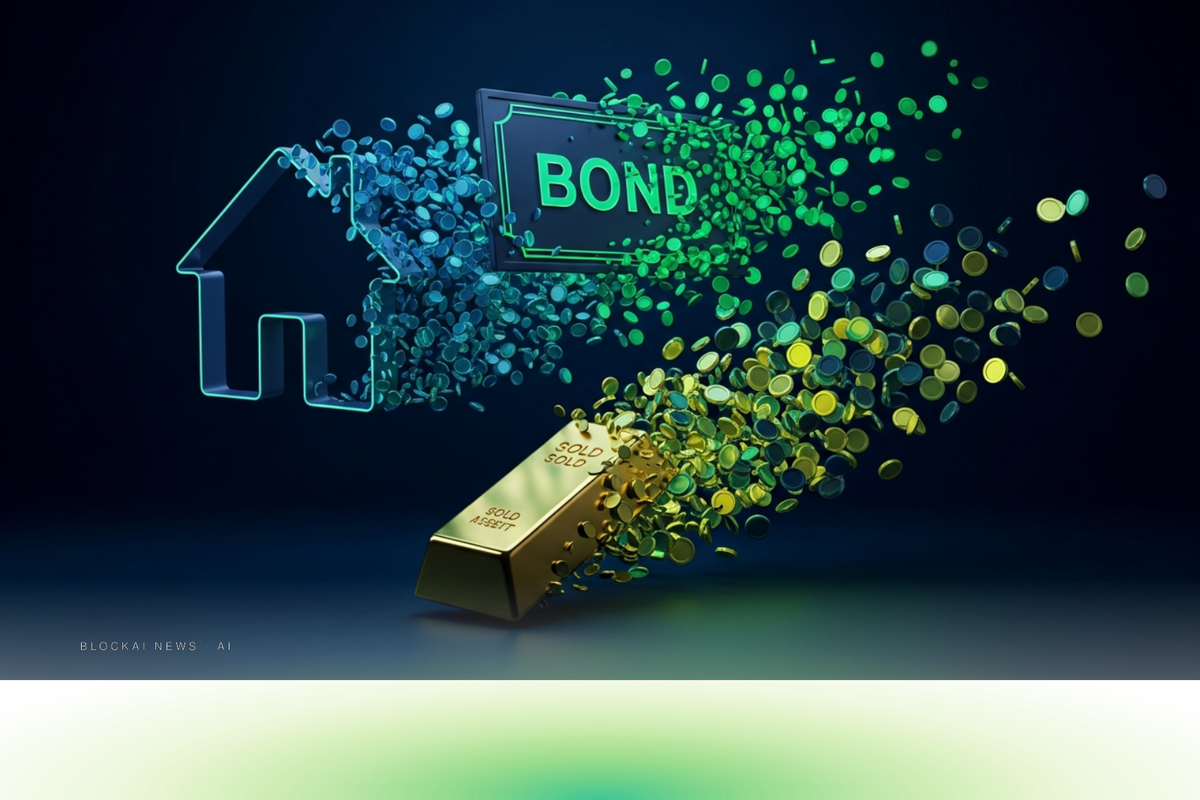
Real-world asset (RWA) tokenization is one of the most significant structural shifts in global finance since the invention of electronic trading. As of early 2026, the tokenized RWA market has grown to approximately $19–36 billion (excluding stablecoins), expanding more than 256% in 15 months, with US Treasuries alone accounting for more than $8.7 billion. The DTCC — the clearinghouse that processes virtually every US stock and bond trade — has announced a full platform launch for October 2026. This guide explains what RWA tokenization is, how it works, why institutions are betting billions on it, and what you need to watch.
What Does "Tokenizing" a Real-World Asset Actually Mean?
A token is a digital record on a blockchain that represents ownership of something. When you tokenize a real-world asset, you create a digital token that corresponds to a specific ownership claim on an asset that exists in the physical world — a share of stock, a government bond, a kilogram of gold, a parcel of real estate, or a receivable from a business loan.
Think of it this way: today, if you own 100 shares of Apple, that ownership is recorded in a centralized database managed by your broker and ultimately tracked by DTCC. The shares are "real" in the sense that they represent a legal ownership claim, but they are not physically transferable — they are entries in a database. Tokenization does the same thing, but records that ownership on a blockchain instead of (or in addition to) the existing centralized database.
The key difference is what you can do with blockchain-based ownership records:
- Programmability: Smart contracts can automatically execute dividends, vote on governance, or rebalance portfolios without human intermediaries.
- 24/7 settlement: Blockchains do not close on weekends. Tokenized assets can settle in seconds, any time of day or night, without the T+1 delay of traditional equity markets.
- Fractional ownership: A $10 million commercial real estate asset can be divided into 10 million $1 tokens, allowing small investors to own a fraction of assets previously accessible only to institutions.
- Composability: Tokenized assets can interact with DeFi protocols — used as collateral, traded on automated market makers, or bundled into structured products — programmatically, without manual paperwork.
What Types of Assets Are Being Tokenized?
In 2026, the most actively tokenized asset classes are:
US Treasuries ($8.7B+ tokenized). Government bonds are the most-tokenized asset class because they are the simplest: a fixed cash flow stream, no physical delivery required, deeply liquid, and globally recognized as risk-free-rate instruments. BlackRock's BUIDL fund, Franklin Templeton's BENJI, and Ondo Finance's USDY are the leading tokenized Treasury products. These are used primarily as on-chain collateral and yield-bearing stable assets in DeFi protocols.
Equities (Russell 1000, ETFs — launching October 2026). DTCC's October 2026 platform will tokenize the 1,000 largest US stocks and major index ETFs. This is the first time mainstream equity tokenization will be available within regulated US market infrastructure. The October launch will be the largest single expansion of the tokenized securities market in history.
Real estate. Tokenized real estate enables fractional ownership of commercial and residential properties. Platforms like RealT, Lofty, and Propy offer fractional real estate tokens, primarily for retail investors. Institutional tokenized real estate is emerging through products like BlackRock's BREAL fund, which tokenizes income-producing commercial properties.
Private credit and loans. Lending protocols like Maple Finance and Goldfinch tokenize business loans and credit facilities, allowing institutional lenders to deploy capital on-chain and receive tokenized loan positions that carry the underlying credit exposure.
Commodities (gold, silver, carbon credits). PAX Gold (PAXG) and Tether Gold (XAUT) tokenize physical gold held in vaults. The tokenized commodities market has grown to approximately $5.5 billion.
How Does Tokenization Actually Work? (Step by Step)
The technical process of tokenization varies by asset type, but the general flow for institutional tokenization is:
- Asset origination and legal structuring. The asset owner (a company, government, or fund) works with legal counsel to create a legal structure that links the blockchain token to the underlying asset. For a stock, this typically means working within existing securities law frameworks; for real estate, it involves a special purpose vehicle (SPV).
- Issuance platform selection. The issuer chooses a tokenization platform — Securitize, Ondo Finance, Tokeny, or the DTCC platform — that handles smart contract deployment, investor onboarding (KYC/AML), and ongoing asset servicing.
- Smart contract deployment. The platform deploys a smart contract on the chosen blockchain (Ethereum, Avalanche, Solana, or a permissioned chain) that represents the token standard (ERC-20, ERC-1400, or custom) and encodes the ownership and transfer rules.
- Token minting. Tokens are created ("minted") corresponding to units of the underlying asset. Each token represents a specific ownership fraction — one token might represent one share of stock, one gram of gold, or $1 of a bond's face value.
- Distribution and trading. Tokens are distributed to investors through a regulated offering or trading venue. Secondary market trading can happen on a regulated tokenized securities exchange (like tZERO or Securitize Markets) or, for public tokens, on DeFi protocols.
- Settlement and servicing. When a token is transferred between wallets, ownership changes instantaneously on-chain. Corporate actions — dividends, interest payments, stock splits — are executed by the smart contract automatically.
Why Are Institutions Moving Into This Now?
Three forces converged in 2025–2026 to move institutional tokenization from pilot to production:
Regulatory clarity. The SEC's no-action letter to DTCC in December 2025, combined with the Clarity Act passing Senate markup in May 2026, has given financial institutions the legal certainty needed to commit capital to tokenization infrastructure. Before this clarity, the risk that a tokenized security could be challenged as an unregistered offering kept many institutions in "wait and see" mode.
Stablecoin infrastructure maturity. Settlement requires a stable currency on-chain. USDC reaching $60+ billion in circulation, Western Union launching USDPT on Solana, and multiple national stablecoin initiatives (Canada's CADD, European digital euro pilots) mean that the settlement layer for tokenized assets now exists at institutional scale.
Cost pressure on post-trade infrastructure. The US financial system spends approximately $50–80 billion annually on post-trade operations — clearing, settlement, custody, reconciliation, and corporate actions. Tokenization can automate the majority of these costs. For institutions managing trillions in assets, even a 10% reduction in post-trade costs represents billions of dollars in annual savings.
 DTCC
DTCCWhat Are the Risks?
RWA tokenization is a genuinely transformative technology, but it carries real risks that investors and participants should understand:
Smart contract risk. If the smart contract governing a tokenized asset has a bug or vulnerability, funds can be lost or stolen. This is distinct from the credit or market risk of the underlying asset — the Kelp DAO hack in April 2026 demonstrated how a smart contract vulnerability can result in $292 million in losses even when the underlying assets are sound.
Legal risk and enforcement uncertainty. In a dispute over token ownership, courts may not yet have clear precedent for how to adjudicate blockchain-based ownership claims versus traditional legal instruments. The Aave/Kelp DAO court freeze — where a US court froze DeFi recovery funds to satisfy unrelated terrorism judgments — illustrates how unexpected legal actions can interrupt on-chain asset management.
Counterparty risk in custodied assets. Tokenized real-world assets require a custodian to hold the underlying asset. If that custodian fails, is hacked, or misappropriates funds (as Etana Custody allegedly did with Kraken reserves), the tokenized representation may not be fully backed. The Kraken/Etana lawsuit is a real-world example of how custody risk persists even in a tokenized world.
Liquidity fragmentation. As tokenized equities and traditional equities trade in parallel, price alignment depends on active arbitrage. In crisis conditions, the two markets could diverge, creating systemic risk that no existing risk model has been calibrated for.
RWA.xyzHow to Follow the RWA Tokenization Market
If you want to track the tokenized RWA market as it develops through the DTCC launch and beyond, these are the key metrics and milestones to watch:
- Total tokenized RWA market cap — tracked in real time at RWA.xyz. The current level of ~$19–36B will expand significantly post-DTCC October launch.
- Tokenized Treasury growth — currently led by BlackRock BUIDL ($5B+), Franklin Templeton BENJI ($700M+), and Ondo USDY ($500M+).
- DTCC July pilot volume — the first indicator of how quickly institutional participants adopt the new platform.
- Stablecoin settlement volume within DTCC — USDC settlement within DTCC will be a key metric for the platform's actual impact on traditional settlement infrastructure.
- First on-chain IPO using DTCC+Securitize stack — expected within 12 months of the October launch.
Stay close to BlockAI News.
The next major tokenization announcement could land any day. Make sure you understand the market before it moves.
How we report: This article cites primary sources, regulatory filings, and on-chain data where available. BlockAI News uses AI tools to assist with research and first-draft generation; every article is reviewed and edited by a human editor before publication. Read our full How We Report page, Editorial Policy, AI Use Policy, and Corrections Policy.