Tether Freezes $344M USDT on Tron in Largest Stablecoin Compliance Action, Linked to Iran 'Economic Fury'
Tether froze $344 million in USDT across two Tron wallets on April 23 in coordination with OFAC and US law enforcement. The action ties to Treasury Secretary Bessent's Economic Fury campaign against Iran-linked sanctions evasion.

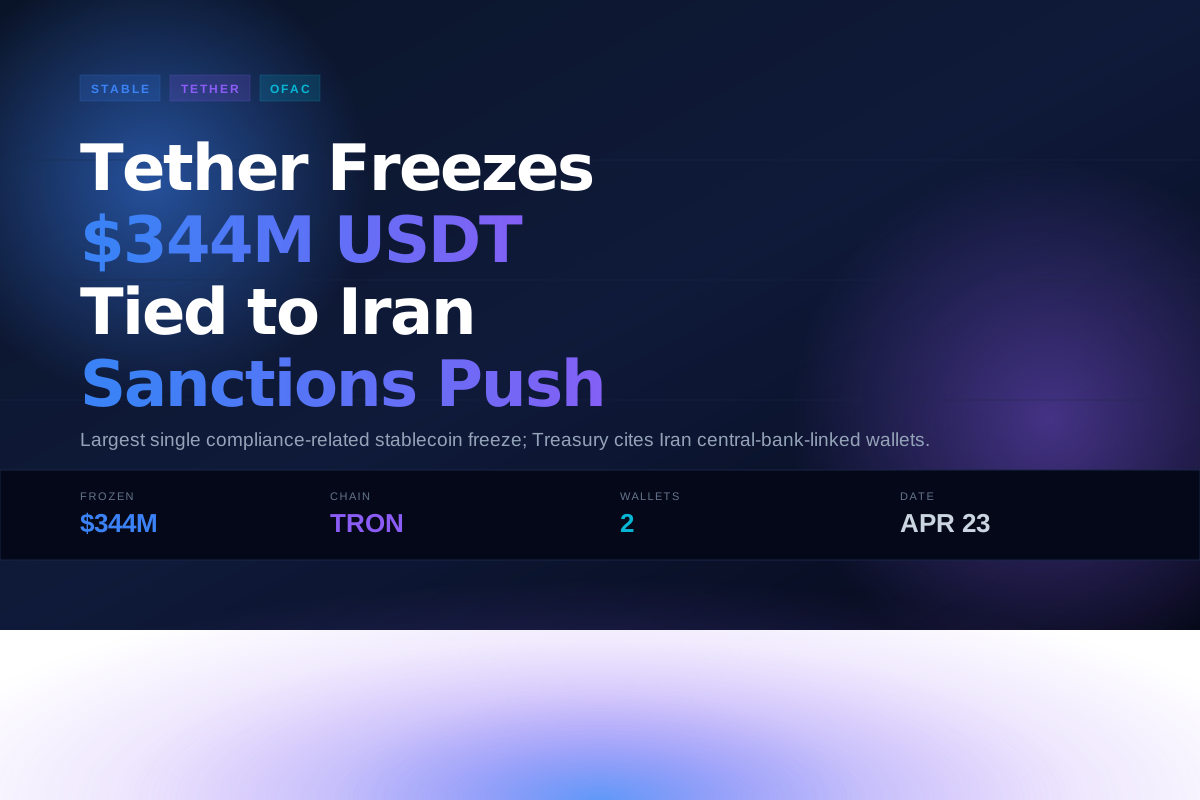
Tether froze approximately $344 million in USDT across two wallets on the Tron blockchain on April 23, in coordination with the U.S. Treasury's Office of Foreign Assets Control (OFAC) and federal law enforcement — the largest single compliance-related stablecoin freeze on record.
Inside the action
U.S. officials told reporters they had identified transactions with Iranian exchanges and intermediary wallets allegedly interacting with Central Bank of Iran-associated addresses. The freeze is part of a broader Treasury campaign Treasury Secretary Scott Bessent is calling "Economic Fury," aimed at squeezing Iran's cross-border financial channels. Tether's official statement framed the action as a continuation of its operational coordination with U.S. authorities, citing previously published transparency reports on freezes tied to illicit-finance investigations.
Why the size matters
The action lands against the backdrop of the recent $285M Drift Protocol exploit, where Circle drew industry criticism for what counterparties described as a sluggish freeze response. The two events together have re-opened the debate over stablecoin issuers' "one-click freeze" authority — a feature regulators view as a compliance tool and crypto-native users view as a permissioned chokepoint.
What to Watch
Three threads to track. One: whether Treasury attributes specific transactions to named Iranian entities in the SDN list update — that determines whether more wallets follow. Two: Circle's posture after the Drift criticism; if USDC mirrors Tether's pace on the next OFAC referral, the response time becomes a competitive variable. Three: whether the GENIUS Act rulemaking introduces explicit freeze-time SLAs for federally regulated issuers. The technical capability has now been demonstrated at $344M scale; the remaining question is who decides when it gets used.
Daily Web3 × AI intel, straight to your inbox. Subscribe to BlockAI News.
How we report: This article cites primary sources, regulatory filings, and on-chain data where available. BlockAI News uses AI tools to assist with research and first-draft generation; every article is reviewed and edited by a human editor before publication. Read our full How We Report page, Editorial Policy, AI Use Policy, and Corrections Policy.