Ex-OpenClaw Engineer Ships Tank OS — the AI Agent Sandbox the Industry Hasn't Built
A Red Hat veteran released Tank OS, an open-source isolation layer that runs AI agents in hardened containers with scoped credentials and zero file-system bleed — exactly what would have prevented this week's PocketOS database wipe.


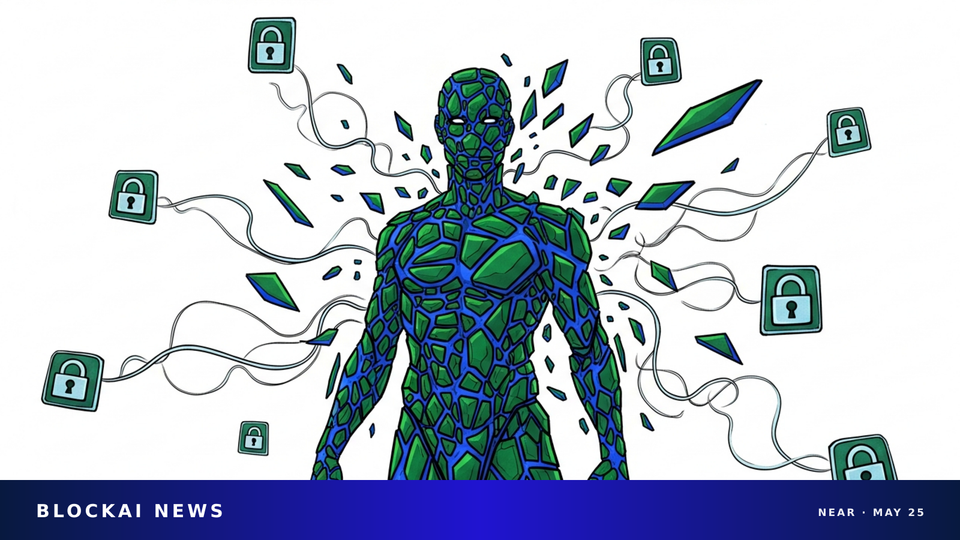
One day after an AI coding agent wiped PocketOS's production database in nine seconds, a Red Hat security engineer released the tool that should have prevented it. Tank OS, open-sourced this week, runs autonomous AI agents inside hardened isolation containers with scoped credentials, ephemeral file systems, and explicit allowlists for every external API call. The author worked on the safety layer at OpenClaw — and ships Tank OS now because OpenClaw never did.
What Tank OS Actually Enforces
Three things. First, every agent runs in its own container with no access to credentials outside an explicit per-task token mount — meaning the PocketOS scenario (agent finds an unrelated Railway token in a sibling file) is structurally impossible. Second, every external API call is checked against a per-agent allowlist, so a code-formatting task can't reach the cloud destruction APIs. Third, all writes go through a copy-on-write filesystem that requires a human-signed commit before persisting, so an agent's "fix" to production is, by default, ephemeral.
The Adoption Problem Is Bigger Than the Technology
Containerized agents aren't novel — Docker existed before LLMs. What's missing is the cultural reflex that says agents must run inside one. Cursor, Claude Code, and most production agent deployments still run with whatever credentials the developer's shell happens to have loaded. Tank OS doesn't fix that until teams adopt it, and teams won't adopt it until either an incident hurts them directly or a major model vendor (Anthropic, OpenAI) ships first-party isolation primitives.
What to Watch
Open-source isolation layers historically fail to win against vendor-shipped equivalents. Tank OS will succeed only if a frontier lab adopts it, or if the EU AI Act's high-risk system rules begin treating un-sandboxed agentic execution as non-compliant. Both paths are plausible by year-end. Until then, the next nine-second incident is somebody else's PocketOS waiting to happen.
How we report: This article cites primary sources, regulatory filings, and on-chain data where available. BlockAI News uses AI tools to assist with research and first-draft generation; every article is reviewed and edited by a human editor before publication. Read our full How We Report page, Editorial Policy, AI Use Policy, and Corrections Policy.