Paradigm-Backed Succinct Ships ZCAM, an iPhone App That Cryptographically Fingerprints Real Photos
Succinct Labs' new iPhone app hashes photos and videos at capture, producing a tamper-proof signature tied to the device — an anti-deepfake tool built on zero-knowledge cryptography.

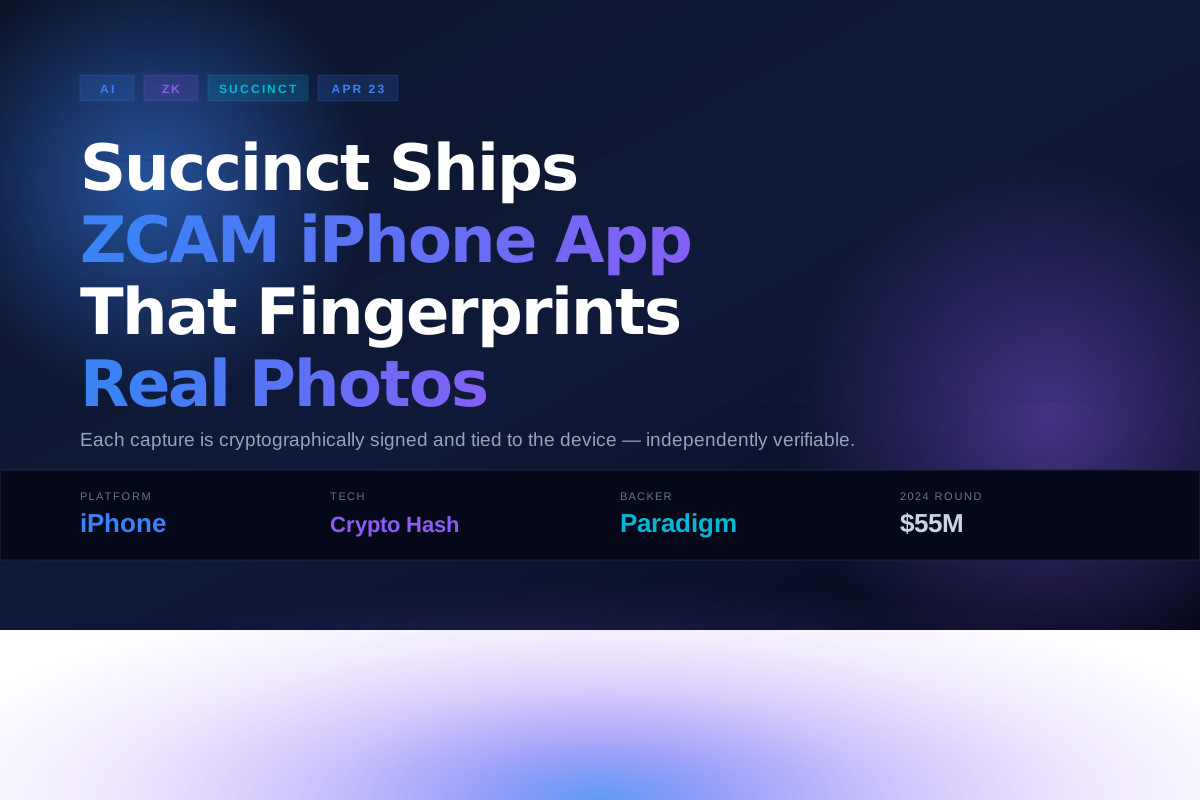
Paradigm-backed zero-knowledge infra startup Succinct Labs launched ZCAM on April 23 — an iPhone camera app that cryptographically fingerprints photos and videos at the moment of capture, aimed at making AI-generated fakes distinguishable from genuine media.
How It Works
When a user takes a photo or video in ZCAM, the app generates a cryptographic hash from the captured pixels and signs it on the device, producing what Succinct calls "a tamper-proof record that links content to the device that captured it." Third parties can then independently verify that media came from a real device and was not digitally altered or AI-generated.
The Significance
Content-provenance tools have been a long-running pitch in AI safety, but the consumer side has lagged. By building at the camera layer on iPhone — not as a platform-level watermark like C2PA — Succinct ships a verification system that works regardless of where the image travels after capture. Paradigm led Succinct's $55M round in 2024, with participation from the founders of Polygon and EigenLayer; ZCAM is the first direct-to-consumer product out of that thesis.
ZCAM's approach sits against two alternatives. Apple-native C2PA (Content Authenticity Initiative) metadata is partially wired into iOS but gets stripped on recompression or re-encoding. TruePic, the Microsoft-backed rival, signs photos inside a proprietary app but doesn't expose the signature chain publicly. ZCAM's design — pixel hash plus device-bound signature, independently verifiable — is the first to make the proof checkable without trusting Apple or Succinct themselves. Detail not disclosed: whether ZCAM verifications are anchored to a public ledger or held off-chain, and what the throughput ceiling is at scale. Both will matter if the app reaches wire-service journalists, insurance adjusters, or courtroom exhibits — the first three use cases Succinct publicly flagged at launch.
 The Block
What's Next
If ZCAM gets any traction with journalists, insurers, or courts, its signed-capture standard becomes the anchor spec — and crypto goes from "blockchain stuff" to "the infra for trusting images." Watch whether a major newsroom or an insurance carrier integrates ZCAM verification in the next 90 days.
Want frontier-model launches and AI-agent news first? Subscribe to the daily brief →
How we report: This article cites primary sources, regulatory filings, and on-chain data where available. BlockAI News uses AI tools to assist with research and first-draft generation; every article is reviewed and edited by a human editor before publication. Read our full How We Report page, Editorial Policy, AI Use Policy, and Corrections Policy.