Hut 8 Lands $9.8B AI Data Center Lease — Stock Surges 30%
Bitcoin miner Hut 8 has secured a $9.8 billion AI data center lease in Texas — expandable to $25 billion — sending shares up more than 30% in a single session. The deal signals a pivotal identity shift: from crypto miner to full-stack AI infrastructure operator at institutional scale.

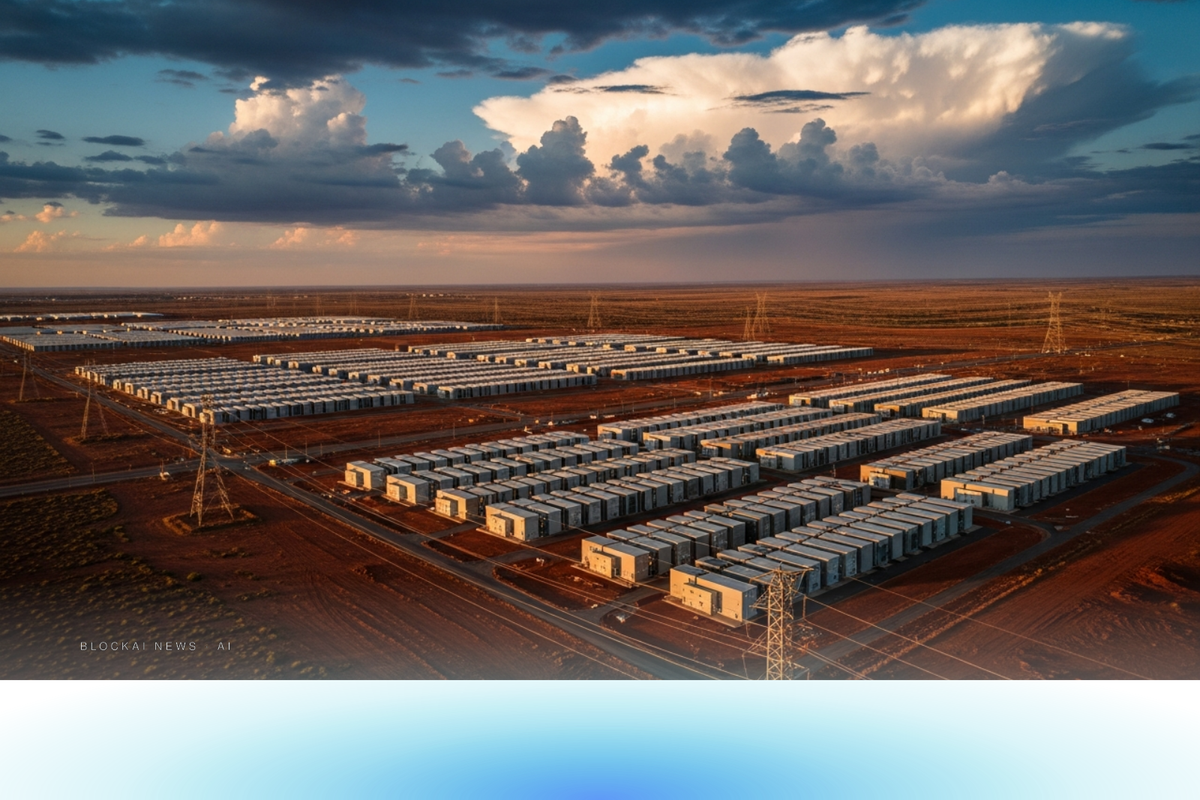
Hut 8 announced on May 6 that it has signed a $9.8 billion AI data center lease for a facility in Texas, with contractual options to expand the total commitment to as much as $25 billion. The news sent the company's shares soaring more than 30% in a single trading session, one of the largest single-day moves in the Bitcoin miner's publicly traded history. The deal marks the most consequential strategic step yet by a legacy crypto-mining company to reposition itself as a tier-one AI infrastructure provider.
What Just Changed
Per the company's announcement, the lease covers a purpose-built AI data center campus in Texas — a state that has become the epicenter of hyperscale compute buildout thanks to its deregulated power grid, abundant land, and relatively light permitting environment. Hut 8 has not disclosed the exact counterparty to the lease agreement at this stage, though the structure — a long-duration, capital-heavy master lease — is consistent with arrangements typically made with large cloud providers, sovereign wealth-backed real estate vehicles, or hyperscaler anchor tenants.
The $9.8 billion base figure is itself extraordinary. For context, it exceeds the entire market capitalization that Hut 8 carried for most of 2024 by a wide margin. The expansion option to $25 billion would make this one of the largest single-site AI infrastructure lease commitments ever publicly disclosed by a company of Hut 8's size. The company's press release describes the facility as designed to support the power and cooling densities required by next-generation GPU clusters and large language model training workloads — the exact use cases driving a global land grab for compute real estate.
This is not Hut 8's first move toward AI infrastructure. The company completed its merger with US Bitcoin Corp in late 2023, creating a combined entity with sites across North America. Since then, management — led by CEO Asher Genoot — has been explicit in public filings and investor presentations that Bitcoin mining would serve as a cash-flow base while high-density AI compute became the growth engine. This lease is the operational proof of that thesis arriving at scale.
The Capital Picture
A $9.8 billion lease obligation is a double-edged instrument. On one hand, it signals that a creditworthy anchor tenant — or a consortium of tenants — has underwritten demand sufficient to justify the commitment. Institutional landlords and infrastructure REITs do not sign leases of this magnitude without high confidence in the lessee's ability to populate and monetize the facility. On the other hand, it introduces significant balance-sheet leverage that investors will scrutinize closely as interest rates remain elevated.
Hut 8's equity reaction — a 30%-plus single-session rally — reflects the market pricing in a scenario where the company successfully subleases or operates the facility at margins consistent with colocation and AI cloud economics, rather than the thinner margins typical of Bitcoin mining. At prevailing AI colocation rates, a campus capable of supporting a $9.8 billion lease base would need to deliver somewhere in the range of $800 million to $1.2 billion in annual revenue at stabilized utilization — a number that, if achieved, would represent a step-change in Hut 8's revenue profile.
The company has not yet published an updated capital structure or financing plan in connection with the lease. Investors should watch for an SEC filing — likely an 8-K or amended 10-Q — that will detail the lease accounting treatment under ASC 842, the drawdown schedule, and any associated debt or equity raise. The expansion option to $25 billion would almost certainly require third-party capital, whether through project-level financing, a joint venture, or a public equity offering.
It is also worth noting the Texas location's strategic logic beyond cost. ERCOT, Texas's grid operator, has been actively courting large load customers willing to participate in demand-response programs, effectively turning data centers into flexible grid assets. This creates an additional revenue stream — grid services payments — that could meaningfully offset power costs at scale, a dynamic that several hyperscalers have already begun to monetize in the state.
What This Tells Us
The Hut 8 lease is a data point in a much larger pattern. Over the past eighteen months, the line separating Bitcoin miners from AI infrastructure companies has been dissolving at speed. Core Scientific signed a $1.2 billion hosting contract with CoreWeave in early 2024. Cipher Mining, Bit Digital, and others have announced partial or full pivots toward GPU hosting. What distinguishes the Hut 8 announcement is sheer magnitude — a $9.8 billion commitment puts it in a league previously occupied only by the hyperscalers themselves and specialist data center REITs like Equinix or Digital Realty.
This has implications beyond Hut 8's own stock price. It validates the thesis — articulated by a growing number of infrastructure analysts at firms including Goldman Sachs and Morgan Stanley — that stranded power assets and pre-permitted land in deregulated energy markets are among the most valuable inputs to the AI buildout, and that companies sitting on those assets are being systematically revalued upward. Every Bitcoin miner with owned land, permitted power interconnects, and operational infrastructure teams is now, in effect, a potential AI data center developer.
The critical variable to watch in the coming weeks is tenant disclosure. If Hut 8 names a hyperscaler anchor — Microsoft, Amazon Web Services, Google, or a large AI model lab — as the demand driver behind this lease, the re-rating of the stock could have further to run. Conversely, if the tenant base turns out to be a collection of smaller or less creditworthy AI startups, the risk profile of the commitment changes substantially. The $25 billion expansion option is only as valuable as the demand signed to support it.
How we report: This article cites primary sources, regulatory filings, and on-chain data where available. BlockAI News uses AI tools to assist with research and first-draft generation; every article is reviewed and edited by a human editor before publication. Read our full How We Report page, Editorial Policy, AI Use Policy, and Corrections Policy.