Trump DOJ Moves to Intervene in xAI's Challenge to Colorado SB24-205, Citing Equal Protection
The U.S. Department of Justice on April 24 moved to intervene in xAI's lawsuit against Colorado's SB24-205, arguing the state's algorithmic discrimination law violates the Fourteenth Amendment's Equal Protection Clause ahead of the statute's June 30 effective date.

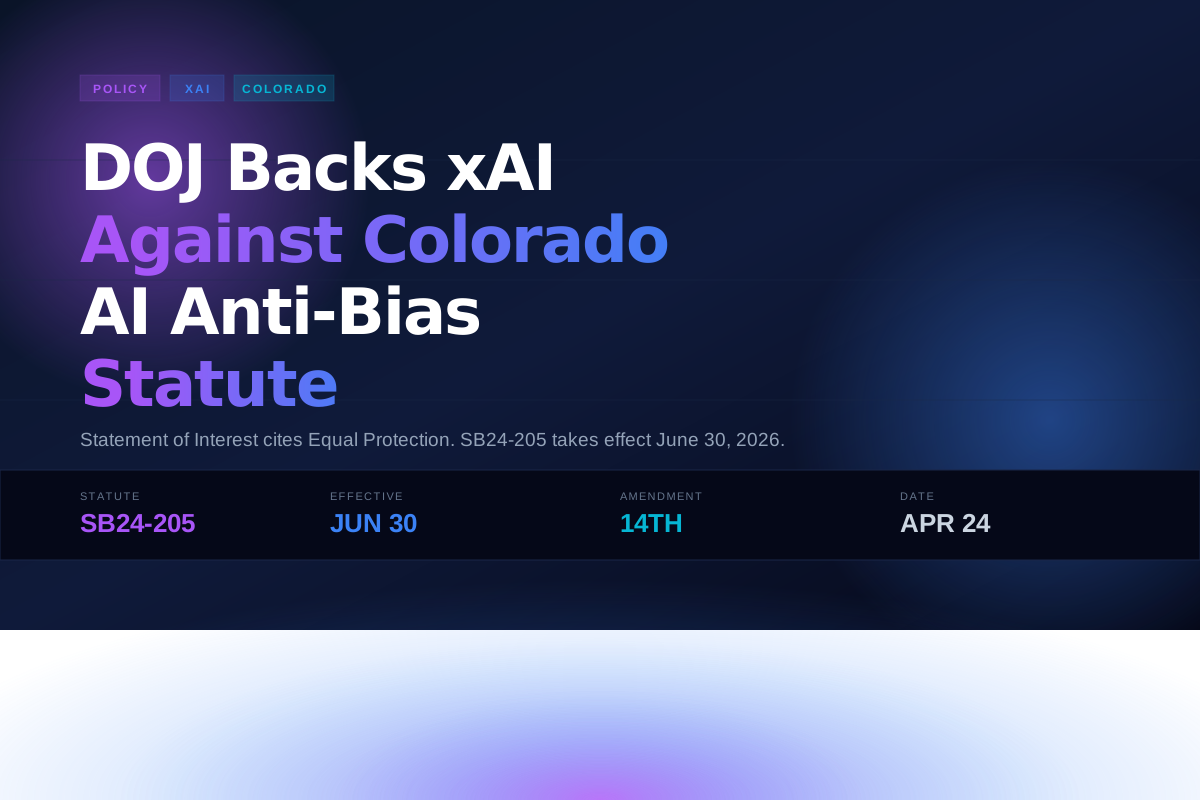
The U.S. Department of Justice on April 24 moved to intervene in xAI's lawsuit challenging Colorado's SB24-205, the state's algorithmic discrimination statute. The filing escalates a state-versus-federal fight over how — and whether — high-impact AI systems can be regulated.
What SB24-205 actually requires
Colorado's law obligates AI developers and deployers to assess and reduce discrimination risks in high-impact decisions (hiring, admissions, lending), disclose how AI systems function, and notify consumers when algorithms influence consequential choices. The statute takes effect June 30, 2026, and exempts uses designed to advance diversity or address historical discrimination.
The DOJ's constitutional argument
The DOJ's Statement of Interest argues SB24-205 violates the Fourteenth Amendment's Equal Protection Clause by requiring companies to prevent unintentional disparate impact while carving out exemptions for diversity-related applications. Assistant Attorney General Harmeet K. Dhillon framed the law as coercing "technological innovators into producing harmful products" tied to ideological preferences. The intervention fits a broader Trump administration policy push to consolidate AI regulation at the federal level rather than allow a 50-state patchwork; New York and California have advanced their own AI bias measures.
Our Take
The June 30 effective date is the binding constraint. If the case isn't resolved or stayed before then, every AI company doing business in Colorado has to either build a SB24-205 compliance program or accept litigation exposure. The DOJ filing is unusual in that it picks an Equal Protection theory rather than the more conventional preemption argument — that's a tell that the administration wants a Supreme Court precedent that constrains state AI regulation broadly, not just in Colorado. For frontier-lab compliance leaders, the planning rule is to keep both compliance and litigation tracks running in parallel until a court actually rules.
Want every AI × Web3 signal the moment it breaks? Subscribe to the BlockAI News daily brief.
How we report: This article cites primary sources, regulatory filings, and on-chain data where available. BlockAI News uses AI tools to assist with research and first-draft generation; every article is reviewed and edited by a human editor before publication. Read our full How We Report page, Editorial Policy, AI Use Policy, and Corrections Policy.