Why DeFi Isn't Dead Despite Black April: $13B TVL Drop Was Mostly Leveraged Unwinding
DeFi TVL dropped $13B in 48 hours after Kelp DAO's $292M exploit, but most of that wasn't real capital leaving — it was looping strategies unwinding. Spark TVL meanwhile jumped from $1.8B to $2.9B, suggesting capital rotation, not abandonment.

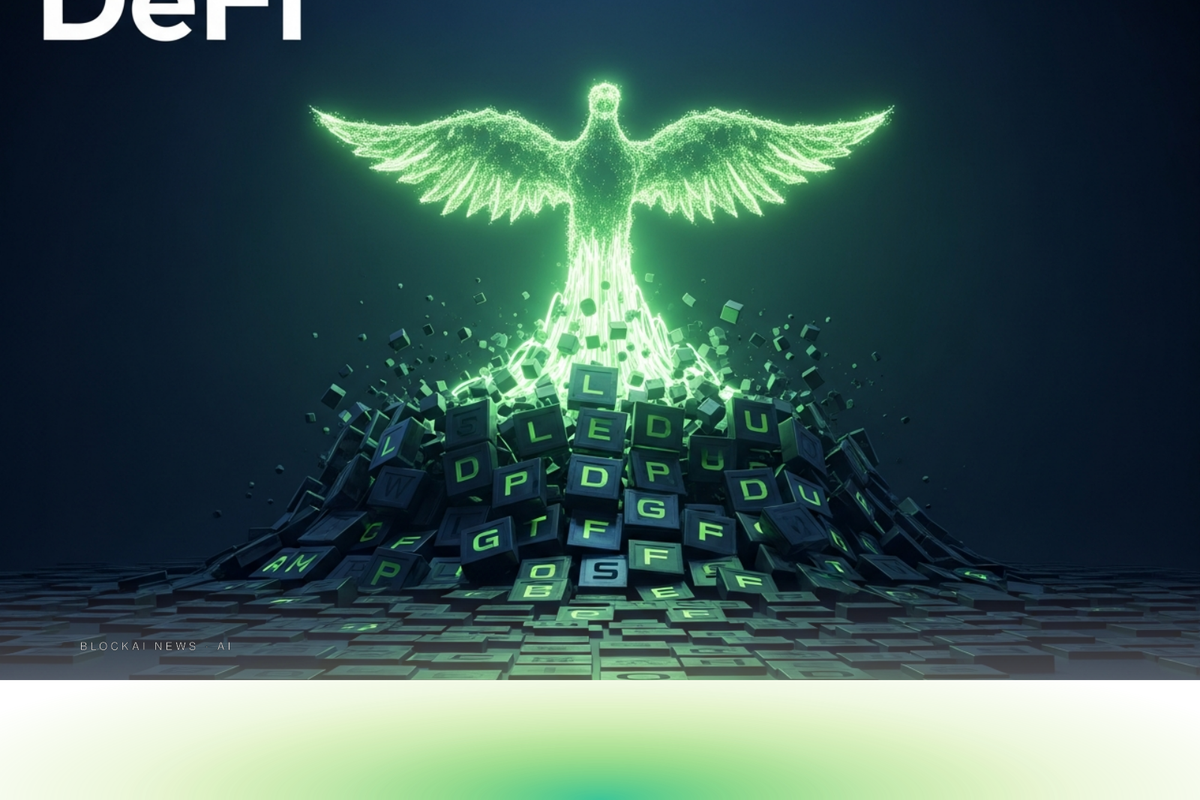
The post-mortem on April's brutal week in DeFi has begun, and the early conclusion is that the headline numbers were misleading. $13 billion in TVL drained from the sector in 48 hours after the $292 million Kelp DAO exploit — but most of that wasn't real capital walking out the door.
Looping math, not panic exit
Much of the lost TVL was concentrated in looping strategies: users deposit liquid restaking tokens, borrow ETH against them, swap for more LRTs, repeat. Each loop counts the same dollar of collateral multiple times in TVL math. When the underlying token loses peg, the entire stack unwinds at once — destroying TVL without destroying real net capital. Aave alone saw $8.45 billion in outflows over 48 hours, with much of it tied to LRT loops collapsing simultaneously.
Where the money actually went
Capital didn't leave DeFi — it rotated. Spark's TVL jumped from $1.8 billion to $2.9 billion over the same weekend as users moved to lending venues with conservative collateral. Total DeFi TVL settled in the mid-$80 billion range, roughly back to where the sector sat a year ago — a reset, not a collapse. Aave has separately raised ~$160M of $200M needed to cover bad debt from the Kelp DAO exploit, with Mantle and the Aave DAO leading the cover.
BlockAI News' View
The "DeFi is dead" narrative makes for clean headlines but doesn't survive contact with the on-chain data. What April actually killed was a specific class of degenerate looping strategy that depended on perfect peg conditions across LRT issuers, lending markets, and bridges. The protocols that survived — and the new entrants now scaling — are the ones with conservative collateral assumptions and no cross-chain dependencies. Expect the next 90 days to be a flight-to-simple, not a flight from DeFi.
Track every DeFi move in real time. Subscribe to the BlockAI News daily brief.
How we report: This article cites primary sources, regulatory filings, and on-chain data where available. BlockAI News uses AI tools to assist with research and first-draft generation; every article is reviewed and edited by a human editor before publication. Read our full How We Report page, Editorial Policy, AI Use Policy, and Corrections Policy.