Tim Cook to Step Down in September, Hardware Chief John Ternus Set to Take Over Apple
Tim Cook will step down as Apple CEO in September 2026, with hardware chief John Ternus succeeding him — handing the next leader an Apple Intelligence rollout, App Store economics under platform pressure, and a developer ecosystem reshaped by AI-native build flows.

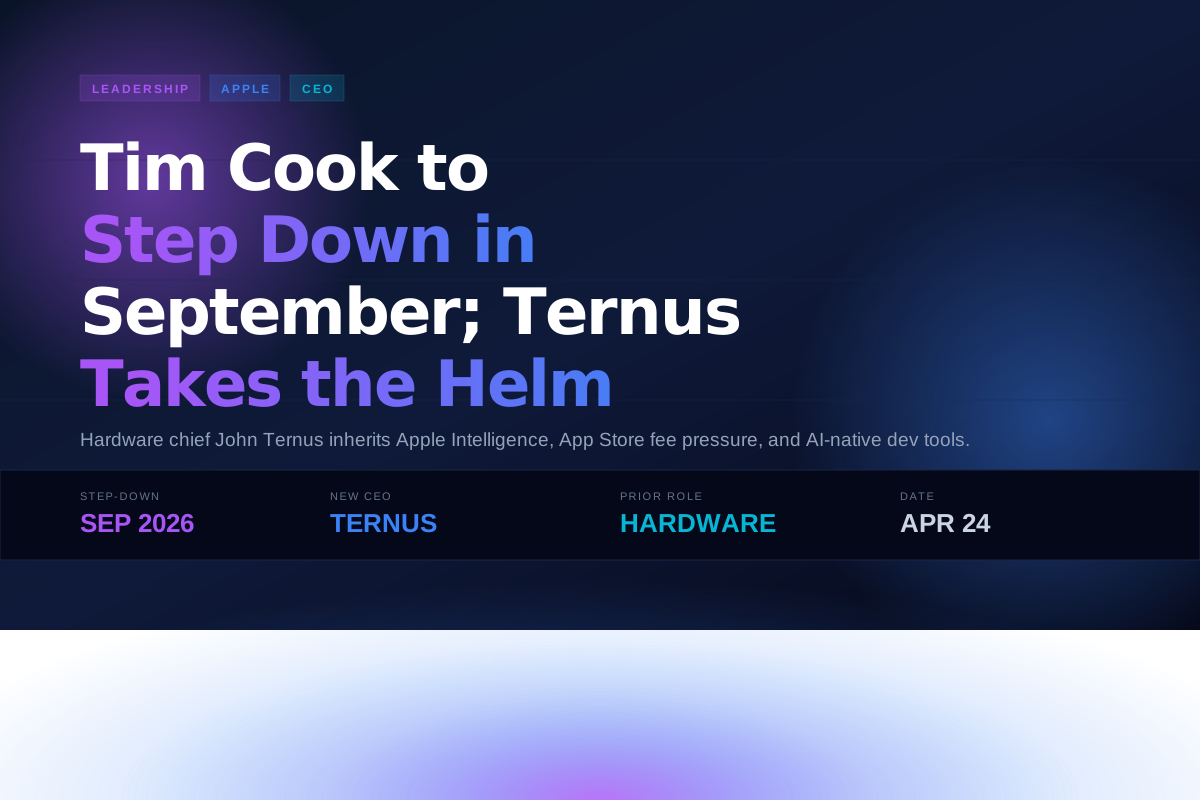
Tim Cook will step down as Apple CEO in September 2026, ending a 15-year tenure. Apple's hardware chief John Ternus is set to succeed him — a transition disclosed roughly five months ahead of handover.
Who Ternus is
Ternus has run Apple's hardware engineering organization, the group responsible for the iPhone, iPad, and Mac silicon transitions. The choice signals continuity on the engineering side; for a company whose recent narrative has centered on Apple Silicon and on-device AI inference, putting a hardware leader at the top reads as a deliberate bet that the next chapter is decided more by chips and devices than by services strategy.
The strategic inbox
Ternus inherits three live problems Cook is leaving behind. One: the App Store's 30% cut is under sustained pressure from regulators and from the rise of side-loading regimes in the EU. Two: "vibe-coded" apps and AI-native build flows are reshaping what it means to ship on Apple's platforms, eroding the traditional moat around developer tooling. Three: the Apple Intelligence rollout — Apple's flagship consumer-AI bet — has yet to demonstrate a step-change in user behavior. A successful first 18 months for Ternus likely requires moving the needle on at least two of those three.
BlockAI News' View
The interesting frame isn't Cook-versus-Ternus — it's Apple-versus-an-AI-stack-it-doesn't-yet-own. Anthropic, OpenAI, and Google are all building consumer-facing assistants that compete for the same surface (the home screen, the operating system entry point) Apple has historically owned. A hardware-first CEO is the right pick if the answer is on-device inference and proprietary silicon. It's the wrong pick if the answer requires ceding ground to third-party AI partnerships at the OS layer. Ternus's first major product call after September will reveal which path Apple has chosen.
Want every AI × Web3 signal the moment it breaks? Subscribe to the BlockAI News daily brief.
How we report: This article cites primary sources, regulatory filings, and on-chain data where available. BlockAI News uses AI tools to assist with research and first-draft generation; every article is reviewed and edited by a human editor before publication. Read our full How We Report page, Editorial Policy, AI Use Policy, and Corrections Policy.