Jefferies: $606M April Crypto Exploits May Force Wall Street to Rethink Blockchain
After the $293M Kelp DAO bridge hack and other April incidents, Jefferies tells clients that banks, asset managers, and payments firms may decelerate tokenization rollouts — especially bridge-dependent designs.

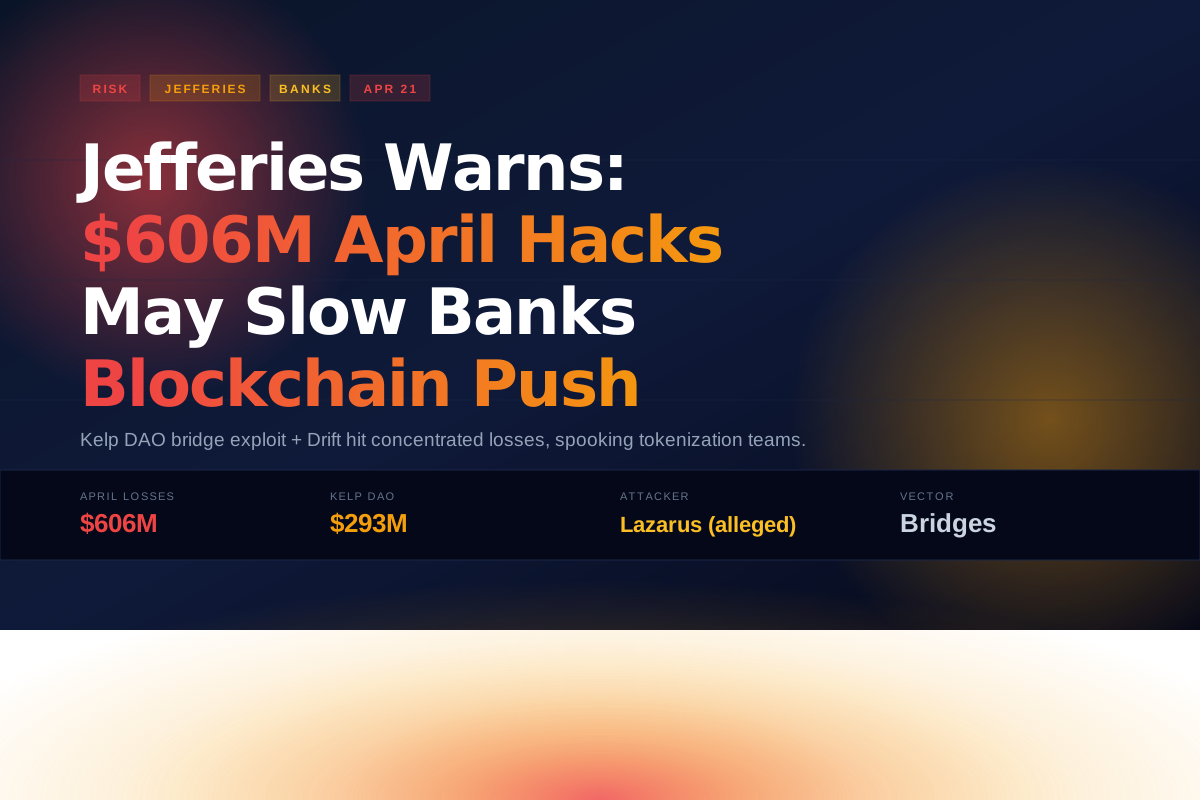
Investment bank Jefferies told clients on April 21 that the concentrated wave of April crypto exploits — totaling roughly $606 million, with the $293 million Kelp DAO bridge hit as centerpiece — could force banks, asset managers, and payments firms to slow their blockchain and tokenization rollouts.
What's new
Kelp DAO on April 18 was drained when attackers minted unbacked tokens and used them as cross-chain collateral, exploiting the exact bridge infrastructure that institutional tokenization depends on. The attack is linked to North Korea's Lazarus Group. Combined with Drift Protocol and other April incidents, the monthly loss total is among the highest since 2022.
Why it matters
Jefferies' read: TradFi is unlikely to abandon crypto outright, but the pace of tokenization — onchain treasuries, tokenized deposits, stablecoin rails — could decelerate as risk, compliance, and custody teams re-audit bridge-dependent designs. That matters for every bank that spent 2025 publicly committing to blockchain pilots.
 Bloomberg
The takeaway
Bridge-free tokenization designs (native-issuance on a single chain, or institutional-permissioned ledgers) may get a second look as a result. Watch BNY, JPM Onyx, and Stripe's Tempo for whether this changes 2026 Q2 rollouts.
Daily Web3 + AI signal, straight to your inbox — subscribe →
How we report: This article cites primary sources, regulatory filings, and on-chain data where available. BlockAI News uses AI tools to assist with research and first-draft generation; every article is reviewed and edited by a human editor before publication. Read our full How We Report page, Editorial Policy, AI Use Policy, and Corrections Policy.